Azerbaijan is where the Gulf goes in summer: a three-hour flight from Dubai, green mountains at 25C in August, and prices a third of Europe's. Baku's walled old city sits under three flame-shaped towers, Sheki's khan's palace has stained-glass shebeke windows assembled without nails or glue, and Gobustan has 6,000-year-old rock art beside a field of mud volcanoes. It is a Muslim-majority country with a strongly secular public culture, so halal food needs a little more attention here than in the Gulf.
Around 96% Muslim, mostly Shia with a substantial Sunni minority, in a determinedly secular state. Meat in Azerbaijani restaurants is generally halal, but pork is sold openly and alcohol is everywhere - this needs more checking than the Gulf.
Sheki, Gabala, Lahij and Quba sit at 700-1,500 metres in forested mountains, at 22-28C in August. This is why Azerbaijan fills with Gulf families every summer.
Baku's walled old city is a UNESCO site - the Maiden Tower, the 15th-century Palace of the Shirvanshahs, caravanserais and the Juma Mosque, all inside 12th-century walls in the middle of a modern capital.
Bibi-Heybat, rebuilt after the Soviets dynamited it in 1936, stands on a cliff above the sea. Taza Pir in the city centre and the Juma Mosque in the old city are both working and welcoming.
A good Baku hotel is USD 50-90, a full dinner USD 15-25, and intercity transport costs a few dollars. Considerably cheaper than Turkey now, let alone the EU.
Mud volcanoes and 6,000-year-old petroglyphs at Gobustan, a burning hillside at Yanar Dag, Caucasus villages at 2,300 metres at Khinalug, and the Caspian.
The ASAN e-visa takes three days online and costs around USD 25. GCC citizens often get visa-free entry, and Baku is well connected to Dubai, Doha, Istanbul and Moscow.
Three days in and around Baku, then north-west to Sheki and Gabala, or north to Quba and Khinalug. Roads are good and a driver for the mountain legs costs little.
Old city - Maiden Tower - Shirvanshahs
Bibi-Heybat - Taza Pir - Heydar Aliyev Centre
Gobustan - mud volcanoes - Ateshgah - Yanar Dag
Shamakhi - Sheki - caravanserai
Kish - Gabala - Lahij
Quba - Khinalug - Red Village
Baku Boulevard - Nizami Street - departure
Most Azerbaijani mosques were closed under Soviet rule and many were destroyed. The ones standing today are either pre-Soviet survivals or post-1991 reconstructions, and all are open to visitors outside prayer times.
On a cliff over the Caspian, above the tomb of Ukeyma Khanum, a descendant of the seventh Shia imam. The 13th-century original was dynamited by the Soviets in 1936; the present mosque is a 1990s reconstruction from photographs.
Built between 1905 and 1914, funded by the philanthropist Nabat Khanum Ashurbeyova, with a gilded dome and minarets. The seat of the Caucasus Muslim Board and the main working mosque of the capital.
Inside the walled old city on the site of a much earlier mosque, with a minaret added in 1437. Small, working and open to visitors.
Opened in 2014, the largest mosque in the country, with four 95-metre minarets. Built for both Shia and Sunni congregations, which is characteristic of Azerbaijan.
Founded in 743, making it among the oldest mosques in the Caucasus. Destroyed and rebuilt repeatedly after earthquakes, most recently restored in 2013.
The mosque encloses the tomb itself, and the complex includes a small museum on the Soviet destruction and the reconstruction.
A 19th-century brick mosque with an unusual squat dome in the centre of Quba, near the covered bazaar.
Part of the khan's fortress complex beside the palace, with a plane tree in the courtyard said to be several hundred years old.
The oldest dated mosque in Baku, from 1078, with the 'broken tower' minaret damaged by Russian naval bombardment in 1723.
A blue-domed shrine complex around the tomb of a descendant of the fifth Shia imam, restored in the 2010s and the main pilgrimage site of western Azerbaijan.
A 15th-century royal complex of palace, divankhana, mosque, bath house and burial vault in pale limestone. The finest medieval architecture in Azerbaijan.
Over 6,000 petroglyphs across 40,000 years - dancers, reed boats, aurochs - on a boulder field above the Caspian, with an excellent modern museum.
An 18th-century summer palace covered in frescoes, with shebeke windows of thousands of hand-cut glass pieces held in wooden lattice without nails or glue.
A pentagonal caravanserai-temple built by Indian and Persian merchants around a natural gas vent, used by Zoroastrians, Hindus and Sikhs into the 19th century.
In a building shaped like a rolled carpet on the Boulevard, holding the best collection of Azerbaijani weaving - an art form on the UNESCO intangible heritage list.
A stone-paved mountain village of coppersmiths with a medieval sewerage system still in use, on a cliff above the Girdimanchay gorge.
Azerbaijani food sits between Turkish, Persian and Caucasian. Rice, lamb, saffron, pomegranate and herbs. National restaurants are reliably pork-free; Russian and European menus are not.
Rice steamed with saffron and served separately from the topping - lamb with chestnuts and dried fruit, or fish. Azerbaijan claims over forty distinct versions.
Plov baked inside a crust of thin lavash bread and brought whole to the table, where the crust is cut open. The celebration version.
Vine leaves, cabbage or hollowed vegetables filled with minced lamb, rice and herbs. On the UNESCO intangible heritage list as an Azerbaijani tradition.
Lamb, chickpeas, chestnuts and saffron slow-cooked in a sealed clay pot and eaten in two courses - the broth poured over crumbled bread first, the meat mashed and eaten second. A Sheki speciality.
Thin folded flatbread griddled with a filling of herbs, pumpkin or minced lamb, served with sumac and yoghurt. Street food and breakfast.
Tiny lamb dumplings in broth, so small that the skill is judged by how many fit on a spoon. Winter food.
Chicken or fish stuffed with walnut, onion and sour plum paste and baked. From the Talysh region in the south.
Lamb or chicken with vegetables cooked on a convex iron plate at the table and served sizzling with lavash.
Lamb, chicken or sturgeon over charcoal with onion and sumac. Ordinary, ubiquitous and reliably good.
Layers of rice-flour vermicelli with hazelnuts and saffron syrup, cut into diamonds. Unlike any other halva and specific to Sheki.
The Azerbaijani version is diamond-cut with a walnut filling, glazed with saffron, and made in quantity for Novruz in March.
Black tea in an armudu pear-shaped glass, drunk through or alongside a spoonful of cherry, fig or white-cherry preserve. Served constantly.
Part restaurant, part museum of Azerbaijani material culture, serving the full range of national dishes including shah plov. Touristy in the best sense and genuinely good.
A townhouse near Fountain Square doing careful versions of dolma, piti and plov. One of the most reliable kitchens in the city.
Large, popular with local families, and a good place to eat saj and kebab at fair prices.
The name means mother-in-law. Home-style Azerbaijani cooking - dushbara, kufta bozbash, qutab - in a warm room.
A more polished take on the national cuisine, popular with visitors from the Gulf, with a halal sign displayed.
Long-running restaurant with live mugham music in the evenings, serving traditional dishes in a formal setting.
A courtyard restaurant inside the old city walls, good for lunch between the Maiden Tower and the Shirvanshahs' palace.
Qutab griddled to order with herb, pumpkin or meat filling, for a manat or two. The best cheap food in the city.
In the courtyard of the 18th-century caravanserai, serving Sheki piti in its clay pot and the local halva. The most atmospheric meal in the country.
A local favourite for piti and kebab, cheaper and busier than the caravanserai.
The Gabala and Gusar mountain resorts have a cluster of restaurants used to Gulf visitors, most displaying halal signage and many with family rooms.
A fashionable pan-Asian restaurant in the centre. Popular and good, but the menu is international - check individual dishes.
Bread baked in clay ovens and sold hot through a window, everywhere from Baku suburbs to mountain villages. A few coins and excellent.
Charcoal grills and Caucasian dishes, straightforward and good value, with branches around the city.
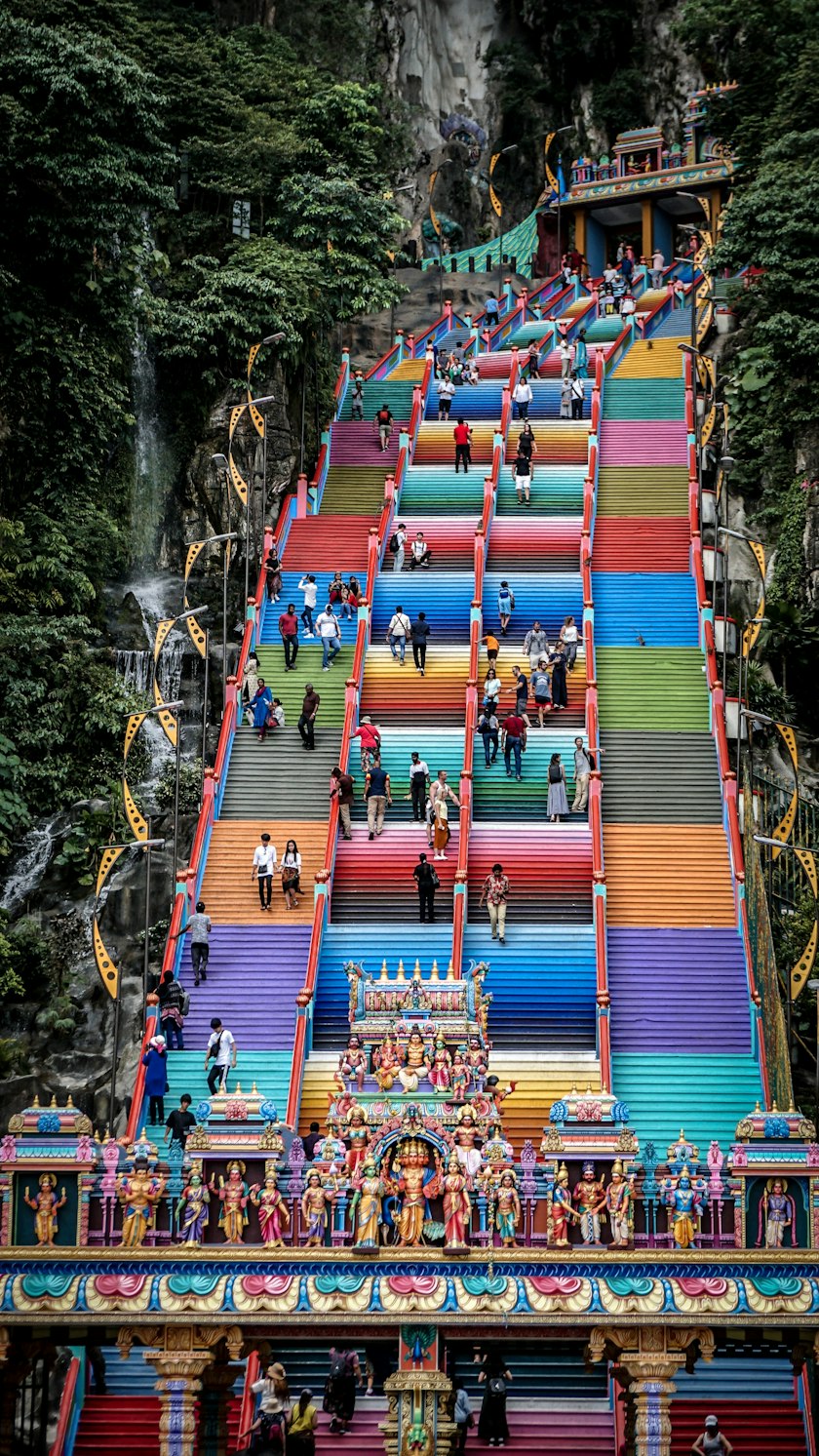
Mosques reopened after 1991 and every town has working ones, though there are fewer per head than in the Gulf or Turkey and the public call to prayer is more restrained.
| Where | Prayer facilities |
|---|---|
| Heydar Aliyev International Airport | Prayer rooms airside and landside with ablution facilities. |
| Baku mosques | Taza Pir, the Juma Mosque in the old city, Bibi-Heybat and the Heydar Mosque are all working and open for the five prayers. |
| Shopping malls | Port Baku, 28 Mall and Ganjlik Mall have prayer rooms, though they are less prominently signposted than in the Gulf - ask at the information desk. |
| Mountain resorts | Gabala, Gusar and Sheki hotels catering to Gulf visitors have prayer rooms; village mosques are within walking distance in most towns. |
| Petrol stations | Larger stations on the intercity roads have small prayer rooms; smaller ones do not, so plan longer drives. |
| Hotels | International hotels in Baku supply mats and qibla markers on request; resorts in the mountains aimed at Gulf guests do so as standard. |
| Heritage sites | The Juma Mosque in Icherisheher and the Sheki khan complex mosque are both working and can be used for prayer. |
Baku is where the hotels are. In the mountains, the resort towns of Gabala and Gusar are built substantially around Gulf summer visitors, and Sheki's caravanserai is the single best stay in the country.
Inside or beside the old city walls, walkable to everything, with boutique hotels in restored houses. The best base in the capital.
International hotels along the Caspian promenade, convenient and comfortable, with the Flame Towers above.
Rooms off the stone courtyard of a working 18th-century caravanserai. Simple, atmospheric and inexpensive - the most memorable night in Azerbaijan.
Resort hotels in forested foothills with cable cars, a summer season built around Gulf families, and prayer facilities as standard.
Azerbaijan's ski resort in winter and a cool mountain escape in summer, at 1,400-2,300 metres.
A practical base for Khinalug and the Red Village, with guesthouses and apple orchards.
Family rooms in stone houses along the cobbled main street, above the coppersmiths' workshops.
Sanatoriums offering baths in medicinal crude oil, a Soviet-era tradition that is still going and is popular with regional visitors.
Cheap by European standards and a fraction of Gulf prices, with the mountains dearer than Baku in summer. All figures are per person per day unless stated, excluding international flights.
| Item | Budget | Mid-range | Premium |
|---|---|---|---|
| Accommodation | AZN 50-90 | AZN 120-220 | AZN 450+ |
| Food (3 meals) | AZN 20-35 | AZN 50-90 | AZN 200+ |
| Local transport | AZN 5-12 (metro, Bolt) | AZN 30-60 | AZN 150 (car and driver) |
| Attractions | AZN 10-20 | AZN 30-60 | AZN 120+ |
| Day trip (Gobustan, pp) | AZN 40-60 (shared) | AZN 90-140 | AZN 250 (private) |
| Daily total per person | AZN 90-140 | AZN 220-400 | AZN 900+ |
Baku is a windy Caspian city with mild winters; the mountains are alpine. The summer contrast with the Gulf is the whole selling point.
| Period | Weather | Verdict for a halal trip |
|---|---|---|
| April-June | 15-28C | The best window overall. Green mountains, comfortable Baku, and before the Gulf summer crowds arrive. |
| July-August | 28-35C in Baku, 22-28C in the mountains | Baku is hot and humid; the mountains are the point. Peak season for Gulf visitors and peak prices in Gabala and Gusar. |
| September-October | 18-28C | Excellent - warm, dry, harvest season, and the mountain crowds have gone. The best value window. |
| November-March | 2-12C, wet and windy | Cold and grey in Baku, with snow and skiing at Shahdag. Cheapest, and Novruz in late March is worth timing for. |
The questions Muslim travellers ask most often before booking.