🇹🇭Halal Travel Guide to Thailand

Thailand has around four million Muslims, concentrated in the south but with long-established communities in Bangkok going back to Ayutthaya-era Persian and Cham settlement. Massaman curry, one of the country's most famous dishes, is a direct product of that history. CICOT, the Central Islamic Council of Thailand, certifies thousands of restaurants and producers, Krabi and Phuket have substantial Muslim populations and halal beach resorts, and Bangkok has several distinct Muslim quarters. It needs more planning than Malaysia, and less than Japan.

Last updated: 20 September 2026
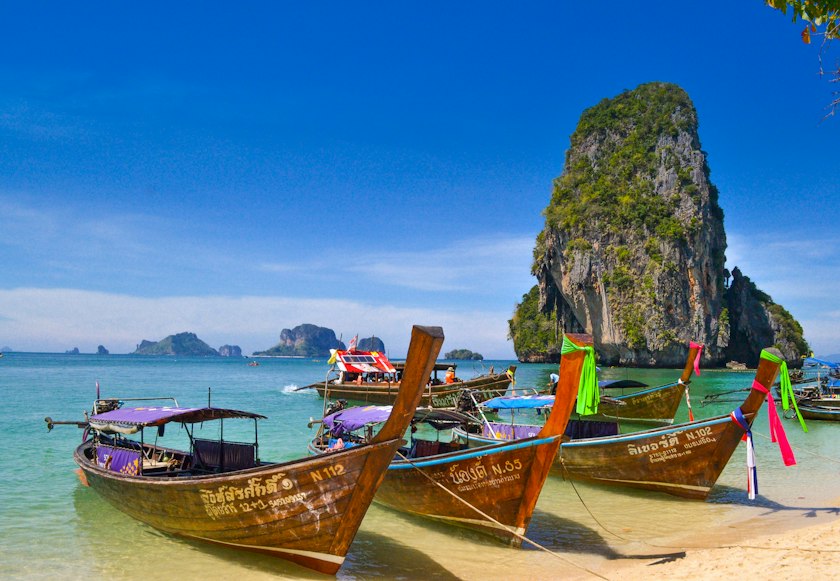
Long-tail boats moored below the limestone karsts of Krabi

Why Thailand works for Muslim travellers

Around 5-6% of Thais are Muslim - roughly four million people - concentrated in the deep south and along the Andaman coast, with established communities in Bangkok. CICOT certification is well organised and widely displayed.

Muslim population
~5-6%
Around four million, mostly Sunni Shafi'i Malay-speaking in the far south, with Cham, Persian-descended and South Asian communities in Bangkok.
Certification body
CICOT
The Central Islamic Council of Thailand certifies restaurants, factories and hotels. Its green logo with Thai and Arabic script is widely displayed.
Language
Thai
English is reasonable in tourist areas and poor elsewhere. Malay is spoken in the far south.
Visa
Visa exemption, 30-60 days
Visa exemption for around 90 nationalities including the GCC, UK, EU, US and Malaysia. Check the current length, which has changed recently.
Currency
Thai baht (THB)
Around 33-36 to the US dollar. Cash is still important at markets and small restaurants.
Best months
November-February
Cool, dry season. March to May is very hot; June to October is the rainy season, heaviest on the Andaman coast.

Massaman and the Muslim kitchen

Massaman curry came from Persian Muslim traders in 17th-century Ayutthaya - the cardamom, cinnamon and cloves are not Thai. Khao mok gai, mataba and Thai-Muslim roti are all part of the same inheritance.

CICOT certification

The Central Islamic Council certifies thousands of restaurants and producers and its logo is well recognised. Thailand is one of the largest halal food exporters in the world.

A Muslim-majority Andaman coast

Krabi province is roughly 40% Muslim and Phuket around 35%. Halal restaurants, village mosques and Muslim-run boat operators are normal along that coast rather than exceptional.

Bangkok's Muslim quarters

Ban Krua, the Cham weavers' village on the canal; the Haroon community by the river; and the Ramkhamhaeng and Nana districts, each with mosques and a street of halal restaurants.

Cheap and well set up

Thailand has the best tourism infrastructure in Southeast Asia at some of the lowest prices - a good hotel is THB 1,500-3,000 and a meal THB 60-150.

Easy to reach and combine

Bangkok is a major hub, and Thailand pairs easily with Malaysia, which is a short flight or a train ride from the southern border.

Know before you go

Nine days: Bangkok, Chiang Mai and the Andaman coast

Three days in Bangkok with its Muslim quarters, two in Chiang Mai, and four on the Krabi coast, where halal food is straightforward. Internal flights are 75-90 minutes and cheap.

1Day

Bangkok: the river and the old city

Grand Palace - Wat Pho - Chao Phraya

morning
The Grand Palace and Wat Phra Kaew at opening, before the heat. Dress code is enforced - covered shoulders and knees for everyone.
afternoon
Wat Pho and the reclining Buddha, then the Chao Phraya express boat upriver, which is the best and cheapest way to see the city.
evening
Ton Son Mosque, founded in 1688 and the oldest in Bangkok, on a canal near the river - built by Persian Muslim settlers in the Ayutthaya period. Dinner in the Haroon community nearby.
The Haroon village beside the Old Customs House is a small riverside Muslim quarter with a mosque and a handful of home-style halal restaurants.
2Day

Bangkok: Muslim quarters and markets

Ban Krua - Jim Thompson House - Nana

morning
Ban Krua, a Cham Muslim village on the Saen Saep canal settled in the 1780s, whose weavers supplied Jim Thompson's silk business. The Jim Thompson House is on the opposite bank.
afternoon
Chatuchak weekend market if it is Saturday or Sunday - 15,000 stalls - or the Bangkok National Museum if it is not.
evening
Sukhumvit Soi 3 and 3/1, Bangkok's Arab and South Asian quarter, with dozens of Lebanese, Egyptian, Pakistani and Indian halal restaurants around the Nana intersection.
Ban Krua's Ton Son and Jamiul Khoir mosques are still the centre of a working community, and the silk workshops still operate.
3Day

Bangkok: Ayutthaya day trip

Ayutthaya - Persian quarter history

morning
Train or minivan to Ayutthaya, the Siamese capital sacked in 1767, now a UNESCO park of brick temples and a Buddha head grown into a tree root.
afternoon
Ayutthaya had a substantial Persian Muslim community - the Bunnag family, descended from a Persian merchant, became one of Siam's most powerful dynasties, and massaman curry came from that quarter.
evening
Back to Bangkok. Dinner on Soi Ramkhamhaeng 53, a street of halal restaurants near the Ramkhamhaeng Muslim community.
The Persian envoy Ibn Muhammad Ibrahim wrote an account of Ayutthaya in 1685 that is still one of the best sources on the city.
4Day

Chiang Mai: the old city

Old city temples - Ban Ho Mosque - night bazaar

morning
Fly north (75 min). The old city inside its moat and walls, with Wat Chedi Luang and Wat Phra Singh.
afternoon
Ban Ho Mosque, built by Chinese Muslim (Hui) traders from Yunnan who came down the caravan routes, with a Chinese-influenced design and a Yunnanese Muslim community still around it.
evening
The halal street on Charoenprathet Soi 1 beside Ban Ho Mosque - Yunnanese Muslim noodles, khao soi and roti. Then the night bazaar.
Khao soi, Chiang Mai's signature curry noodle dish, came with the same Yunnanese Muslim traders and the halal versions on this street are the original form.
5Day

Chiang Mai: mountains and elephants

Doi Suthep - ethical elephant sanctuary

morning
Doi Suthep, the temple on the mountain above the city, reached by 306 naga-flanked steps, with a view over the whole valley.
afternoon
An ethical elephant sanctuary - choose one that does not offer riding or bathing shows. Several north of the city are properly run.
evening
Back to Chiang Mai. The Saturday and Sunday walking streets are the best markets in the country.
Chiang Mai is cooler than Bangkok and much easier to walk around.
6Day

To Krabi

Ao Nang - Railay - Muslim villages

morning
Fly south to Krabi (2 hours). The province is around 40% Muslim, so halal restaurants and village mosques are ordinary rather than exceptional.
afternoon
Railay, reached only by long-tail boat, with limestone cliffs dropping straight into the sea and some of the best rock climbing in Asia.
evening
Ao Nang has a strip of bars; the Muslim fishing villages either side of it do not. Dinner at a halal restaurant in Ao Nang or Krabi town.
Many Krabi boat operators are Muslim-run and will not have alcohol on board - worth asking when booking.
7Day

Islands and karsts

Four Islands - Hong Islands - Phra Nang

morning
The Four Islands tour by long-tail - Chicken Island, Tup Island and the sandbar that appears at low tide between them.
afternoon
Or the Hong Islands for the lagoon, which is calmer and less crowded.
evening
Sunset at Phra Nang beach beneath the cliff, then back to Ao Nang.
Modest swimwear is entirely normal on Krabi's beaches, which have a strong local Muslim presence alongside the visitors.
8Day

Inland Krabi

Emerald Pool - hot springs - Tiger Cave

morning
The Emerald Pool and the Blue Pool in the Khao Phra Bang Khram reserve - spring-fed pools in rainforest, an hour inland.
afternoon
The hot springs waterfall nearby, where thermal water runs over smoothed rock into cool pools.
evening
Tiger Cave Temple - 1,260 steps to a summit with a 360-degree view over the karst landscape. Start at 4pm; it is a serious climb.
Krabi town's night market by the river is entirely walkable and has a good halal section.
9Day

Phuket or home

Phuket Old Town - Bang Tao - airport

morning
Two hours by road to Phuket, which is around 35% Muslim, or fly home from Krabi.
afternoon
Phuket Old Town - Sino-Portuguese shophouses in pastel colours, with a good halal food cluster and the Central Mosque a short ride away.
evening
Bang Tao and the northern beaches are quieter and have several Muslim-friendly resorts; Patong is the nightlife strip and is best avoided if that is not what you want.
Phuket International has direct flights to the Gulf, Malaysia and much of Asia.

Shorter and longer versions

Mosques and Islamic sites in Thailand

Thailand has around 4,000 mosques, the great majority in the southern provinces. Bangkok's are mostly small neighbourhood mosques at the heart of specific historic communities, and visitors are generally welcome outside prayer times.

Ton Son Mosque Bangkok 1688, oldest

Founded in 1688 by Persian Muslim settlers, making it the oldest mosque in Bangkok. On the Bangkok Yai canal near the river, in a quiet riverside Muslim quarter.

Haroon Mosque Bangkok Riverside community

The centre of a small riverside Muslim village behind the Old Customs House, founded by an Indonesian trader in the 19th century. Lanes of wooden houses and a handful of home-style halal kitchens.

Bang Luang Mosque Bangkok Unusual

Built in the early 19th century in the form of a Thai temple rather than a conventional mosque - a rectangular hall with Thai-style ornament. Architecturally unique.

Ban Krua mosques Bangkok Cham community

Jamiul Khoir and the neighbouring mosques serve the Cham Muslim village settled on the Saen Saep canal in the 1780s, whose weavers made Jim Thompson's silk.

Ban Ho Mosque Chiang Mai Chinese Muslim

Built by Yunnanese Hui Muslim caravan traders in the 1910s, with Chinese architectural elements, and still the centre of Chiang Mai's Chinese Muslim community. The halal street beside it is the best food in the city.

Masjid Klang (Central Mosque) Phuket Provincial

The main mosque of Phuket province, which is around 35% Muslim, in Phuket Town. Green-domed and modern.

Krabi Central Mosque Krabi Town Provincial

The provincial mosque of a province that is roughly 40% Muslim, with village mosques along the whole coast and on the islands.

Darul Aman Mosque Bangkok Ramkhamhaeng

The centre of the Ramkhamhaeng Muslim community in eastern Bangkok, surrounded by the halal restaurants of Soi Ramkhamhaeng 53.

Masjid Jamiul Islam Bangkok Nana

Near the Sukhumvit Soi 3 Arab quarter, serving the South Asian and Middle Eastern communities of that district.

Pattani Central Mosque Pattani Deep south

The largest mosque in Thailand, in the Malay-Muslim heartland. Note that most governments advise against travel to Pattani, Yala and Narathiwat due to the ongoing insurgency.

Islamic heritage and museums

Ban Krua Bangkok Cham village

A Cham Muslim community settled on the Saen Saep canal in the 1780s after fighting for King Taksin. Its weavers supplied Jim Thompson's silk company and a few looms still work.

Ayutthaya Central Thailand UNESCO

The Siamese capital from 1350 to 1767, which had a substantial Persian Muslim quarter. The Bunnag family, descended from a Persian merchant, became one of Siam's most powerful dynasties, and massaman curry originated in that community.

Jim Thompson House Bangkok Museum

Six teak houses assembled by the American who revived the Thai silk industry, directly across the canal from the Ban Krua Muslim weavers who made the cloth.

Phuket Old Town Phuket Shophouses

Sino-Portuguese shophouses in pastel colours from the tin-mining boom, with a mixed Chinese, Muslim and Peranakan heritage.

Chiang Mai old city North Walled city

A moated square of temples and lanes, founded in 1296 as the capital of the Lanna kingdom. The Yunnanese Muslim quarter grew up on the caravan route outside it.

Bangkok National Museum Bangkok Collection

The largest museum in Southeast Asia, covering Thai history from prehistory to the Chakri dynasty, including the Ayutthaya period and its foreign communities.

What to eat in Thailand - and where

Thai-Muslim cooking is a distinct tradition, not an adaptation - massaman, khao mok gai and mataba came with Persian, Indian and Malay traders centuries ago. Look for the CICOT logo, or eat in the Muslim quarters.

Dishes worth planning a day around

Massaman curry

Cardamom, cinnamon, cloves and star anise in a mild coconut curry with beef or chicken and potato. Brought by Persian Muslims to Ayutthaya in the 17th century - the name derives from 'Mussulman'.

Khao mok gai

Thai biryani - turmeric rice steamed with chicken, served with a green coriander sauce and fried shallots. The signature Thai-Muslim dish.

Mataba

The Thai version of murtabak - roti stuffed with spiced minced beef or chicken and egg, folded and griddled, served with cucumber pickle.

Roti and roti kluay

Thin pancake fried on a hot plate, either plain with condensed milk and sugar or stuffed with banana. Street food across the south and in Bangkok's Muslim quarters.

Khao soi

Northern Thai curry noodles with crisp noodles on top, brought to Chiang Mai by Yunnanese Muslim caravan traders. The halal versions on Charoenprathet Soi 1 are the original.

Tom yum

Hot and sour soup with lemongrass, galangal, lime leaf and chilli. Fine at CICOT-certified restaurants; the ordinary version often uses non-halal stock.

Gaeng kiew wan

Green curry with coconut milk, Thai basil and aubergine. Halal versions are widely available at certified restaurants.

Pad thai

Stir-fried rice noodles with tamarind, egg and peanuts. Commonly made with lard or non-halal additions in ordinary restaurants - use certified versions.

Satay

Thai satay is turmeric-heavy and served with peanut sauce and a cucumber relish. A Muslim dish in origin, and widely available halal.

Khanom jeen nam ya

Fermented rice noodles with a fish curry sauce and a tray of raw vegetables. Southern Thai, and frequently halal in Muslim areas.

Andaman seafood

Krabi and Phuket grill the day's catch - snapper, squid, prawns - with lime, garlic and chilli. Muslim-run restaurants along the coast do it best.

Cha yen and nam manao

Thai iced tea, orange and very sweet, and fresh lime soda. Both are everywhere and neither contains anything questionable.

Restaurants

Muslim Restaurant Charoen Krung, Bangkok Halal

Open since the 1940s near the Old Customs House, doing biryani, mataba and curries in a room that has barely changed. The best-known halal restaurant in central Bangkok.

Yusup Pochana Ramkhamhaeng, Bangkok Halal

A large open-air Thai-Muslim restaurant that is a local institution, serving khao mok gai, massaman and southern dishes until late.

Home Cuisine Islamic Restaurant Charoen Krung, Bangkok Halal

Home-style Thai-Muslim cooking near the river in the Haroon area, with the day's dishes laid out on the counter.

Sukhumvit Soi 3 and 3/1 Nana, Bangkok Halal cluster

Bangkok's Arab and South Asian quarter - dozens of Lebanese, Egyptian, Pakistani and Indian restaurants within a few hundred metres, most open very late.

Soi Ramkhamhaeng 53 Bangkok Halal cluster

A street of Thai-Muslim restaurants and shops near the Darul Aman mosque in eastern Bangkok. Far from the tourist areas and the real thing.

Ban Krua khao soi and noodle shops Bangkok Halal

Small kitchens in the Cham village on the canal, serving what the community eats. Reached on foot from the National Stadium BTS.

Khao Soi Islam Charoenprathet Soi 1, Chiang Mai Halal

Yunnanese Muslim khao soi beside Ban Ho Mosque, in the form the dish originally took. A few dozen baht and excellent.

Halal street, Charoenprathet Soi 1 Chiang Mai Halal cluster

A lane of Yunnanese Muslim restaurants, roti stalls and bakeries beside the mosque - the best concentration of halal food in northern Thailand.

Fatima Restaurant Chiang Mai Halal

Thai-Muslim and Indian dishes in the old city area, long established and reliable.

Ao Nang and Krabi Town halal restaurants Krabi Halal

Krabi province is around 40% Muslim, so halal restaurants are common in both Ao Nang and Krabi Town. The night market by the river in Krabi Town has a good halal section.

Phuket Old Town halal cluster Phuket Halal

Several Thai-Muslim and Indian restaurants around the old town and near the Central Mosque, in a province that is roughly 35% Muslim.

Al Hussein and Shahrazad Nana, Bangkok Halal

Long-running Middle Eastern restaurants on Soi 3/1 doing mezze, grills and shisha, open until the small hours.

Sinthorn Steak House halal branches Bangkok CICOT certified

Several Bangkok chains now hold CICOT certification, which makes eating in malls straightforward - check the directory for the halal logo.

Koh Lanta Muslim village restaurants Koh Lanta Halal

The island has a large Muslim population and the village restaurants on the east coast serve southern Thai Muslim food away from the resort strip.
Watch out for:
  • Pork and lard are everywhere in mainstream Thai cooking, including in dishes that sound vegetarian. Pork stock is common in noodle soups.
  • Fish sauce and shrimp paste are central to Thai flavour. Most scholars accept them; some travellers prefer certified versions where the production chain is documented.
  • Pad thai, tom yum and green curry in ordinary restaurants frequently contain non-halal ingredients. CICOT-certified versions of all three are widely available.
  • A halal sign without a CICOT certificate number is not certification. In the Muslim quarters it is usually reliable; in tourist areas, less so.
  • Alcohol is served almost everywhere and Thailand's beer and cocktail culture is pervasive. Muslim-run restaurants and boat operators generally do not serve it.

Prayer, dress and practicalities

Around 4,000 mosques nationwide, concentrated in the south. Bangkok's are in specific neighbourhoods rather than spread evenly, so plan around them or use hotel rooms.

WherePrayer facilities
Suvarnabhumi and Don Mueang airportsPrayer rooms in both Bangkok airports, airside and landside, with ablution facilities. Phuket and Krabi airports also have them.
Bangkok Muslim quartersBan Krua, Haroon, Nana and Ramkhamhaeng each have working mosques at their centre, open for the five prayers.
Shopping mallsSeveral Bangkok malls have prayer rooms - Terminal 21, MBK and Siam Paragon among them. Ask at information; signage is limited.
Krabi and PhuketVillage mosques along the whole Andaman coast, in provinces that are 35-40% Muslim. Prayer facilities at both airports and at many hotels.
Chiang MaiBan Ho Mosque on Charoenprathet Soi 1 is the main one, with the halal street beside it.
HotelsQibla markers are not standard. Muslim-friendly hotels on the Andaman coast provide mats and markers; elsewhere, ask or use a compass app.
Motorway service areasProvision is inconsistent. In the south, PTT stations often have a small prayer room; in the north and centre, rarely.

Practical notes

Where to stay in Thailand

In Bangkok, the district matters for both food and atmosphere. On the coast, the difference between a quiet Muslim-majority beach and a nightlife strip can be a few kilometres.

Sukhumvit (Nana to Asok) Bangkok Halal food

On the BTS, with the Soi 3 Arab quarter and dozens of halal restaurants nearby. Note that Nana and Soi Cowboy are also nightlife areas - check the exact street.

Riverside and Charoen Krung Bangkok Quiet

Near the Haroon Muslim village and the old customs district, with river boats to the Grand Palace and a calmer atmosphere than Sukhumvit.

Silom and Sathorn Bangkok Central

The business district, on both the BTS and MRT, with good hotels and easy access across the city.

Chiang Mai old city and Nimman Chiang Mai Walkable

Inside the moat for the temples and markets, or Nimman for cafés and a younger scene. Ban Ho Mosque and the halal street are between the two.

Ao Nang Krabi Beach

The main Krabi beach town, with boats to Railay and the islands, a wide choice of hotels and several halal restaurants. There is a bar strip; the ends of the beach are quieter.

Krabi Town Krabi Local

Not on a beach but far cheaper, with the night market, the provincial mosque and a strongly local feel. Twenty minutes from Ao Nang.

Koh Lanta Andaman Quiet island

Long beaches, a large Muslim population, minimal nightlife and a slow pace. The best Andaman choice if you want quiet.

Bang Tao and Nai Yang Phuket Quiet beach

The northern Phuket beaches, resort-oriented and far calmer than Patong, with several properties used to Gulf guests.

Beaches, pools and leisure

What a halal-friendly trip to Thailand costs

One of the best-value destinations in Asia, with the beaches costing more than the cities. All figures are per person per day unless stated, excluding international flights.

ItemBudgetMid-rangePremium
AccommodationTHB 700-1,200THB 1,800-3,500THB 9,000+
Food (3 meals)THB 200-350THB 600-1,000THB 2,500+
Local transportTHB 60-150 (BTS)THB 300-600 (Grab)THB 2,500 (car and driver)
AttractionsTHB 100-300THB 500-900THB 2,000+
Island day tour (pp)THB 700-1,000 (shared)THB 1,500-2,500THB 8,000+ (private boat)
Daily total per personTHB 1,100-1,800THB 3,000-5,500THB 15,000+

Best time to visit Thailand

Three seasons in the centre and north, and two different monsoon cycles on the two coasts - which means somewhere in Thailand is always in season.

PeriodWeatherVerdict for a halal trip
November-February22-32C, dryThe best window nationwide. Cool in Chiang Mai, dry on both coasts, and peak prices on the beaches.
March-May33-40CVery hot, with Songkran in mid-April - the water festival, which is genuinely enormous. Burning season affects air quality in the north in March.
June-October28-33C, wetThe Andaman coast's rainy season - Krabi and Phuket get heavy rain and rough seas, with the lowest prices of the year. Bangkok floods occasionally.
Gulf coast (Koh Samui)Different cycleSamui and the Gulf islands are driest from February to August and wettest in October and November - the opposite of the Andaman.
Travelling during Ramadan: Thailand's Muslim minority fasts but the country continues normally - restaurants stay open, nothing closes, and there is no restriction on daytime eating. In Krabi, Phuket and the southern provinces, the Muslim neighbourhoods run Ramadan evening markets that are worth seeking out, and the mosques fill for taraweeh. Bangkok's Muslim quarters - Ban Krua, Haroon and Ramkhamhaeng - hold iftar gatherings and street stalls. Eid al-Fitr (Hari Raya) is a provincial holiday in the four southern Muslim-majority provinces but a normal working day elsewhere.

Thailand halal travel FAQ

The questions Muslim travellers ask most often before booking.

Is it hard to eat halal in Thailand?
Harder than Malaysia, easier than Japan. Mainstream Thai cooking uses pork and lard heavily, so you cannot order freely. But CICOT certifies thousands of restaurants, Bangkok has several Muslim quarters with clusters of halal food, and Krabi and Phuket are 35-40% Muslim, where halal restaurants are ordinary.
Is massaman curry really a Muslim dish?
Yes. It came from Persian Muslim traders in 17th-century Ayutthaya - the cardamom, cinnamon, cloves and star anise are not part of the Thai spice repertoire, and the name derives from 'Mussulman'. Khao mok gai (Thai biryani) and mataba have the same origin.
Which beach should I choose?
Krabi - Ao Nang, Railay or Koh Lanta - for a Muslim-majority province with halal food, quiet beaches and Muslim-run boat operators. Phuket's northern beaches (Bang Tao, Nai Yang) are the alternative. Avoid Patong unless the nightlife is what you want.
Should I go to the deep south?
No, despite it being Thailand's Muslim heartland. Pattani, Yala and Narathiwat have an ongoing insurgency and most governments advise against all but essential travel. Krabi, Phuket, Satun and Koh Lanta give you a Muslim-majority coastal Thailand without that.
What about fish sauce and shrimp paste?
Both are fundamental to Thai cooking and most scholars consider them permissible - they are fermented fish rather than anything prohibited. Travellers who prefer full certainty should use CICOT-certified restaurants, where the whole supply chain is documented.
Are there prayer rooms at the attractions?
Inconsistently. Both Bangkok airports, Phuket and Krabi airports and several Bangkok malls have them; most temples and tourist sites do not. In Krabi and Phuket, village mosques are common. Elsewhere, plan around hotel rooms.
Is Thailand suitable for a family trip?
Very - it has the best tourism infrastructure in Southeast Asia at low prices, the beaches are shallow and calm, and Thais are famously good with children. The planning effort goes into food and into choosing beach areas away from the nightlife strips.
How does the cost compare with Malaysia?
Broadly similar for food and transport, somewhat higher for beach accommodation in high season. Thailand's advantage is variety and infrastructure; Malaysia's is that you never have to think about whether a restaurant is halal.