Halal Travel Guides / United States

🇺🇸Halal Travel Guide to the United States

There are around four million Muslims in the United States, and the country's Muslim history is older than most visitors realise - a significant proportion of enslaved West Africans were Muslim, the first purpose-built mosque still standing dates from 1934 in Iowa, and Malcolm X's Harlem is a pilgrimage in itself. Practically, the halal scene is superb in specific places: Dearborn outside Detroit, Jackson Heights and Atlantic Avenue in New York, Devon Avenue in Chicago, Hillcroft in Houston. Between those places, it thins out fast.

Last updated: 20 September 2026
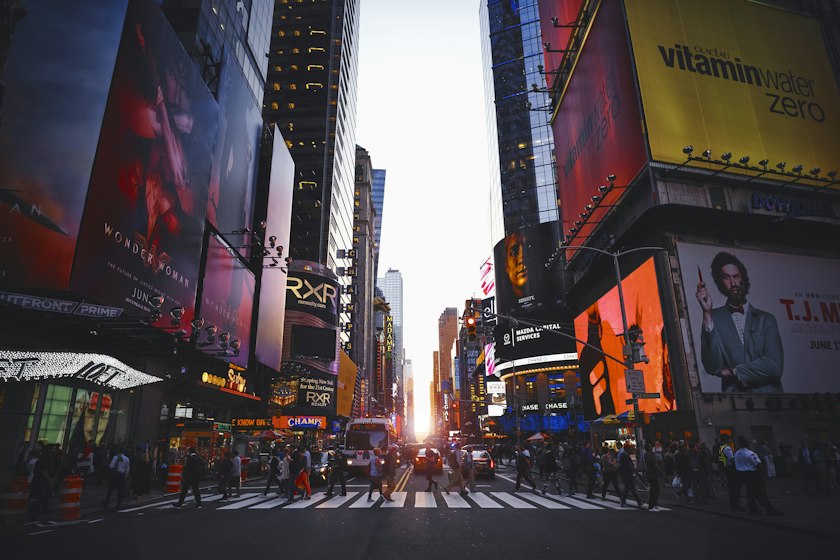
The Manhattan skyline seen from across the East River at dusk

Why United States works for Muslim travellers

Around 1.1% of the population - roughly 4 million people - but extremely concentrated. South Asian, Arab, African American, West African, Somali, Bosnian and Turkish communities each have their own districts and cuisines.

Muslim population
~1.1%
Around four million. Roughly a fifth are African American, with large South Asian, Arab, West African, Somali and Bosnian communities concentrated in specific metropolitan areas.
Certification bodies
IFANCA, HMS, others
No single scheme. IFANCA's crescent-M is the most widely seen on packaged food. Restaurants are mostly community-known rather than formally certified.
Language
English
No barrier. Spanish is widely spoken; Arabic, Urdu and Bengali in the Muslim districts.
Visa
ESTA or visa
Visa Waiver Program countries apply for an ESTA online. Most others, including several Gulf states, need a full B1/B2 visa with an interview - apply months ahead.
Currency
US dollar (USD)
Cards everywhere. Tipping of 18-22% is expected in restaurants and is effectively part of the price.
Best months
Apr-Jun, Sep-Oct
Spring and autumn in the northeast and Midwest. Summers are hot and humid; winters in Chicago and New York are severe.

Dearborn

The most concentrated Arab American community in the United States - roughly half the city's population is of Arab descent, mostly Lebanese, Yemeni and Iraqi, with entire avenues of halal bakeries, butchers and restaurants.

The Met's Islamic wing

Fifteen galleries covering the Arab lands, Turkey, Iran, Central Asia and South Asia, including the Damascus Room - an entire 18th-century Syrian reception room reassembled. Among the best collections anywhere.

The halal cart

Chicken and rice with white sauce from a street cart, a New York institution created by Egyptian and Afghan vendors serving Muslim taxi drivers in the 1990s and now eaten by everyone.

Malcolm X's Harlem

The Masjid Malcolm Shabazz on 116th Street, the Malcolm Shabazz Harlem Market, and the Audubon Ballroom where he was killed, now the Shabazz Memorial Center.

A longer history than expected

The Mother Mosque of America in Cedar Rapids, Iowa, built in 1934, is the oldest surviving purpose-built mosque in the US. The Islamic Center of America in Dearborn is the largest in North America.

Every Muslim cuisine in one country

Yemeni in Dearborn and Brooklyn, Bangladeshi in Jackson Heights, Senegalese in Harlem, Somali in Minneapolis, Bosnian in St Louis, Pakistani in Devon Avenue Chicago.

Know before you go

Ten days: New York, Washington, Detroit and Chicago

The eastern halal corridor. New York and Washington by train, then fly to Detroit for Dearborn and on to Chicago. Each has a distinct Muslim community and cuisine.

1Day

New York: Midtown and the Met

Central Park - Metropolitan Museum - Midtown

morning
Arrive in New York. Central Park and the walk up to the Metropolitan Museum on the east side.
afternoon
The Met's Islamic art galleries - fifteen rooms covering the Arab lands, Turkey, Iran, Central Asia and South Asia, including the Damascus Room, an 18th-century Syrian reception room reassembled in full.
evening
A halal cart - the Halal Guys on 53rd and 6th is the original and the queue is part of it. Chicken and rice, white sauce, red sauce used sparingly.
The Met's Islamic wing reopened in 2011 after eight years of reinstallation and is one of the finest such collections in the world.
2Day

New York: Downtown and Brooklyn

Statue of Liberty - 9/11 Memorial - Atlantic Avenue

morning
The Staten Island Ferry - free, and it passes the Statue of Liberty - or the ferry to Liberty Island itself, booked ahead.
afternoon
The 9/11 Memorial and Museum, then the walk across Brooklyn Bridge at sunset.
evening
Atlantic Avenue in Brooklyn - the historic Arab American quarter, with Yemeni, Palestinian and Syrian restaurants, Sahadi's grocery since 1948, and bakeries.
Atlantic Avenue has been the centre of Arab Brooklyn since the 1890s, when Syrian and Lebanese immigrants settled in what was called Little Syria in Manhattan and later moved across the river.
3Day

New York: Harlem and Queens

Masjid Malcolm Shabazz - Harlem - Jackson Heights

morning
Masjid Malcolm Shabazz on 116th Street in Harlem, with its green dome, where Malcolm X was minister. The Malcolm Shabazz Harlem Market beside it sells West African cloth, carvings and food.
afternoon
Harlem - the Apollo Theater, the Schomburg Center for Research in Black Culture, and Little Senegal on 116th Street with its Senegalese and Malian restaurants.
evening
Jackson Heights, Queens - the largest South Asian district in the city, with Bangladeshi, Pakistani, Indian and Tibetan food along 74th Street and Roosevelt Avenue.
Queens is the most linguistically diverse place on earth, with over 130 languages spoken. Jackson Heights is its centre.
4Day

Washington DC

National Mall - Islamic Center - Smithsonian

morning
Train to Washington (3h15 on Amtrak). The National Mall - the Lincoln Memorial, the Washington Monument and the Reflecting Pool.
afternoon
The Smithsonian museums, all free - the National Museum of African American History and Culture is the one to prioritise, and it covers the Muslim presence among enslaved West Africans.
evening
The Islamic Center of Washington on Massachusetts Avenue, opened in 1957 with a 49-metre minaret and an interior of Turkish tile and Egyptian woodwork. It welcomes visitors.
The Islamic Center was the first purpose-built mosque in Washington and every US president since Eisenhower has acknowledged it in some form.
5Day

Washington and Virginia

Capitol - Georgetown - halal in Virginia

morning
The Capitol (free tours, booked ahead) and the Library of Congress, whose main reading room is one of the great interiors in America.
afternoon
Georgetown and the C&O canal towpath, or Arlington National Cemetery across the river.
evening
Northern Virginia - Falls Church and Annandale - has a large Afghan, Pakistani and Arab community with excellent halal restaurants, twenty minutes from the Mall.
The DC metropolitan area has one of the largest and most diverse Muslim populations in the country, concentrated in northern Virginia and Maryland rather than the District.
6Day

Fly to Detroit: Dearborn

Islamic Center of America - Warren Avenue

morning
Fly to Detroit (90 minutes). Dearborn is fifteen minutes from the airport and roughly half its population is of Arab descent - the highest concentration in the United States.
afternoon
The Islamic Center of America, the largest mosque in North America, and the Arab American National Museum, the only museum in the country devoted to Arab American history.
evening
Warren Avenue and Michigan Avenue - Lebanese, Yemeni and Iraqi restaurants, bakeries and butchers for mile after mile. Shatila Bakery, Al-Ameer and the Yemeni coffee houses.
Dearborn's community dates to the 1910s, when Ford's Rouge plant recruited Lebanese and Syrian workers for the assembly line.
7Day

Detroit

Detroit Institute of Arts - Motown - Eastern Market

morning
The Detroit Institute of Arts, which holds Diego Rivera's Detroit Industry murals, and one of the great American collections.
afternoon
The Motown Museum in the house where Hitsville USA recorded, or the Eastern Market if it is a Saturday.
evening
Back to Dearborn for dinner, or Hamtramck - a small city within Detroit with a large Yemeni and Bangladeshi population and the first majority-Muslim city council in the United States.
Hamtramck was historically Polish and is now majority Muslim - one of the more striking demographic stories in urban America.
8Day

Chicago

Art Institute - Millennium Park - Devon Avenue

morning
Fly or drive to Chicago (4h30 by road, 1h by air). The Art Institute and Millennium Park with the Bean.
afternoon
The Chicago Architecture Center river cruise, which is the best way to understand the city that invented the skyscraper.
evening
Devon Avenue in West Ridge - the Midwest's largest South Asian commercial district, with Pakistani, Indian and Bangladeshi restaurants, sweet shops and grocers for a mile.
Devon Avenue's street signs carry honorary names including Gandhi Marg and Mohammed Ali Jinnah Way on adjacent blocks.
9Day

Chicago

Willis Tower - Bronzeville - Mosque Maryam

morning
The Willis Tower Skydeck or the 360 Chicago observatory, and the lakefront path.
afternoon
Bronzeville, the historic centre of Black Chicago, and Mosque Maryam on the South Side, the headquarters of the Nation of Islam, in a former Greek Orthodox church.
evening
Halal deep dish exists - several Chicago pizzerias offer halal meat versions - or back to Devon Avenue.
Chicago has one of the oldest and largest African American Muslim communities in the country, with roots in the Nation of Islam and the Sunni communities that grew from it.
10Day

Home, or onward

Chicago - or Houston, Minneapolis, Los Angeles

morning
Fly home from Chicago, or continue - Houston's Hillcroft Avenue, Minneapolis's Cedar-Riverside Somali community, or Los Angeles and Anaheim's Little Arabia.
afternoon
Anaheim's Little Arabia on Brookhurst Street was officially designated in 2022 and has the largest Arab American community on the west coast.
evening
Fly out. All major US airports have interfaith chapels or meditation rooms; several now have dedicated prayer spaces.
If you have more time, the choice is really between adding a second region and seeing one properly. The US does not reward rushing.

Shorter and longer versions

Mosques and Islamic sites in United States

The United States has around 2,800 mosques. Several are historically significant, and many participate in open-house programmes. The African American Muslim tradition and the immigrant communities have distinct institutional histories.

Islamic Center of America Dearborn, Michigan Largest in North America

Opened in 2005, the largest mosque in North America, serving a substantial Shia Lebanese congregation. The community's roots go back to the Ford Rouge plant recruitment of the 1910s.

Masjid Malcolm Shabazz Harlem, New York Malcolm X

The green-domed mosque on 116th Street where Malcolm X served as minister when it was Temple No. 7, later becoming a Sunni congregation. The Harlem Market beside it sells West African goods.

Islamic Center of Washington Washington DC 1957

On Massachusetts Avenue, with a 49-metre minaret, Turkish Iznik tile and Egyptian woodwork. The first purpose-built mosque in the capital, and it welcomes visitors.

Mother Mosque of America Cedar Rapids, Iowa 1934, oldest standing

Built in 1934 by Lebanese and Syrian immigrant families, and the oldest surviving purpose-built mosque in the United States. Restored and open as a mosque and heritage site.

Islamic Cultural Center of New York Manhattan 1991

On 96th Street and Third Avenue, the first purpose-built mosque in Manhattan, designed by SOM with a dome and a freestanding minaret, aligned to the qibla rather than the street grid.

Mosque Maryam Chicago Nation of Islam

A former Greek Orthodox church on the South Side, now the national headquarters of the Nation of Islam. A significant site in African American religious history.

Dar al-Hijrah Falls Church, Virginia Large

One of the largest mosques in the Washington area, serving northern Virginia's substantial and diverse Muslim community.

Islamic Society of Boston Cultural Center Roxbury, Boston New England

The largest mosque in New England, serving a diverse congregation including a large student population.

Al-Farooq Masjid Atlanta South

A landmark mosque with a large dome and twin minarets on 14th Street, serving Atlanta's growing and very diverse Muslim community.

King Fahad Mosque Culver City, Los Angeles West coast

A prominent Los Angeles mosque with a tiled minaret, serving one of the largest and most varied Muslim populations in the country.

Islamic Center of Cedar Rapids Iowa Historic community

The community around the Mother Mosque, one of the oldest continuously organised Muslim communities in North America, dating from the 1880s.

Hamtramck mosques Michigan Majority-Muslim city

Hamtramck, a small city entirely surrounded by Detroit, has a large Yemeni and Bangladeshi population and in 2015 elected the first majority-Muslim city council in the United States.

Islamic heritage and museums

Islamic art galleries, Metropolitan Museum New York World class

Fifteen galleries covering the Arab lands, Turkey, Iran, Central Asia and later South Asia, including the Damascus Room - an entire 18th-century Syrian reception room reassembled. Among the best collections anywhere.

Arab American National Museum Dearborn Only one

The only museum in the United States devoted to Arab American history - immigration, labour, the Ford plants, civil rights and contemporary life. Small and excellent.

National Museum of African American History and Culture Washington DC Free

Covers the Muslim presence among enslaved West Africans - estimated by some historians at 15-30% of those transported - alongside the full arc of African American history. Timed passes required.

Schomburg Center Harlem, New York Research

A research library of the New York Public Library devoted to Black history and culture, with significant holdings on African American Islam and on Malcolm X.

Shabazz Memorial Center Harlem, New York Malcolm X

The former Audubon Ballroom, where Malcolm X was assassinated in 1965, now partly preserved as a memorial and educational centre.

Freer and Sackler Galleries Washington DC Free

The Smithsonian's Asian art museums, holding major Persian, Ottoman and Mughal collections including illuminated Qur'ans and the Shahnameh manuscripts. Free, like all Smithsonians.

What to eat in United States - and where

Concentrated and superb. Dearborn for Lebanese and Yemeni, New York for everything, Devon Avenue for Pakistani, Minneapolis for Somali. Between the districts, provision thins fast.

Dishes worth planning a day around

Halal cart chicken and rice

Chopped chicken or lamb over yellow rice with salad, white sauce and a red chilli sauce used sparingly. Created by Egyptian and Afghan vendors in 1990s Manhattan serving Muslim taxi drivers, and now a New York institution.

Yemeni food

Fahsa, saltah, mandi and haneeth, with malawah bread and Yemeni coffee with cardamom. Dearborn, Hamtramck and Brooklyn's Bay Ridge have the best of it, and Yemeni coffee houses have spread nationally.

Lebanese mezze and shawarma

Dearborn's Warren Avenue does Lebanese cooking at a standard that would hold up in Beirut - hummus, tabbouleh, kibbeh, shawarma and manakish.

Pakistani and Indian

Devon Avenue in Chicago, Jackson Heights in Queens, Hillcroft in Houston and Edison in New Jersey - biryani, nihari, haleem, karahi and weekend paya.

Somali food

Suqaar, bariis iskukaris and sambusa in Minneapolis's Cedar-Riverside, which has the largest Somali community in North America.

Senegalese and West African

Thieboudienne, yassa and mafé in Harlem's Little Senegal and in the Bronx - a food culture that is Muslim by default.

Halal soul food

A distinctly African American Muslim tradition - fried fish, bean pie, collards and cornbread - associated with Nation of Islam and later Sunni communities. The bean pie in particular is a specific cultural marker.

Halal burgers and fried chicken

A growing sector - halal smashburger and fried chicken operations have opened across most large US cities in the last decade.

Deep dish and halal pizza

Chicago's deep dish in halal-meat form is available at several pizzerias, and halal pizza is common in New York.

Bosnian food

St Louis has the largest Bosnian community outside Europe - ćevapi, burek and Bosnian coffee on Bevo Mill's main street.

Seafood and steak

American seafood is superb and raises no questions. Halal steakhouses exist in New York, Chicago and Houston for the American beef experience.

Diner breakfast, halal

Halal diners in New York and New Jersey serve the full American breakfast with beef bacon and turkey sausage - pancakes, eggs, hash browns and bottomless coffee.

Restaurants

The Halal Guys 53rd and 6th, New York Halal

The original cart, operating since 1990, now with a global franchise. Chicken and rice with white sauce. The queue is part of it and the original corner is still the best.

Atlantic Avenue Brooklyn, New York Halal district

The historic Arab American quarter - Yemeni, Palestinian and Syrian restaurants, Sahadi's grocery since 1948, and bakeries. The community has been here since the 1890s.

Jackson Heights 74th Street Queens, New York Halal district

Bangladeshi, Pakistani, Indian and Tibetan restaurants and sweet shops. The densest South Asian food in the city and cheap.

Bay Ridge Brooklyn, New York Halal district

Fifth Avenue in Bay Ridge has a large Palestinian, Lebanese and Yemeni community, with bakeries, restaurants and hookah cafés.

Al-Ameer Dearborn, Michigan Halal

A Lebanese restaurant that won a James Beard America's Classics award - shawarma, kibbeh, fattoush and grilled meats. The benchmark in a city full of them.

Shatila Bakery Dearborn, Michigan Halal

Baklava, knafeh and Lebanese pastries made in quantity since 1979, with a café attached. A Dearborn institution and the best sweets in the Midwest.

Warren Avenue Dearborn, Michigan Halal district

Mile after mile of Lebanese, Yemeni and Iraqi restaurants, butchers, bakeries and grocers. The most concentrated halal food in the United States.

Yemeni coffee houses Dearborn, Hamtramck, Brooklyn Halal

Qahwah House and its imitators serve Yemeni coffee with cardamom and ginger alongside pastries, open very late. A genuinely new American café culture.

Devon Avenue West Ridge, Chicago Halal district

A mile of Pakistani, Indian and Bangladeshi restaurants, sweet shops and grocers. Ghareeb Nawaz, Sabri Nihari and the biryani houses are the names.

Little Senegal, 116th Street Harlem, New York Halal

Senegalese and Malian restaurants serving thieboudienne, yassa and mafé beside the Malcolm Shabazz mosque and market.

Hillcroft Avenue Houston Halal district

Houston's South Asian and Middle Eastern corridor, serving one of the fastest-growing Muslim populations in the country.

Cedar-Riverside Minneapolis Halal district

The largest Somali community in North America, with restaurants, the Karmel Mall and a food scene that exists almost nowhere else in the US.

Little Arabia, Brookhurst Street Anaheim, California Halal district

Officially designated in 2022, the largest Arab American commercial district on the west coast, with Syrian, Lebanese, Egyptian and Palestinian restaurants.

Halal steakhouses and burger joints Major cities Halal

A growing sector - halal steakhouses in New York and Chicago, and halal smashburger and fried chicken operations in most large cities.
Watch out for:
  • Pork and alcohol are standard in mainstream American restaurants, and bacon appears in an extraordinary range of dishes including salads and desserts.
  • Certification is fragmented. IFANCA's crescent-M is the most common mark on packaged food; restaurants are mostly community-known rather than certified. A 'halal' sign in a tourist area is not always reliable.
  • Gelatine and rennet are pervasive in American confectionery, marshmallows and cheese. Check labels; halal and kosher marks both help.
  • Between the districts, provision is thin. Rural areas, much of the South and the Mountain West have effectively none - plan on supermarkets, seafood and vegetarian food.
  • Alcohol in cooking is common in mid and high-end American restaurants - in sauces, reductions and marinades.

Prayer, dress and practicalities

Around 2,800 mosques, concentrated in metropolitan areas. Airport prayer rooms and interfaith chapels are common; dedicated facilities elsewhere are less so.

WherePrayer facilities
AirportsMost large US airports have an interfaith chapel or meditation room; several - including Detroit, Dallas, Orlando and JFK - have dedicated prayer spaces with ablution facilities.
MosquesAround 2,800 nationwide, concentrated in New York, Michigan, Illinois, Texas, California, New Jersey and the DC area. Many participate in open-house programmes.
UniversitiesAlmost every US university has a Muslim Students' Association with a prayer room, and most are accessible to visitors.
Shopping mallsRare, but malls in Muslim-majority suburbs - Dearborn, Edison, Devon Avenue - sometimes have them, and Karmel Mall in Minneapolis has a full prayer hall.
HospitalsMost US hospitals have a chapel or meditation room, usually available to anyone.
HotelsQibla markers are not standard. Rooms are the usual option; hotels in Dearborn and other Muslim-majority areas are more likely to accommodate requests.
National parks and rural areasNo facilities. Carry a mat and a compass app. Distances between towns can be very large.

Practical notes

Where to stay in United States

Choose the city, then the neighbourhood. Staying near a halal district in New York or Chicago transforms the trip; in Dearborn the whole city is the district.

Midtown Manhattan New York Central

Central for the Met, Central Park, Times Square and the subway, with halal carts on many corners. Expensive and the default first-visit choice.

Downtown Brooklyn and Bay Ridge New York Halal districts

Cheaper than Manhattan, with Atlantic Avenue's Arab American quarter and Bay Ridge's Palestinian and Yemeni community. Good subway links.

Jackson Heights and Long Island City Queens, New York Value

Far cheaper than Manhattan, on the subway, with the city's densest South Asian food. Long Island City has the Manhattan skyline view.

Dearborn Michigan Halal city

Fifteen minutes from Detroit airport, with the largest concentration of Arab American food and institutions in the country. Hotels are inexpensive.

Washington DC and northern Virginia DC area Museums / halal

The District for the Mall and the free Smithsonians; northern Virginia (Falls Church, Annandale) for the halal restaurants and cheaper hotels, on the metro.

Chicago Loop and River North Chicago Central

The Art Institute, Millennium Park and the river architecture, with Devon Avenue a 40-minute train ride north.

Devon Avenue and West Ridge Chicago Halal district

Cheaper accommodation among the South Asian restaurants and grocers, on the Red Line and bus routes into the city.

Anaheim and Orange County California Halal district

Little Arabia on Brookhurst Street, with Disneyland nearby and a large Arab American community with extensive halal provision.

Beaches, pools and leisure

What a halal-friendly trip to United States costs

Expensive, with New York and the coastal cities the worst of it and tipping adding 18-22% to every restaurant bill. All figures are per person per day unless stated, excluding international flights.

ItemBudgetMid-rangePremium
AccommodationUSD 110-180USD 220-400USD 800+
Food (3 meals, incl. tip)USD 35-60USD 90-160USD 350+
Local transportUSD 8-15 (subway)USD 40-80 (rideshare)USD 400 (car and driver)
AttractionsUSD 0 (Smithsonians)USD 50-110USD 300+
Internal flight (one way)USD 90-160USD 200-350USD 700+
Daily total per personUSD 190-290USD 400-700USD 1,700+

Best time to visit United States

A continental-sized country with every climate. The northeast and Midwest have four sharp seasons; the south and west are different countries entirely.

PeriodWeatherVerdict for a halal trip
April-June15-26C in the northeastThe best window for New York, Washington, Detroit and Chicago. Spring, cherry blossom in DC in late March and April, and comfortable walking weather.
July-August28-35C, humidHot and humid in the east and Midwest, and peak domestic travel season. Air conditioning is universal, which helps.
September-October14-24CThe other excellent window - autumn colour in New England and the Midwest, lower prices and fewer crowds.
November-March-8 to 8C in the northChicago and the Midwest are genuinely severe; New York is cold but manageable. The south and southwest are at their best. Cheapest in the north.
Travelling during Ramadan: The United States continues entirely as normal during Ramadan, since Muslims are a small minority. The visible activity is in the Muslim districts: Dearborn's Warren Avenue, Devon Avenue in Chicago, Jackson Heights and Atlantic Avenue in New York all fill after maghrib, and mosques hold large communal iftars that are frequently open to non-Muslim neighbours. Fasting hours in June run to about sixteen hours in the northern cities. Eid prayers fill convention centres, sports halls and parks in every major metropolitan area, and several cities now hold public Eid festivals. Dearborn's Eid celebrations are among the largest in North America.

United States halal travel FAQ

The questions Muslim travellers ask most often before booking.

Where is the best halal food in America?
Dearborn, Michigan, without much argument - roughly half the city is of Arab descent and Warren and Michigan Avenues are miles of Lebanese, Yemeni and Iraqi restaurants, bakeries and butchers. New York has the greatest variety, Devon Avenue in Chicago the best South Asian, and Minneapolis the only significant Somali food scene in the country.
What is a halal cart?
A street cart selling chopped chicken or lamb over yellow rice with salad, a garlicky white sauce and a very hot red sauce. Created by Egyptian and Afghan vendors in 1990s Manhattan to feed Muslim taxi drivers, and now eaten by everyone. The Halal Guys at 53rd and 6th is the original.
How reliable is halal certification in the US?
Variable. IFANCA's crescent-M is the most widely recognised mark on packaged food and is reliable. Restaurants are mostly community-known rather than formally certified, and a 'halal' sign in a heavily touristed area is not always trustworthy. The Zabihah app, which originated in the US, carries community reviews and is the practical tool.
Is Dearborn worth a detour?
Yes, and it is easy - fifteen minutes from Detroit airport. The Islamic Center of America is the largest mosque in North America, the Arab American National Museum is the only one of its kind, and the food is the best halal in the United States. Hotels are inexpensive.
Do I need a visa?
Visa Waiver Program countries - most of Europe, plus Japan, South Korea, Singapore and others - apply for an ESTA online in minutes. Everyone else, including several Gulf states, needs a full B1/B2 visa with an in-person interview, and wait times at some consulates run to many months. Apply very early.
How much can I see in ten days?
One or two regions. New York to Los Angeles is a six-hour flight and the country is the size of a continent. The eastern corridor - New York, Washington, Detroit, Chicago - works well because the cities are close and each has a distinct Muslim community.
Is the Met's Islamic wing worth it?
Yes. Fifteen galleries reinstalled in 2011 after eight years of work, covering the Arab lands, Turkey, Iran, Central Asia and South Asia, with the Damascus Room - an entire 18th-century Syrian reception room - as the centrepiece. It is among the best Islamic collections in the world.
Is halal food available outside the big cities?
Rarely. Provision is concentrated in specific metropolitan neighbourhoods and thins out fast - rural areas, much of the South and the Mountain West have effectively none. On road trips and in national parks, plan on supermarkets, seafood and vegetarian food. A cool box makes this straightforward.