Halal Travel Guides / Hong Kong

🇭🇰Halal Travel Guide to Hong Kong

Hong Kong has around 300,000 Muslims - Chinese, Pakistani, Indonesian, Indian and Malay - and a community that goes back to the 1840s. The practical headline is that halal dim sum exists here, served in a canteen above a Wan Chai mosque, and it is genuinely good. Beyond that: four mosques including one built in 1849 on the Mid-Levels escalator, a dense halal cluster in Chungking Mansions, and a city that is small, vertical and superbly connected.

Last updated: 20 September 2026
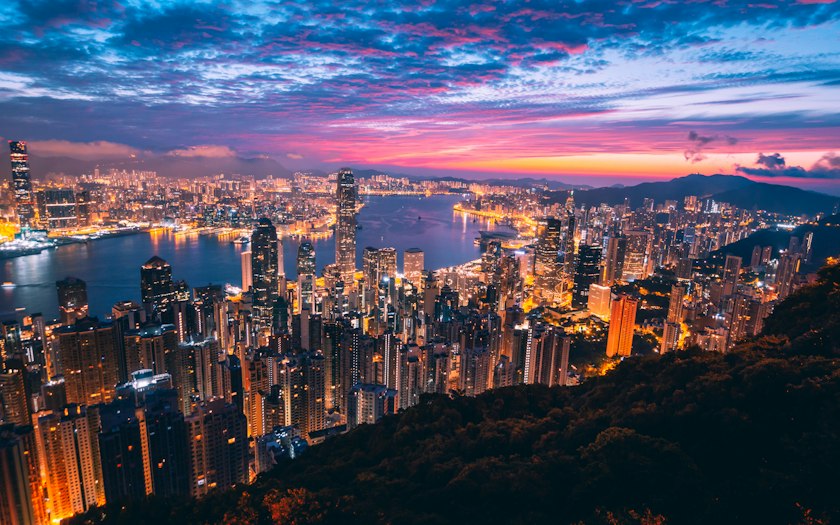
Hong Kong Island skyline and Victoria Harbour at dusk

Why Hong Kong works for Muslim travellers

Around 300,000 Muslims in a population of 7.5 million - Chinese Hui, Pakistani, Indonesian, Indian and Malay. Certification is handled by the Incorporated Trustees of the Islamic Community Fund of Hong Kong.

Muslim population
~300,000
Around 4% - roughly 50,000 Chinese Muslims, 150,000 Indonesian domestic workers, and Pakistani, Indian and Malay communities, some dating to the 1840s.
Certification body
The Trustees
The Incorporated Trustees of the Islamic Community Fund of Hong Kong certify restaurants and food producers and publish the list.
Language
Cantonese + English
English is an official language and is used on all signage and transport. No language barrier for visitors.
Visa
Visa-free for most
Visa-free for 7-180 days for around 170 nationalities, including the GCC, UK, EU, US, Malaysia and Indonesia. Separate from mainland China's visa regime.
Currency
Hong Kong dollar (HKD)
Pegged at around 7.8 to the US dollar. Octopus card covers transport, convenience stores and many restaurants.
Best months
October-December
Dry, mild and clear. Summer is hot, humid and the typhoon season; spring is foggy and damp.

Halal dim sum

The Islamic Centre Canteen on the fifth floor above Masjid Ammar in Wan Chai serves halal dim sum from trolleys. It is the only place of its kind and it is the reason many Muslim travellers come.

A 175-year-old community

Jamia Mosque on Shelley Street dates to 1849 and stands on the Mid-Levels escalator route. Kowloon Masjid in Tsim Sha Tsui is the largest, in white marble on Nathan Road.

The skyline

Victoria Peak, the Star Ferry across the harbour for a few dollars, and the Symphony of Lights. The setting - towers against green mountains against water - is genuinely among the best in the world.

Everything is close

The MTR reaches almost everything, the Star Ferry crosses the harbour in eight minutes, and you can be on a hiking trail twenty minutes from Central.

Chungking Mansions

A 17-storey building in Tsim Sha Tsui that functions as a South Asian and African trading hub, with dozens of halal restaurants and the cheapest beds in the city. Notorious, safe and fascinating.

The best stopover in Asia

Hong Kong International connects almost everywhere and the city is compact enough that two days covers it properly.

Know before you go

Four days in Hong Kong

One day on Hong Kong Island, one in Kowloon, one for Lantau and the Big Buddha, one for the outlying islands or a hike. Everything on the MTR and the ferries.

1Day

Hong Kong Island: Central and the Peak

Jamia Mosque - Mid-Levels escalator - Victoria Peak

morning
Jamia Mosque on Shelley Street, founded in 1849 and rebuilt in 1915, the oldest in Hong Kong - a green and cream building directly beside the Mid-Levels escalator, the longest outdoor covered escalator system in the world.
afternoon
Victoria Peak by the Peak Tram, for the view down over the towers to Kowloon and the harbour. Go late afternoon and stay for the lights.
evening
The Symphony of Lights at 8pm from the Tsim Sha Tsui waterfront, then halal dinner in Wan Chai or Tsim Sha Tsui.
The Mid-Levels escalator runs downhill until 10am and uphill for the rest of the day. Jamia Mosque is a short step off it.
2Day

Wan Chai and halal dim sum

Islamic Centre Canteen - Wan Chai - Star Ferry

morning
Islamic Centre Canteen on the fifth floor of the Masjid Ammar and Osman Ramju Sadick Islamic Centre in Wan Chai - halal dim sum from trolleys, and the single most distinctive meal available to a Muslim traveller in the region. Go before noon.
afternoon
Wan Chai - the Blue House, the old street markets on Tai Yuen Street, and Pacific Place for the malls.
evening
The Star Ferry across Victoria Harbour, which costs a few dollars and is the best-value sightseeing in the city, then the Tsim Sha Tsui promenade.
The canteen is a working community kitchen rather than a restaurant - unglamorous, cheap, and the dim sum is the real thing.
3Day

Kowloon and Lantau

Kowloon Masjid - Big Buddha - Ngong Ping

morning
Kowloon Masjid and Islamic Centre on Nathan Road, the largest mosque in Hong Kong, in white marble with four minarets, holding 3,500 worshippers. Visitors are welcome with prior arrangement.
afternoon
The Ngong Ping cable car on Lantau to the Tian Tan Big Buddha - a 34-metre bronze seated Buddha on a hilltop, reached by 268 steps, with Po Lin Monastery below.
evening
Tai O, a stilt fishing village on Lantau's west coast, for the sunset and the pink dolphin boats. Then back to Kowloon.
The cable car has a glass-floor option and the 25-minute ride over the water and the hills is the best part of the trip.
4Day

Chungking Mansions, markets and a hike

Chungking Mansions - Temple Street - Dragon's Back

morning
Dragon's Back, a ridge walk on the southeast of Hong Kong Island with the sea on both sides, 45 minutes from Central and consistently rated the best urban hike in Asia.
afternoon
Chungking Mansions in Tsim Sha Tsui - dozens of halal South Asian restaurants on the upper floors, currency exchanges, phone shops and guesthouses. Anthropologists have written books about it.
evening
Temple Street night market in Yau Ma Tei, then fly out. The Airport Express reaches the airport in 24 minutes.
Hong Kong International has a prayer room and several halal-certified outlets in the departures area.

Shorter and longer versions

Mosques and Islamic sites in Hong Kong

Hong Kong has five mosques for a Muslim population of around 300,000. Visitors are generally welcome but it is worth calling ahead, particularly at Kowloon Masjid.

Kowloon Masjid and Islamic Centre Tsim Sha Tsui Largest

White marble with four minarets on Nathan Road, built in 1984 on the site of an 1896 mosque serving Muslim soldiers of the British Indian Army. Holds 3,500. Visitors welcome; arrange in advance.

Jamia Mosque Mid-Levels, Central 1849, oldest

Founded in 1849 and rebuilt in 1915, the oldest mosque in Hong Kong, in green and cream on Shelley Street directly beside the Mid-Levels escalator. Small, quiet and easy to miss.

Masjid Ammar and Osman Ramju Sadick Islamic Centre Wan Chai Halal dim sum

A multi-storey Islamic centre with a mosque, a library and, on the fifth floor, the Islamic Centre Canteen serving halal dim sum from trolleys - the best-known halal meal in Hong Kong.

Chai Wan Masjid Chai Wan Cemetery

A small mosque beside the Muslim cemetery on Hong Kong Island's eastern end, where the community's dead have been buried since the 19th century.

Stanley Mosque Stanley Prison

Built in 1937 within the Stanley Prison complex on the south side of the island, and the least accessible of the five.

Masjid Ammar prayer facilities Wan Chai Central

The most convenient prayer space on Hong Kong Island for anyone sightseeing in Central, Wan Chai or Causeway Bay, and it is where the halal dim sum is.

Indonesian community prayer spaces Causeway Bay, Victoria Park Sundays

Hong Kong's 150,000 Indonesian domestic workers gather in Victoria Park on Sundays, with informal prayer arrangements and a large open-air Indonesian food scene.

Macau Mosque Macau Nearby

A small mosque and Muslim cemetery in Macau, an hour away by ferry, serving a community dating to the Portuguese period.

Islamic heritage and museums

Chungking Mansions Tsim Sha Tsui Living hub

A 17-storey block on Nathan Road functioning as a trading and residential hub for South Asian, African and Middle Eastern communities, with dozens of halal restaurants, phone shops and guesthouses. Academically documented as a centre of 'low-end globalisation'.

Jamia Mosque and the Mid-Levels Central 1849

The mosque and the surrounding Mid-Levels streets are part of the earliest colonial settlement, and the community that built it came with the British Indian regiments.

Tai O Lantau Stilt village

A Tanka fishing village of houses on stilts over a tidal creek, with shrimp paste drying in the sun and pink dolphin boat trips from the pier.

Tian Tan Big Buddha and Po Lin Lantau Landmark

A 34-metre bronze Buddha completed in 1993 on a hilltop above Po Lin Monastery, reached by 268 steps or the Ngong Ping cable car.

Hong Kong Museum of History Tsim Sha Tsui Museum

Covers the territory from prehistory through the opium wars, the Japanese occupation and the handover. The best single orientation to the city.

Man Mo Temple and Hollywood Road Sheung Wan Old Central

An 1847 temple thick with hanging incense coils, on the antiques street that runs along the old shoreline.

What to eat in Hong Kong - and where

Halal dim sum is the headline. Beyond that, the halal scene is South Asian and Middle Eastern - Chungking Mansions and the Tsim Sha Tsui and Wan Chai clusters.

Dishes worth planning a day around

Halal dim sum

Har gow, siu mai and cheung fun made with chicken, beef and prawn instead of pork, served from trolleys at the Islamic Centre Canteen in Wan Chai. Available almost nowhere else on earth.

Halal roast goose and duck

Cantonese roast meats in halal form are served at a small number of Hong Kong Muslim restaurants - the community's own adaptation of the local cuisine.

Beef brisket noodles

A Cantonese staple in halal form at several Muslim-run noodle shops - slow-braised beef in a spiced broth with egg noodles.

Pakistani and North Indian food

Chungking Mansions and the Tsim Sha Tsui streets around it have dozens of halal curry houses run by Hong Kong's long-established Pakistani and Indian communities.

Indonesian food

Hong Kong's 150,000 Indonesian workers support a network of halal warungs, concentrated in Causeway Bay and around Victoria Park, busiest on Sundays.

Egg tarts and pineapple buns

Cantonese bakery staples. Most are made with butter and are fine; check for lard, which is still used in some traditional bakeries.

Milk tea

Hong Kong-style milk tea, strained through a cloth sock and mixed with evaporated milk. Strong, smooth and everywhere.

Fish balls and seafood

Street-food fish balls and the seafood restaurants on Cheung Chau and Lamma are generally free of pork, but check the cooking oil and sauces.

Halal hotpot

A handful of certified restaurants serve halal hotpot, which matters because hotpot is a central Hong Kong social meal in winter.

Kebabs

The Ebeneezer's chain and several Chungking Mansions counters do Turkish and Middle Eastern kebabs, open late and reliably halal.

Mango desserts

Hong Kong's dessert shops do mango sago, mango pomelo and coconut jellies. Check for gelatine in the jelly.

Dai pai dong dishes

The open-air street kitchens do wok cooking, most of which uses pork or lard. Halal versions are limited to the Muslim restaurants.

Restaurants

Islamic Centre Canteen Wan Chai Halal certified

Fifth floor of the Islamic Centre above Masjid Ammar - halal dim sum from trolleys, plus Cantonese dishes. Unglamorous, cheap, and unique. Go before noon; it is busiest at weekends.

Ebeneezer's Kebabs and Pizzeria Several branches Halal certified

A Hong Kong halal chain doing Turkish kebabs, curries and pizza, with branches in Tsim Sha Tsui, Central and elsewhere. Open late and dependable.

Chungking Mansions restaurants Tsim Sha Tsui Halal cluster

Dozens of Pakistani, Indian, Nepali and African halal restaurants on the upper floors of the block - Delhi Club, Khyber Pass and others. Cheap, authentic and a genuine experience.

Bombay Dreams Central Halal

Long-running North Indian restaurant in Central, popular with the business crowd at lunch and a step up from the Chungking options.

Islamabad Club Tsim Sha Tsui Halal

Pakistani cooking in Chungking Mansions, one of the longest-established of the building's restaurants.

Sultan's Table Tsim Sha Tsui Halal

Middle Eastern and South Asian cooking near Nathan Road, with a sit-down setting rather than a canteen.

Indonesian warungs, Causeway Bay Causeway Bay Halal

Small Indonesian shops and restaurants serving the domestic worker community, concentrated near Victoria Park. Cheap, halal and busiest on Sundays.

Wai Kee Halal Restaurant Kowloon Halal

Chinese Muslim cooking - beef noodles, lamb dishes - run by the Hui community, and a rare chance to eat Chinese food that is both halal and not dim sum.

Kowloon Masjid canteen Tsim Sha Tsui Halal

A simple canteen attached to the mosque serving South Asian food to the congregation, open to visitors.

Halal Chinese restaurants, Tsim Sha Tsui Kowloon Certified

A small number of certified Chinese restaurants operate in Kowloon; the Trustees publish the current list, which is worth checking before you travel.

Ali Baba Tsim Sha Tsui Halal

Middle Eastern grills and mezze near the Kowloon mosque, open late.

Airport halal outlets Hong Kong International Certified

Several halal-certified outlets in the departures area, plus a prayer room - useful on a long connection.
Watch out for:
  • Pork is central to Cantonese cooking - char siu, siu mai, roast pork and lard-fried dishes are standard. Ordinary dim sum is largely pork-based.
  • Lard is used as a frying medium in traditional bakeries and dai pai dong street kitchens, including in items that look vegetarian.
  • Chinese cooking wine appears in most wok dishes. Halal restaurants avoid it.
  • Halal restaurants are concentrated in Wan Chai, Tsim Sha Tsui and Chungking Mansions. Check the Trustees' certified list before travelling elsewhere in the territory.
  • Gelatine appears in the jelly toppings of Hong Kong's mango desserts - ask before ordering.

Prayer, dress and practicalities

Five mosques, plus the informal Sunday gatherings of the Indonesian community. Dedicated public prayer rooms are limited, so the mosques and the airport are the reliable options.

WherePrayer facilities
Hong Kong International AirportA prayer room in the departures area with ablution facilities, plus halal-certified outlets.
Kowloon MasjidThe largest mosque, on Nathan Road in Tsim Sha Tsui, open for the five prayers and central for anyone staying in Kowloon.
Masjid Ammar, Wan ChaiThe most convenient prayer space on Hong Kong Island, with the halal dim sum canteen upstairs in the same building.
Jamia Mosque, Mid-LevelsSmall and central, just off the Mid-Levels escalator, useful for anyone sightseeing in Central and Sheung Wan.
Malls and public buildingsDedicated prayer rooms are rare. Some malls provide a quiet room on request - ask at concierge.
HotelsQibla markers are not standard; larger hotels will usually supply a mat on request. Rooms are private and clean, which is what most visitors use.
Victoria ParkOn Sundays the park fills with Indonesian domestic workers and informal prayer arrangements, alongside an open-air food and social scene.

Practical notes

Where to stay in Hong Kong

Tsim Sha Tsui puts you next to the Kowloon mosque and the halal restaurant cluster; Wan Chai puts you next to the halal dim sum. Rooms are small everywhere.

Tsim Sha Tsui Kowloon Halal cluster

The Kowloon Masjid, Chungking Mansions and the densest halal restaurant cluster, plus the harbour promenade and the Star Ferry pier. The most practical base.

Wan Chai Hong Kong Island Halal dim sum

Masjid Ammar and the Islamic Centre Canteen, on the MTR and tram lines, and central for the island. Good mid-range hotels.

Causeway Bay Hong Kong Island Shopping

Shopping, Victoria Park and the Indonesian community's Sunday gatherings, with a cluster of halal Indonesian shops.

Central and Sheung Wan Hong Kong Island Premium

The business district and the Mid-Levels escalator, with Jamia Mosque. Expensive, and the halal options require a short MTR ride.

Jordan and Yau Ma Tei Kowloon Value

Cheaper than Tsim Sha Tsui, on the same MTR line, with Temple Street night market and the jade market. Good South Asian food.

Chungking Mansions guesthouses Tsim Sha Tsui Budget

The cheapest beds in Hong Kong, in small licensed guesthouses on the upper floors. Basic, safe, and surrounded by halal restaurants.

Lantau and Tung Chung Lantau Airport side

Near the airport, the cable car and the Big Buddha, with the outlet mall. Useful for an early flight.

Beaches, pools and leisure

What a halal-friendly trip to Hong Kong costs

Expensive for accommodation, cheap for transport, and mid-priced for halal food. All figures are per person per day unless stated, excluding international flights.

ItemBudgetMid-rangePremium
AccommodationHKD 350-650HKD 1,100-2,000HKD 4,000+
Food (3 meals)HKD 150-280HKD 400-700HKD 1,800+
Local transportHKD 40-80 (Octopus)HKD 150-300HKD 1,500 (car and driver)
AttractionsHKD 0-100HKD 300-600HKD 1,500+
Ngong Ping cable car (return)HKD 235HKD 315 (crystal cabin)HKD 500 (private)
Daily total per personHKD 600-1,000HKD 1,800-3,200HKD 8,000+

Best time to visit Hong Kong

Subtropical - hot humid summers with typhoons, and a short, superb dry autumn.

PeriodWeatherVerdict for a halal trip
October-December20-27C, dry and clearComfortably the best window. Clear harbour views, good hiking weather and low humidity.
January-March15-20C, damp and foggyCool and often grey, with the harbour view frequently lost in mist. Chinese New Year brings closures and crowds.
April-June23-30C, humidWarming and increasingly humid, with the rainy season building. Still workable.
July-September28-33C, typhoonsHot, very humid and typhoon season - a signal 8 warning closes the entire city for a day at a time. Cheapest, and genuinely uncomfortable outdoors.
Travelling during Ramadan: Hong Kong continues entirely as normal during Ramadan. Kowloon Masjid and Masjid Ammar both hold nightly iftar, usually free and open to anyone, and they draw a genuinely international crowd - Chinese, Pakistani, Indonesian, African and Middle Eastern. The Indonesian community's Sunday gatherings in Victoria Park expand during the month. Eid al-Fitr sees large congregational prayers at Kowloon Masjid and in Victoria Park, and the Indonesian community holds open-air celebrations.

Hong Kong halal travel FAQ

The questions Muslim travellers ask most often before booking.

Is halal dim sum really available?
Yes, at the Islamic Centre Canteen on the fifth floor of the Islamic Centre above Masjid Ammar in Wan Chai. Har gow, siu mai and cheung fun made with chicken, beef and prawn rather than pork, served from trolleys. It is a community canteen rather than a smart restaurant, it is cheap, and it exists almost nowhere else in the world.
Is Chungking Mansions safe?
Yes. It has a reputation from films and older guidebooks, but it is heavily policed, has CCTV throughout and is home to licensed guesthouses and dozens of halal restaurants. It is crowded, chaotic and full of people trying to sell you a phone or a suit, which is different from being dangerous.
How many days do I need?
Three or four. Two days covers Hong Kong Island and Kowloon; a third for Lantau and the Big Buddha; a fourth for an outlying island or a hike. It is a small territory with excellent transport.
Can non-Muslims visit the mosques?
Generally yes, outside prayer times, though it is worth calling ahead - Kowloon Masjid in particular prefers arranged visits. Jamia Mosque in the Mid-Levels is small and quiet; Masjid Ammar in Wan Chai is a community centre and the most straightforward to drop into.
Do I need a separate visa from mainland China?
Yes, in both directions. Hong Kong has its own visa regime and is visa-free for around 170 nationalities. Entering mainland China from Hong Kong requires a Chinese visa, even on the high-speed train from West Kowloon.
Where should I stay?
Tsim Sha Tsui for the Kowloon mosque and the largest halal restaurant cluster, or Wan Chai for the halal dim sum and central island access. Jordan and Yau Ma Tei are cheaper versions of the former.
Is it expensive?
Accommodation is, and rooms are small. Everything else is reasonable - the MTR and Star Ferry cost a few dollars, halal dim sum is under HKD 150 a head, and the best things in the city (the harbour, the hikes, the Symphony of Lights) are free.
When should I avoid Hong Kong?
July to September, when it is hot, extremely humid and typhoon warnings periodically close the entire city. February and March are often grey and foggy, which loses you the harbour view. October to December is clearly the best.