🇪🇬Halal Travel Guide to Egypt

Cairo is the only city where you can see the oldest intact mosque in the world in the morning, the Grand Egyptian Museum in the afternoon, and eat koshari for under a dollar in between. Al-Azhar has taught continuously since 972, Al-Muizz Street is effectively an open-air museum of Fatimid, Ayyubid and Mamluk architecture, and the whole country is halal without exception. Nine days covers Cairo, Luxor and Aswan with a Nile leg in between.

Last updated: 20 September 2026
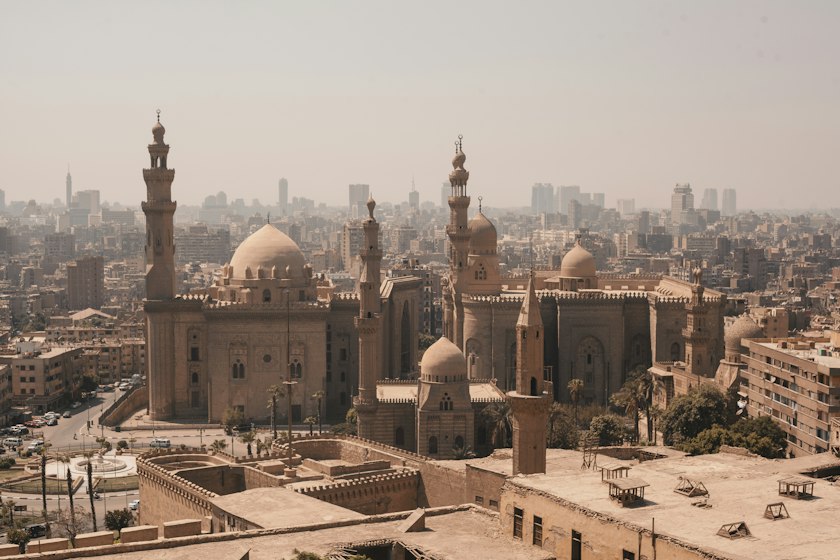
Minarets and domes of historic Islamic Cairo at sunset

Why Egypt works for Muslim travellers

Around 90% Muslim with a large and ancient Coptic Christian minority. All meat is halal, alcohol is legal but confined to tourist venues and a handful of licensed shops, and prices are among the lowest in this guide.

Muslim population
~90%
Sunni, Shafi'i and Hanafi. The Coptic Orthodox Church is one of the oldest Christian communities in the world and makes up most of the remainder.
Halal status
Default
All meat sold and served is halal. Pork exists only in a few Coptic butchers and tourist-hotel buffets, where it is labelled.
Language
Arabic
Egyptian Arabic is the most widely understood dialect in the Arab world. English is good in tourism, limited elsewhere.
Visa
e-Visa or on arrival
Visa on arrival for many nationalities at around USD 25, or an e-Visa online. GCC citizens are visa-free.
Currency
Egyptian pound (EGP)
The pound has devalued heavily, which makes Egypt extremely cheap for foreign visitors. Carry cash; cards work in hotels and malls only.
Best months
October-April
Luxor and Aswan exceed 40C from May to September. Cairo is bearable but hazy and hot in summer.

The oldest mosques still standing

Amr ibn al-As, founded 641, is the first mosque built in Africa. Ibn Tulun, from 879, is the oldest intact mosque anywhere in its original form, with a spiral minaret you can still climb.

Al-Azhar

Founded in 970 and teaching since 972, Al-Azhar is the most influential seat of Sunni learning in the world and its mosque is open to visitors. The courtyard at asr is one of the great sights of Cairo.

Al-Muizz Street

A kilometre of Fatimid, Ayyubid, Mamluk and Ottoman buildings standing shoulder to shoulder - UNESCO calls it the greatest concentration of medieval Islamic architecture in the Islamic world.

The pyramids and the Grand Egyptian Museum

The Giza plateau needs no introduction, and the Grand Egyptian Museum beside it now holds the complete Tutankhamun collection in one place for the first time.

Extraordinarily cheap

Koshari costs under a dollar, a good Cairo hotel is USD 40-80, and a domestic flight to Luxor is USD 60. Currency devaluation has made Egypt one of the cheapest destinations anywhere.

The Nile and the Red Sea

A Nile cruise between Luxor and Aswan, and then some of the best and cheapest diving in the world on the Sinai and Hurghada coasts.

Know before you go

Nine days: Cairo, Luxor, Aswan and back

Four days for Cairo - Islamic Cairo alone justifies two - then the overnight train or a short flight south for the Pharaonic sites and the Nile.

1Day

Cairo: Islamic Cairo, part one

Ibn Tulun - Sultan Hassan - the Citadel

morning
Ibn Tulun Mosque, from 879 - the oldest mosque in Egypt surviving in its original form, a vast empty courtyard with a spiral minaret modelled on Samarra. Climb it for the best view in the city.
afternoon
Sultan Hassan Mosque-Madrasa and Al-Rifa'i facing each other across a lane - Hassan is Mamluk architecture at full volume, with a 26-metre entrance portal and four madrasas around one courtyard.
evening
The Citadel of Saladin and the Muhammad Ali (Alabaster) Mosque on top of it, Ottoman in style and visible from most of Cairo. Sunset over the whole city from the terrace.
All three mosques admit visitors of any faith outside prayer times. Shoes off, shoulders and knees covered, headscarf for women.
2Day

Cairo: Islamic Cairo, part two

Al-Azhar - Al-Muizz Street - Khan el-Khalili

morning
Al-Azhar Mosque, founded 970 and the seat of the oldest continuously operating university in the Arab world. The courtyard is open and students still study in the riwaqs around it.
afternoon
Al-Muizz Street on foot, north from Bab Zuweila to Bab al-Futuh - the Qalawun complex, Sultan Barquq, Al-Aqmar, Sabil-Kuttab of Katkhuda. Climb the minarets of Bab Zuweila for the rooftop view of the whole medieval city.
evening
Khan el-Khalili and Al-Hussein Mosque, then mint tea at El Fishawy, open more or less continuously since 1773.
Al-Muizz Street is pedestrianised in the evening and lit; it is one of the best night-time walks in any city.
3Day

Cairo: Giza and the Grand Egyptian Museum

Giza plateau - GEM

morning
The Giza pyramids at opening, before the heat and the coaches. The Great Pyramid interior is a separate ticket, is hot and cramped, and is worth it once.
afternoon
The Grand Egyptian Museum beside the plateau - the complete Tutankhamun collection in one place, the Khufu solar boat, and a grand staircase of colossal statues facing the pyramids through a glass wall.
evening
Back into Cairo for dinner. Koshari at Abou Tarek, or grills in Dokki.
Book the GEM online and allow at least four hours. It is enormous and the Tutankhamun galleries alone take an hour.
4Day

Cairo: Museum of Islamic Art and Coptic Cairo

MIA - Coptic Cairo - Amr ibn al-As

morning
The Museum of Islamic Art on Bab al-Khalq - over 100,000 objects from Spain to India, including one of the world's best collections of Mamluk metalwork, enamelled glass mosque lamps and early Qur'ans.
afternoon
Coptic Cairo - the Hanging Church, the Ben Ezra synagogue and the Coptic Museum, all inside the Roman fortress of Babylon, and a reminder of how layered this city is.
evening
Mosque of Amr ibn al-As beside it, founded in 641 by the companion who led the conquest of Egypt - the first mosque built in Africa, rebuilt many times on the same ground.
The Museum of Islamic Art was badly damaged by a bombing in 2014 and has been restored. It is underrated and rarely crowded.
5Day

To Luxor: the East Bank

Karnak - Luxor Temple - Abu al-Haggag

morning
Overnight sleeper train or a one-hour flight to Luxor. Check in on the East Bank.
afternoon
Karnak, the largest religious building ever constructed - the hypostyle hall alone has 134 columns, the tallest 21 metres. Two thousand years of continuous building.
evening
Luxor Temple floodlit after dark, with the Mosque of Abu al-Haggag built into the top of it - a working mosque sitting fifteen metres above the ancient floor level because the temple was buried when it was founded.
Abu al-Haggag's annual moulid, with boats carried through the streets, is a direct continuation of the ancient Opet festival that once ran along the same route.
6Day

Luxor: the West Bank

Valley of the Kings - Hatshepsut - Medinet Habu

morning
Valley of the Kings at opening. The standard ticket covers three tombs; Seti I and Tutankhamun are extra and Seti I is the finest painted tomb in Egypt.
afternoon
Hatshepsut's temple at Deir el-Bahari, terraced into the cliff, and the Colossi of Memnon. Medinet Habu is quieter, better preserved and still carries its original paint.
evening
Back across the river. A hot air balloon over the West Bank at dawn the next morning costs around USD 80-120 and is worth it.
The West Bank is hot and shadeless. Start at 6am, carry two litres of water per person, and stop by 1pm.
7Day

Nile to Aswan

Edfu - Kom Ombo - Aswan

morning
Board a Nile cruise or a dahabiya for the two-night sail south. If you would rather not cruise, the drive is four hours with the same stops.
afternoon
Edfu, the most completely preserved temple in Egypt, and Kom Ombo, a double temple on a bend in the river with a crocodile museum beside it.
evening
Sail into Aswan past the granite islands and the feluccas. Nubian villages line the west bank.
Cruise boats serve alcohol; the food is halal but the bar is there. Dahabiyas - small sailing boats - are quieter and often dry.
8Day

Aswan and Abu Simbel

Abu Simbel - Philae - Nubian village

morning
Abu Simbel - a 3am convoy or a short flight south. Ramesses II's temple was cut into 1,036 blocks and moved up the cliff when Lake Nasser was filled, which is almost as impressive as the original.
afternoon
Philae Temple on its island, also relocated, reached by motorboat. Then the unfinished obelisk in the granite quarries.
evening
A Nubian village on the west bank for dinner - different food, different language, different architecture from anywhere else in Egypt.
Twice a year, on 22 February and 22 October, the sun reaches the inner sanctuary at Abu Simbel. Those two dates are booked out far in advance.
9Day

Back to Cairo, or the Red Sea

Aswan - Cairo - departure

morning
Fly back to Cairo (1h20) or take the sleeper north.
afternoon
Anything you missed - the Sultan Barquq complex in the Northern Cemetery, the Al-Azhar Park with its view over the medieval skyline, or the Gayer-Anderson House beside Ibn Tulun.
evening
Fly out of Cairo, or continue to the Red Sea for a week of diving at Dahab, Marsa Alam or Hurghada.
Al-Azhar Park was built on a 500-year-old rubbish mound and is now the best green space in Cairo, with the restored Ayyubid city wall along one edge.

Shorter and longer versions

Mosques and Islamic sites in Egypt

Historic Cairo's mosques are generally open to visitors of any faith outside prayer times, some for a small ticket that also covers the minaret climb. Cover shoulders, knees and hair; shoes come off at the door.

Mosque of Ibn Tulun Cairo 879 CE

The oldest mosque in Egypt surviving in something close to its original form, and one of the largest by area. A vast brick courtyard with a spiral external staircase on the minaret, modelled on Samarra. Climb it. Almost always empty.

Mosque of Amr ibn al-As Fustat, Cairo 641 CE

The first mosque built in Africa, founded by the companion who led the conquest of Egypt. Rebuilt repeatedly on the same ground, so nothing of the original survives, but the site is the oldest in the continent.

Al-Azhar Mosque Cairo 970 CE

Fatimid foundation, and the seat of the oldest continuously operating university in the Arab world. Students still study in the riwaqs around the marble courtyard. Open to visitors; the courtyard at asr is the moment to be there.

Sultan Hassan Mosque-Madrasa Cairo Mamluk peak

Built 1356-1363, with a 26-metre entrance portal, four madrasas for the four Sunni schools around one courtyard, and a scale that still astonishes. Widely held to be the finest Mamluk building in existence.

Muhammad Ali (Alabaster) Mosque Citadel, Cairo Landmark

Ottoman in style, clad in alabaster, sitting on top of Saladin's Citadel and visible from most of the city. The terrace has the classic view over Cairo's minarets to the pyramids on a clear day.

Al-Hussein Mosque Khan el-Khalili, Cairo Shrine

Believed to hold the head of Husayn ibn Ali, the Prophet's grandson, and one of the most venerated sites in Egypt. Non-Muslims are generally not admitted to the shrine chamber.

Sayyida Zainab Mosque Cairo Shrine

The shrine of the Prophet's granddaughter, and the centre of one of Cairo's largest moulid festivals. The surrounding quarter is intensely local.

Al-Rifa'i Mosque Cairo Royal tombs

Facing Sultan Hassan across a narrow lane and finished in 1912 in deliberate imitation of Mamluk style. Holds the tombs of Egypt's royal family and of the last Shah of Iran.

Qalawun Complex Al-Muizz Street, Cairo 1285

A mosque, madrasa, mausoleum and hospital in one Mamluk block, with an interior of inlaid marble and stained glass that is the best surviving example of its kind.

Mosque of Sultan al-Muayyad (Bab Zuweila) Cairo Minaret climb

Built onto the Fatimid Bab Zuweila gate, with two minarets you can climb for a rooftop view over the medieval city - the single best vantage point in Islamic Cairo.

Mosque of Abu al-Haggag Luxor Inside a temple

A working mosque built into the upper level of Luxor Temple, fifteen metres above the ancient floor because the temple was buried in silt when it was founded. Its annual festival preserves the route of the ancient Opet procession.

Al-Mursi Abu al-Abbas Mosque Alexandria Andalusian saint

Built over the tomb of a 13th-century Andalusian Sufi, in cream stone with an octagonal plan and four domes, facing the Mediterranean in the old harbour quarter.

Islamic heritage and museums

Museum of Islamic Art Cairo Underrated

Over 100,000 objects from Spain to India - Mamluk enamelled glass mosque lamps, early Qur'ans, Fatimid woodwork and one of the best metalwork collections anywhere. Restored after the 2014 bombing, and rarely crowded.

Al-Muizz Street Cairo UNESCO

A kilometre of Fatimid, Ayyubid, Mamluk and Ottoman buildings in continuous sequence, pedestrianised and floodlit after dark. The densest concentration of medieval Islamic architecture in the world.

Grand Egyptian Museum Giza New

The largest archaeological museum in the world, beside the pyramids, holding the complete Tutankhamun collection together for the first time along with the Khufu solar boat.

Al-Azhar Park Cairo Green space

Built by the Aga Khan Trust on a 500-year-old rubbish mound, with the excavated Ayyubid city wall along one edge and a view over the minarets of the medieval city. The best place in Cairo at sunset.

Northern Cemetery (City of the Dead) Cairo Mamluk

A district of monumental Mamluk funerary complexes - Sultan Barquq, Qaytbay - standing among an inhabited neighbourhood. Qaytbay's dome is the finest piece of carved stonework in Egypt.

Bibliotheca Alexandrina Alexandria Modern

The modern successor to the ancient library, a tilted disc inscribed with the scripts of the world, with a manuscript museum and a strong Arabic and Islamic collection.

What to eat in Egypt - and where

Egyptian food is cheap, filling and almost entirely halal. It is also more vegetarian than most Arab cuisines - koshari, ful and ta'ameya are the national trio and none of them contains meat.

Dishes worth planning a day around

Koshari

Rice, lentils, macaroni, chickpeas and fried onion under a spiced tomato sauce, with garlic vinegar and chilli on the side. The national dish, entirely vegetarian, and under a dollar.

Ful medames

Fava beans stewed overnight and mashed with oil, cumin and lemon. Breakfast for most of the country, eaten with baladi bread.

Ta'ameya

Egyptian falafel, made with fava beans rather than chickpeas, greener inside and lighter. Better than the Levantine version, and Egyptians will tell you so.

Molokhia

Jute leaf cooked into a green, slightly viscous soup with garlic and coriander, served over rice with chicken or rabbit. Divisive and beloved.

Hawawshi

Spiced minced beef baked inside baladi bread until the bread crisps and absorbs the fat. Street food, and the best cheap meal in Cairo.

Fattah

Layers of crisp bread, rice and meat under a garlic-vinegar tomato sauce. The Eid al-Adha dish, served at celebrations.

Mahshi

Vine leaves, courgettes, peppers and cabbage stuffed with herbed rice. Every household has its own version.

Feteer meshaltet

Paper-thin layered pastry folded many times and baked with ghee, served sweet with honey or savoury with cheese. Rural Egyptian, and enormous.

Om Ali

Bread or pastry baked in milk with nuts, raisins and coconut - Egypt's bread pudding, named for a 13th-century sultana. Served hot.

Grilled pigeon (hamam mahshi)

Pigeon stuffed with freekeh or rice and grilled. A delicacy, and specifically Egyptian.

Karkade and sugarcane juice

Chilled hibiscus tea, deep red and tart, and fresh-pressed sugarcane from a street press for a few pounds. Both are everywhere.

Basbousa and kunafa

Semolina cake in syrup, and shredded pastry over cream or cheese. Egyptian kunafa is usually made with cream rather than the stretchy cheese of the Levant.

Restaurants

Abou Tarek Downtown Cairo Halal

Four floors dedicated to koshari and nothing else, since 1950. The most famous cheap restaurant in Egypt. Order at the counter, sit, eat, leave.

Felfela Downtown Cairo Halal

Egyptian classics since 1959 in a green-lit room full of birdcages and lanterns - ful, ta'ameya, molokhia, mahshi. Long a first stop for visitors and still good.

Zooba Cairo - several branches Halal

Egyptian street food reworked for a modern audience - hawawshi, ta'ameya sandwiches, koshari - in a bright, design-led setting. Reliable and easy.

Kebdet El Prince Imbaba, Cairo Halal

A working-class Cairo institution open until dawn, serving liver, sausage, brain and grilled offal from plastic tables on the pavement. Not for everyone and completely authentic.

Sobhy Kaber Cairo Halal

Charcoal grills - kofta, lamb chops, kebab - in a busy local room. The standard Cairene grill house done well.

Abou El Sid Zamalek, Cairo Halal

Traditional Egyptian cooking in a dim, carpeted, deliberately old-fashioned room - molokhia with rabbit, stuffed pigeon, fattah. Alcohol is served; the food is the draw.

Naguib Mahfouz Café Khan el-Khalili, Cairo Halal

The calm, air-conditioned option inside the bazaar, named for the Nobel laureate who wrote about these lanes. Reliable Egyptian menu and a good escape from the touting.

El Fishawy Khan el-Khalili, Cairo Alcohol-free

A tea house open more or less continuously since 1773, in an alley of mirrors beside Al-Hussein. Mint tea, shisha and a great deal of people-watching.

Andrea Mariouteya Giza, Cairo Halal

Charcoal-grilled chicken, fresh baladi bread baked in front of you, and mezze, in a garden on the road out to the pyramids. A Cairo family tradition.

Koshary El Tahrir Cairo - several branches Halal

The reliable everyday koshari chain, cleaner and more consistent than the street stalls, and still under a dollar.

Sofra Luxor Alcohol-free

Egyptian home cooking in a restored 1930s house with a roof terrace - tagines, mezze and stuffed pigeon. The best restaurant in Luxor and alcohol-free.

Nubian House and the west bank villages Aswan Halal

Nubian cooking - different spicing, more tamarind and okra - served in the painted houses of Gharb Soheil. Usually arranged as a boat trip with dinner.

Kadoura Alexandria Halal

Pick your fish from the ice at the front, they grill or fry it and serve it with salads and tahina. The classic Alexandrian seafood experience.

Mohamed Ahmed Alexandria Alcohol-free

Ful and ta'ameya since 1957, and the reference point for Egyptian breakfast. Cheap, busy and excellent.
Watch out for:
  • There is very little to avoid - all meat sold and served is halal. Pork appears only in a few Coptic-run butchers and at some tourist hotel buffets, where it is labelled.
  • Nile cruise boats and tourist hotels have bars. The food is halal; the alcohol is there for European guests.
  • Tap water is chlorinated but not recommended for visitors. Bottled water is cheap; check the seal.
  • Salads and cut fruit from street stalls are the usual cause of stomach upsets. Cooked food from busy stalls is generally fine.
  • Some restaurants add a service charge plus a separate tip line; check the bill before adding more.

Prayer, dress and practicalities

Cairo is called the city of a thousand minarets and the estimate is conservative. The adhan from several mosques at once is the sound of the city.

WherePrayer facilities
Everywhere in CairoMosques on almost every street, all open for the five prayers with ablution facilities. Historic mosques such as Ibn Tulun and Al-Azhar welcome worshippers as well as visitors.
Cairo International AirportPrayer rooms in all terminals, airside and landside, with ablution facilities.
Tourist sitesGiza, Karnak, the Valley of the Kings, Abu Simbel and the Grand Egyptian Museum all have prayer rooms near the visitor centres.
Trains and stationsRamses Station in Cairo and the main southern stations have prayer rooms. Sleeper trains will point out the qibla on request.
Malls and metroCairo's malls and the larger metro stations have musallas, usually near the service areas.
Nile cruise boatsMost boats set aside a prayer area and will tell you the qibla; dahabiyas simply point at the riverbank.
HotelsQibla markers are standard. Many hotels in Cairo have a small mosque or prayer room, and the adhan is audible from every window anyway.

Practical notes

Where to stay in Egypt

Cairo's neighbourhoods differ sharply. Zamalek and Garden City are quiet and leafy, Downtown is loud and central, and the Giza side is convenient for the pyramids but disconnected from the rest of the city.

Zamalek Cairo Neighbourhood

An island in the Nile - tree-lined, quieter, full of cafés and galleries, and a reasonable taxi from Islamic Cairo. The most comfortable base.

Downtown and Garden City Cairo Central

Belle-époque buildings, walkable to the Egyptian Museum and the metro, and closest to Islamic Cairo. Noisy and full of character.

Al-Azhar and Khan el-Khalili guesthouses Cairo Historic

A handful of small hotels inside the medieval city itself, with rooftops over the minarets. Basic, atmospheric and alcohol-free.

Giza and pyramid-view hotels Cairo Views

Hotels and guesthouses facing the plateau, some with the Great Pyramid filling the window. Convenient for Giza and the GEM, inconvenient for everything else.

Luxor East Bank Luxor Convenient

The corniche and the town, walkable to Luxor Temple and the ferry, with the widest choice of hotels and restaurants.

Luxor West Bank Luxor Quiet

Guesthouses among the sugarcane fields near the Valley of the Kings - much quieter, much cheaper, and a five-minute ferry from town.

Nubian guesthouses, Gharb Soheil Aswan Nubian

Painted houses on the west bank facing the granite islands, reached by boat. A completely different atmosphere from the Nile-side hotels.

Dahab Sinai Beach

A low-key Bedouin-founded beach town rather than a resort strip - cheap, relaxed, excellent diving, and far less built up than Sharm el-Sheikh.

Beaches, pools and leisure

What a halal-friendly trip to Egypt costs

After the pound's devaluation, Egypt is the cheapest destination in this guide by a clear margin. All figures are per person per day unless stated, excluding international flights.

ItemBudgetMid-rangePremium
AccommodationEGP 600-1,200EGP 2,000-4,000EGP 9,000+
Food (3 meals)EGP 150-300EGP 500-900EGP 2,500+
Local transportEGP 60-150 (Uber)EGP 250-500EGP 2,000 (car and guide)
AttractionsEGP 200-500EGP 900-1,800 (GEM, Valley of Kings)EGP 4,000+
Sleeper train Cairo-LuxorEGP 2,000 (shared cabin)EGP 3,500-5,000EGP 7,000+
Daily total per personEGP 900-1,600EGP 3,000-5,500EGP 14,000+

Best time to visit Egypt

The south is the limiting factor. Cairo is manageable most of the year; Luxor and Aswan are not.

PeriodWeatherVerdict for a halal trip
October-April18-28CThe season. Comfortable in Cairo and workable in Luxor and Aswan. December and January are peak, with higher prices.
March-April22-32CExcellent, though the khamsin wind can bring dust storms in April.
May-September35-45C in the southLuxor and Aswan are extremely hot; sightseeing means starting at 5am. Cairo is hazy and hot. Cheapest rates of the year.
Red Sea, year-round22-38CThe Sinai and Hurghada coasts work all year. Summer is hot but the water is the point; winter is mild and the diving is best.
Travelling during Ramadan: Cairo in Ramadan is transformed. The streets are hung with fanous lanterns, the mosques of Al-Muizz Street are packed for taraweeh, and the mawaid al-rahman - free public iftar tables set out on the pavement by neighbourhoods and businesses - feed anyone who sits down. Restaurants in tourist areas stay open during the day but many local places close until maghrib. Sightseeing hours shorten and traffic just before sunset is chaotic, then the city empties for twenty minutes and refills at night. Eid al-Fitr and Eid al-Adha both close government offices and many businesses for several days and fill the trains. Ramadan is arguably the best time to experience Cairo and the worst time to run a tight sightseeing schedule.

Egypt halal travel FAQ

The questions Muslim travellers ask most often before booking.

Can non-Muslims enter mosques in Egypt?
Yes, at the historic mosques - Ibn Tulun, Sultan Hassan, Al-Azhar, the Muhammad Ali mosque and most of Al-Muizz Street - outside prayer times, sometimes for a small ticket. Shrine chambers, such as Al-Hussein and Sayyida Zainab, are generally restricted to Muslims. Shoes off, shoulders and knees covered, headscarf for women.
Is Egypt safe for tourists?
The main tourist regions - Cairo, Giza, Luxor, Aswan, the Red Sea and South Sinai - are routinely visited and heavily policed. North Sinai is a separate security situation and is not visited. The everyday risks are traffic, heat and aggressive touting rather than crime.
How do I handle the touting at Giza?
Buy tickets only at the official window, decline everything else firmly and keep walking, do not accept anything described as free, and agree every price before any service. Booking a guide through your hotel for the Giza morning removes almost all of it and costs very little.
Is all Egyptian food halal?
Effectively yes. All meat sold and served is halal, and the national dishes - koshari, ful, ta'ameya - are vegetarian anyway. Pork appears only in a few Coptic-run butchers and some tourist hotel buffets, where it is labelled. Alcohol is confined to licensed hotels, cruise boats and a few bars.
Train or plane to Luxor?
The overnight sleeper is comfortable, saves a hotel night and is an experience in itself, at around USD 80-120 per berth. The flight is one hour and often cheaper. Most people take the train one way and fly the other.
Is a Nile cruise worth it?
Yes, for the Edfu and Kom Ombo stops and for the pace - watching the riverbank go by is the best part of Egypt. Standard cruise boats serve alcohol and can feel like floating hotels; a dahabiya, a small sailing boat with a handful of cabins, is quieter, usually dry and far more pleasant.
How much should I budget for tipping?
Between EGP 300 and 600 a day for baksheesh, in small notes. It goes to site guards who point out a detail, porters, drivers, boat crew and anyone who helps with anything. It is deeply embedded in the culture and refusing it entirely creates friction.
What should women wear?
Covered shoulders and knees, loose rather than fitted, everywhere outside the Red Sea resorts. A scarf for mosques. Egypt is conservative in dress and more modest clothing noticeably reduces street attention, which can be persistent in Cairo and Luxor.