🇹🇷Halal Travel Guide to Turkey

Turkey is where the Islamic world's architecture peaked. Sinan's imperial mosques in Istanbul and Edirne are the high point of a building tradition that ran for six hundred years, Topkapi holds the Sacred Relics including the Prophet's mantle, and Konya holds Rumi. Meat is halal by default across the country, so the only real planning question is alcohol - which is widely sold, and entirely absent from the Antalya coast's large halal-concept resort sector. This guide covers a week from Istanbul through Cappadocia.

Last updated: 20 September 2026
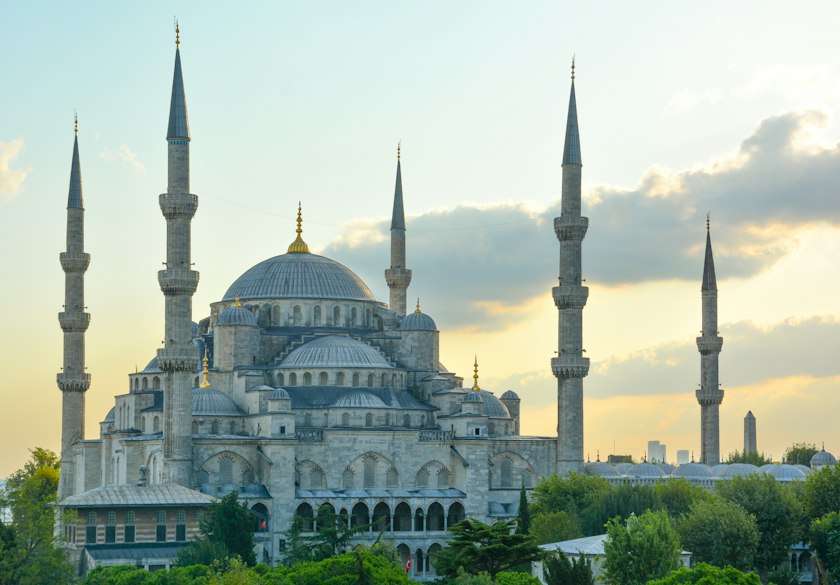
The Blue Mosque and Hagia Sophia across the Sultanahmet skyline at dusk

Why Turkey works for Muslim travellers

Around 99% of the population is Muslim and the state slaughter system is halal, so meat in any ordinary restaurant is fine. What varies is whether alcohol is served alongside it.

Muslim population
~99%
Overwhelmingly Sunni Hanafi, with a large Alevi minority. The state is constitutionally secular.
Halal status
Default
Meat sold in Turkey is halal-slaughtered as standard. HAK is the official certification body for exported and certified products.
Language
Turkish
English is good in Istanbul and the resort coast, patchy elsewhere. Arabic is widely spoken in Fatih and Laleli.
Visa
e-Visa or visa-free
Visa-free for the GCC, UK, most of the EU and Malaysia; a cheap e-Visa for many others. Check before booking.
Currency
Turkish lira (TRY)
High inflation means prices move fast. Card payment is accepted almost everywhere; carry some cash for markets.
Best months
Apr-Jun, Sep-Oct
Mild and dry. July and August are very hot inland and crowded on the coast.

The greatest mosque architecture anywhere

Mimar Sinan built for fifty years under three sultans. The Suleymaniye in Istanbul and the Selimiye in Edirne are the argument's conclusion, and both are free to enter.

The Sacred Relics

Topkapi Palace holds the Prophet's mantle, sword, footprint and a strand of his beard, along with relics of earlier prophets. A reciter has read the Qur'an continuously in that chamber since 1517.

Food you do not have to check

The national meat supply is halal, so kebab houses, lokantas and breakfast salons are all straightforwardly fine. The Turkish breakfast alone justifies the trip.

A real halal resort industry

The Antalya and Alanya coast has dozens of alcohol-free 'helal konsept' resorts with separate men's and women's beaches, pools and spas, and prayer rooms on site. Nothing comparable exists in Europe.

Easy to reach and cheap to fly

Istanbul is a hub for Turkish Airlines and Pegasus; internal flights to Cappadocia, Konya or Antalya are an hour and often under USD 40.

More than mosques

Cappadocia's balloons and rock churches, Pamukkale's travertines, Ephesus, the Lycian coast and the Black Sea highlands are all in the same country.

Know before you go

Seven days: Istanbul, Cappadocia and Bursa

Four days for Istanbul because it needs them, two for Cappadocia, and one for Bursa, the first Ottoman capital. Internal flights are 75 minutes.

1Day

Istanbul: Sultanahmet

Hagia Sophia - Blue Mosque - Basilica Cistern

morning
Hagia Sophia Grand Mosque - a cathedral for 900 years, a mosque for 480, a museum for 85, and a mosque again since 2020. Entry for worshippers is free; visitors use the upper gallery on a ticket.
afternoon
The Blue Mosque (Sultanahmet Camii) across the square, with its six minarets and 20,000 Iznik tiles. Free, with robes and scarves lent at the visitor entrance.
evening
The Basilica Cistern underground, then dinner at Sultanahmet Köftecisi - meatballs, bean salad and ayran, on the same corner since 1920.
Both mosques close to visitors during the five daily prayers and for longer on Friday. Check the board at the gate for the day's visitor windows.
2Day

Istanbul: Topkapi and the bazaars

Topkapi Palace - Grand Bazaar - Spice Bazaar

morning
Topkapi Palace for the Sacred Relics chamber, the treasury and the Harem (separate ticket, worth it). Arrive at opening - the relic queue builds fast.
afternoon
The Grand Bazaar, 4,000 shops under vaulted brick since 1461, then downhill through the tradesmen's streets to the Spice Bazaar.
evening
Rüstem Pasha Mosque above the Spice Bazaar, a small Sinan building lined wall to wall with the best Iznik tiles in the city. Dinner at Hamdi, on the terrace over the Golden Horn.
The Sacred Relics chamber has a continuous Qur'an recitation and photography is forbidden. Dress modestly - this is treated as a place of worship, not an exhibit.
3Day

Istanbul: Sinan, the Golden Horn and Asia

Suleymaniye - Eyüp Sultan - Kadıköy

morning
Suleymaniye Mosque, Sinan's Istanbul masterpiece, on the hill above the Golden Horn with the tombs of Suleiman the Magnificent and Hurrem Sultan in the garden and a terrace view over the whole city.
afternoon
Ferry or taxi up the Golden Horn to Eyüp Sultan Mosque, built over the tomb of the Prophet's companion Abu Ayyub al-Ansari and the most venerated site in the city. Take the cable car up to Pierre Loti hill for tea and the view.
evening
Ferry to Kadıköy on the Asian side - the food market, Çiya Sofrası for regional Anatolian cooking, and a completely different, less touristed Istanbul.
Eyüp Sultan is a working pilgrimage site, busiest on Fridays and during Ramadan. Dress conservatively and expect queues at the tomb.
4Day

Istanbul: Bosphorus and the Turkish and Islamic Arts Museum

Bosphorus ferry - Ortaköy - TIEM

morning
The public Bosphorus ferry from Eminönü - 90 minutes each way past Ottoman waterfront mansions, the two fortresses and three bridges, for the price of a bus ticket.
afternoon
The Turkish and Islamic Arts Museum on the Hippodrome - the world's best collection of early Islamic carpets, plus Qur'an manuscripts and Seljuk woodwork.
evening
Ortaköy Mosque on the water under the first Bosphorus bridge - the classic Istanbul photograph - then kumpir and baklava at Karaköy Güllüoğlu.
Şakirin Mosque in Üsküdar, designed by Zeynep Fadıllıoğlu, is the first major mosque designed by a woman and is worth the detour if you have an extra half day.
5Day

Fly to Cappadocia: Göreme

Kayseri or Nevşehir - Göreme - Uçhisar

morning
Early flight to Cappadocia (75 min). Check into a cave hotel in Göreme, Uçhisar or Ürgüp.
afternoon
Göreme Open Air Museum - Byzantine rock-cut churches with frescoes carved into the tuff, a UNESCO site and the reason the valley is famous.
evening
Sunset from Uçhisar castle or Red Valley, then testi kebab, cooked and cracked open at the table in a sealed clay pot.
Book the balloon flight for the following morning before you land - flights are capped daily and cancelled in wind.
6Day

Cappadocia: balloons and underground cities

Balloon flight - Derinkuyu - Ihlara

morning
Hot air balloon at dawn - a pickup around 4.30am, an hour in the air over the fairy chimneys, and the single most photographed experience in Turkey. USD 180-320 depending on season and basket size.
afternoon
Derinkuyu or Kaymaklı underground city - eight levels cut into the rock, with ventilation shafts, stables and churches, used as refuges for centuries.
evening
The Ihlara valley walk or the pottery workshops at Avanos, then back to Göreme.
Cappadocia is conservative Central Anatolia; food is halal throughout and alcohol is much less visible than in Istanbul.
7Day

Bursa or Konya, then home

Bursa Ulu Cami - Green Mosque - Istanbul

morning
Fly back to Istanbul and take the fast ferry to Bursa (2h door to door). Ulu Cami, the 1399 Grand Mosque, has twenty domes and monumental calligraphy panels painted directly onto the walls.
afternoon
The Green Mosque and Green Tomb, early Ottoman at its most refined, and the covered silk market at Koza Han. Iskender kebab was invented here and is still served at the original Kebapçı İskender.
evening
Return to Istanbul for the flight home. Istanbul Airport has large prayer halls in both the domestic and international zones.
Swap Bursa for Konya if you can add a day - the Mevlana museum and tomb, the Sunday sema ceremony, and Turkey's most conservative major city.

Shorter and longer versions

Mosques and Islamic sites in Turkey

Turkey's imperial mosques are free, open to visitors between prayers, and lend robes and scarves at the door. The pattern to look for is Sinan's: a single great dome on semi-domes, with the weight carried out to the corners and the interior left as one uninterrupted volume.

Hagia Sophia Grand Mosque Istanbul 537 CE

Justinian's cathedral, Mehmed II's mosque, Ataturk's museum, and a mosque again since 2020. Worshippers enter free at ground level; visitors pay for the upper gallery, where Byzantine mosaics survive beside Ottoman calligraphy roundels.

Sultanahmet Mosque (Blue Mosque) Istanbul Free entry

Six minarets, a cascade of domes, and more than 20,000 blue Iznik tiles inside. Free, with a dedicated visitor entrance on the south side and robes provided.

Suleymaniye Mosque Istanbul Sinan

Sinan's Istanbul masterpiece, finished 1557, sitting on the third hill with a terrace over the Golden Horn. The tombs of Suleiman and Hurrem Sultan are in the garden. Quieter than Sultanahmet and, most would argue, better.

Rüstem Pasha Mosque Istanbul Iznik tiles

Small, raised above the shops of the Spice Bazaar and easy to miss. The tile work is the finest in the city - whole walls of tomato-red and cobalt Iznik from the 1560s.

Eyüp Sultan Mosque Istanbul Pilgrimage

Built over the tomb of Abu Ayyub al-Ansari, the Prophet's companion who died besieging Constantinople in 674. Ottoman sultans were girded with the sword of Osman here. The most spiritually significant site in the city.

Ortaköy Mosque Istanbul Photogenic

Baroque, white, and standing on the water directly under the first Bosphorus bridge. Small inside; the point is the setting.

Şakirin Mosque Üsküdar, Istanbul Contemporary

Completed in 2009 and designed by Zeynep Fadıllıoğlu - the first major mosque with a woman as lead designer. Glass, aluminium and a turquoise mihrab; a modern argument about what a mosque can look like.

Selimiye Mosque Edirne UNESCO

Sinan called this his masterwork, built when he was over 80. A dome wider than Hagia Sophia's on eight piers, with four of the tallest minarets in the Ottoman world. Two and a half hours from Istanbul.

Ulu Cami (Grand Mosque) Bursa 1399

Twenty domes on twelve pillars, a fountain under the central dome, and 192 monumental calligraphy panels painted straight onto the walls and columns. Early Ottoman at its most confident.

Green Mosque and Green Tomb Bursa Early Ottoman

Named for the green-blue tiles of the sultan's tomb opposite. Smaller and more intimate than the imperial mosques, and the clearest view of where Ottoman architecture came from.

Mevlana Mosque and Tomb Konya Rumi

The turquoise fluted dome over Rumi's tomb is the most recognisable building in Anatolia. The complex is officially a museum, is treated by visitors as a shrine, and is the centre of the Mevlevi tradition.

Çamlıca Mosque Istanbul Largest in Turkey

Opened 2019 on the highest hill on the Asian side, holding 63,000 worshippers, with a museum and gallery underneath and the widest view of the city from its terrace.

Islamic heritage and museums

Sacred Relics, Topkapi Palace Istanbul Do not miss

The Prophet's mantle, sword, bow, a tooth, a footprint and hairs from his beard, along with Moses' staff and David's sword, brought from Cairo in 1517. A reciter has read Qur'an in the chamber continuously since. No photography.

Turkish and Islamic Arts Museum Istanbul Carpets

In Ibrahim Pasha's palace on the Hippodrome. The carpet collection is the best in the world, with Seljuk fragments from the 13th century, plus illuminated Qur'ans and Damascene metalwork.

Museum of Islamic Science and Technology History Gülhane Park, Istanbul Families

Working replicas of instruments and machines described by al-Jazari, al-Biruni and al-Idrisi - clocks, pumps, surgical tools and observatory equipment. Excellent with older children.

Mevlana Museum Konya Sufism

Rumi's tomb, the Mevlevi dervish lodge, illuminated manuscripts and the cells the dervishes trained in. The sema ceremony is performed publicly on Saturday evenings.

Balıklıgöl Şanlıurfa Prophetic tradition

The pool of sacred carp where, by local tradition, Nimrod's fire was turned to water when Ibrahim was thrown into it. Beside it, Göbekli Tepe is the oldest known monumental site on earth.

What to eat in Turkey - and where

Meat in Turkey is halal by default, which makes the food scene effortless. The only judgement call is alcohol: ordinary lokantas and kebab houses are usually alcohol-free, while meyhanes and most Beyoğlu restaurants are not.

Dishes worth planning a day around

Turkish breakfast (kahvaltı)

Not a meal so much as a tabletop: cheeses, olives, tomato, cucumber, honey with clotted cream, jams, eggs, sucuk and endless tea. Two hours minimum.

Adana and Urfa kebab

Hand-minced lamb on a flat skewer over charcoal. Adana is chilli-hot, Urfa is mild. Served with grilled pepper, sumac onion and lavash.

İskender kebab

Sliced döner over torn pide bread with tomato sauce and browned butter poured at the table, with yoghurt on the side. Invented in Bursa.

Lahmacun

Paper-thin dough with spiced minced lamb, rolled around parsley and lemon and eaten with the hands. Two or three per person.

Pide

Boat-shaped flatbread baked with cheese, minced meat or egg. The Black Sea version comes with butter and a soft cheese that pulls.

Mantı

Tiny lamb dumplings under garlic yoghurt with melted butter, paprika and dried mint. Kayseri's version is the reference point.

Menemen

Eggs scrambled slowly into tomato, green pepper and sometimes sucuk, cooked in a copper pan and eaten straight from it with bread.

Testi kebab

Cappadocian speciality: lamb and vegetables sealed in a clay pot, baked for hours, and the pot cracked open at your table with a small blade.

Börek

Layered yufka pastry with cheese, spinach or meat. Su böreği, boiled before baking, is the soft, lasagne-like one worth finding.

Künefe

Shredded pastry over stretchy unsalted cheese, baked, soaked in syrup and served scaldingly hot with pistachio. The best dessert in the country.

Baklava

Forty layers of filo, pistachio from Gaziantep, and butter. Sold by weight; a hundred grams is plenty. Gaziantep's version is protected by geographical indication.

Turkish coffee and çay

Coffee ground to powder and boiled in a cezve, served with the grounds settling. Tea, drunk far more often, comes in tulip glasses all day long.

Restaurants

Hamdi Restaurant Eminönü, Istanbul Alcohol-free

Southeastern kebabs from Şanlıurfa, on a rooftop looking over the Golden Horn to Galata. No alcohol, which is unusual for a restaurant of its standing. Book the terrace.

Çiya Sofrası Kadıköy, Istanbul Alcohol-free

Musa Dağdeviren's project to cook the regional dishes of Anatolia that nobody else serves. The menu changes daily; point at what looks good on the counter.

Asitane Edirnekapı, Istanbul Ottoman cuisine

Researched palace recipes from the 15th to 19th centuries - melon stuffed with lamb, almond soup, quince dolma. Beside the Chora church. Alcohol is served; ask for a table away from the bar if that matters.

Sultanahmet Köftecisi Selim Usta Sultanahmet, Istanbul Alcohol-free

Grilled meatballs, white bean salad, semolina halva. One dish, done since 1920, in a room that has not changed much. Beware near-identical imitators on the same street.

Van Kahvaltı Evi Cihangir, Istanbul Alcohol-free

Eastern Turkish breakfast - herbed otlu peynir, kaymak with honey, murtuğa - done properly. Expect to queue at weekends and to leave two hours later.

Karaköy Güllüoğlu Karaköy, Istanbul Alcohol-free

Baklava since 1949, sold by weight at a counter. The fıstıklı (pistachio) and the şöbiyet are the ones to order. Eat it standing up like everyone else.

Hafız Mustafa 1864 Istanbul - several branches Alcohol-free

Turkish delight, baklava, künefe and rice pudding, in a café setting that works well for families. Reliable and everywhere, including the airport.

Develi Samatya, Istanbul Gaziantep

Southeastern kebab house open since 1912, known for its pistachio kebab and its baklava. Alcohol is available; the food is the reason to go.

Namlı Gurme Karaköy, Istanbul Alcohol-free

A delicatessen with a breakfast room attached - you choose cheeses and mezze from the counter. Note that the deli also sells non-halal charcuterie, so read labels if buying to take away.

Kebapçı İskender Bursa Alcohol-free

The family that invented İskender kebab in 1867, still serving it in the same city. One dish, one decision: portion size.

Topdeck Cave Restaurant Göreme, Cappadocia Alcohol-free

A small family-run cave dining room serving testi kebab and home-style Anatolian dishes. Booking essential - it has about eight tables.

Dibek Göreme, Cappadocia Halal

Floor cushions, low tables and slow-cooked pots that must be ordered several hours ahead. The most atmospheric meal in the valley.

Somatçı Fıhtı Konya Alcohol-free

Seljuk-era recipes in a restored Konya house - etli ekmek, tirit, and Mevlevi dishes you will not find elsewhere. Konya is dry by custom, not by law.

Çiğdem Pastanesi Sultanahmet, Istanbul Alcohol-free

An unassuming patisserie among the tourist restaurants, where locals actually go for tea, profiterole and rice pudding at fair prices.
Watch out for:
  • Meyhane means a drinking house. The mezze will be excellent and the atmosphere will be built around rakı - decide in advance whether that suits you.
  • Hotel breakfast buffets in international chains occasionally include pork sausage or bacon for European guests; it is labelled.
  • A few delicatessens in Beyoğlu, Nişantaşı and Kadıköy sell pork charcuterie. Read the label before buying cured meat to take home.
  • Kokoreç is seasoned lamb intestine - halal, but not what everyone expects from a sandwich.
  • Some imported sweets and marshmallows contain pork gelatine; Turkish delight (lokum) traditionally uses starch and is fine.

Prayer, dress and practicalities

Turkey has around 90,000 mosques, all open five times a day, all free, all with wudhu facilities outside. You will rarely be more than a few minutes' walk from one.

WherePrayer facilities
Istanbul Airport (IST) and Sabiha GökçenLarge prayer halls (mescit) with separate men's and women's sections and full ablution facilities, airside and landside on multiple levels.
Any neighbourhoodEvery district has several mosques, open for all five prayers with outdoor ablution taps. Visitors are welcome to pray in any of them, including the imperial ones.
Shopping mallsEvery mall - Zorlu, İstinye Park, Kanyon, Cevahir - has a mescit, usually on the top floor or near the car park entrance.
Motorway rest stopsEvery service area on the intercity network has a mosque, plus toilets and a restaurant. Long drives are easy to time around prayer.
Museums and sitesTopkapi, the Grand Bazaar, the Göreme museum car park and most major attractions have a mescit on site.
Metro and ferry terminalsLarger interchanges and the main ferry piers (Eminönü, Kadıköy, Üsküdar) have small prayer rooms; ask for the 'mescit'.
HotelsQibla markers are standard. Halal-concept hotels on the Antalya coast have full prayer rooms and often a resident imam during Ramadan.

Practical notes

Where to stay in Turkey

Istanbul is about which side of the water you want. The coast is where Turkey's halal-concept resort industry is - alcohol-free, with separate beaches and pools for men and women, and nothing else like it in the Mediterranean.

Sultanahmet Istanbul Neighbourhood

Walk to Hagia Sophia, the Blue Mosque and Topkapi. Touristy and full of touts, but unbeatable for a short first visit, and most hotels here are alcohol-free.

Fatih and Süleymaniye Istanbul Conservative

The conservative heart of the old city - alcohol-free by custom, Arabic widely spoken, cheaper than Sultanahmet, and the best street food. Popular with Gulf visitors.

Karaköy and Galata Istanbul Neighbourhood

Design hotels in restored buildings, good coffee, walkable to the tram and the Golden Horn. Livelier and more secular than Fatih.

Kadıköy Istanbul Local

The Asian side - the best food market in the city, far fewer tourists, and a 20-minute ferry to the historic peninsula.

Cave hotels, Göreme and Uçhisar Cappadocia Experience

Rooms cut into the tuff, with terraces facing the balloon launch fields. Uçhisar is quieter and higher; Göreme is walkable to everything.

Adenya Hotel & Resort Alanya Halal concept

One of the established alcohol-free resorts on the coast, with separated men's and women's beaches, pools and spas, and a prayer room on site.

Bera Hotels Alanya and Konya Halal concept

A Turkish chain built entirely around the halal-concept model - no alcohol, gender-separated leisure facilities, family suites.

Adin Beach Hotel Alanya Halal concept

Another long-running alcohol-free coastal resort with a private women's beach section. The Alanya cluster is where most of these properties sit.

Beaches, pools and leisure

What a halal-friendly trip to Turkey costs

Turkey is cheap by European standards, though Istanbul hotel prices have risen sharply. All figures are per person per day unless stated, excluding international flights.

ItemBudgetMid-rangePremium
AccommodationTRY 900-1,600TRY 2,500-4,500TRY 8,000+
Food (3 meals)TRY 400-700TRY 900-1,600TRY 3,000+
Local transportTRY 100-180 (Istanbulkart)TRY 300-500TRY 2,500 (private car)
AttractionsTRY 0 (mosques)TRY 1,200-2,000 (Hagia Sophia, Topkapi)TRY 8,000+ (balloon)
Internal flight (one way)TRY 1,200-1,800TRY 2,000-3,000TRY 5,000+
Daily total per personTRY 1,500-2,400TRY 4,000-7,000TRY 14,000+

Best time to visit Turkey

Istanbul has four real seasons, Cappadocia is high and continental, and the south coast is Mediterranean. The shoulder months are clearly the best.

PeriodWeatherVerdict for a halal trip
April-June15-25C, some rainThe best time. Tulips in Istanbul in April, comfortable walking, balloons flying most mornings in Cappadocia.
July-August30-38C, dryHot and crowded. The coast is at peak price, Istanbul is heavy going in the afternoons. Cappadocia mornings are still fine.
September-October18-28CThe other best window - warm sea, fewer visitors, the clearest light of the year for photography.
November-March5-14C, wet; snow inlandCheapest, and Istanbul in the rain is atmospheric rather than ruined. Cappadocia under snow is spectacular but balloons cancel often.
Travelling during Ramadan: Istanbul during Ramadan is one of the great sights: the mahya, illuminated messages strung between the minarets of the imperial mosques, the mass iftar in the Sultanahmet square, and taraweeh filling buildings designed for exactly that. Restaurants stay open all day since Turkey is constitutionally secular, so non-fasting travel is unaffected. Eid al-Fitr (Ramazan Bayramı) and Eid al-Adha (Kurban Bayramı) are both national holidays of several days: domestic transport sells out, coastal resorts fill with Turkish holidaymakers, and many small businesses close. Book well ahead or avoid those weeks.

Turkey halal travel FAQ

The questions Muslim travellers ask most often before booking.

Is all meat in Turkey halal?
In practice yes. The national slaughter system is halal and pork is a negligible part of the food supply, so meat at any ordinary restaurant, kebab house or butcher is fine. The exceptions are a handful of delicatessens in the most cosmopolitan Istanbul districts, which label their pork products clearly, and some international hotel breakfast buffets.
Can non-Muslims enter Turkish mosques?
Yes, all of them, free of charge, outside prayer times. Hagia Sophia, the Blue Mosque and Suleymaniye all have visitor entrances with robes and scarves lent at the door. Friday midday is the one time to stay away.
How do I avoid alcohol in restaurants?
Look for alkolsüz on the sign or ask. Kebab houses, lokantas, breakfast salons and most restaurants in Fatih, Eyüp, Konya and Cappadocia are alcohol-free. Meyhanes, Beyoğlu restaurants and hotel bars are not. Hamdi, Çiya, Van Kahvaltı Evi and the whole Fatih district are dependable.
What are the halal-concept resorts actually like?
Full-service coastal resorts with no alcohol anywhere on the property, separate beaches, pools and spa hours for men and women, prayer rooms, and halal-only kitchens. They cluster around Alanya and Antalya, cost roughly the same as an equivalent mainstream resort, and are popular with Turkish, Gulf and European Muslim families.
Is Istanbul enough on its own?
For a first visit of four or five days, yes - there is more in the historic peninsula alone than you can see. Cappadocia adds a completely different landscape and is the usual second stop. Konya and Bursa are for a return trip.
What should women wear?
Whatever you normally would, in Istanbul and on the coast. Turkey is a secular republic and you will see the full range from swimwear to full covering. Mosques require covered hair, arms and legs, and robes are provided at the door. Konya, Şanlıurfa and rural Anatolia are more conservative in practice.
Can I see the Prophet's relics?
Yes. The Sacred Relics chamber at Topkapi Palace is open to all visitors on the standard palace ticket. Photography is forbidden, a reciter reads the Qur'an continuously, and modest dress is expected. Queues are longest late morning; go at opening.
Is Turkey good value now?
Yes, though less dramatically than a few years ago. Food, transport and internal flights remain inexpensive by European standards, while Istanbul hotel rates and the major museum tickets have risen steeply. Mosques, ferries and street food are still remarkable value.