🇩🇪Halal Travel Guide to Germany

Germany has around five and a half million Muslims, the majority of Turkish heritage, descended from the guest workers invited from 1961 onwards. That history produced the döner kebab, invented in Berlin in the early 1970s and now the country's most popular fast food, and whole districts - Kreuzberg, Neukölln, Cologne's Ehrenfeld, Duisburg-Marxloh - where halal is simply the default. Add Cologne's extraordinary 2018 central mosque and Berlin's Museum of Islamic Art, which contains an entire 8th-century Umayyad palace facade.

Last updated: 20 September 2026
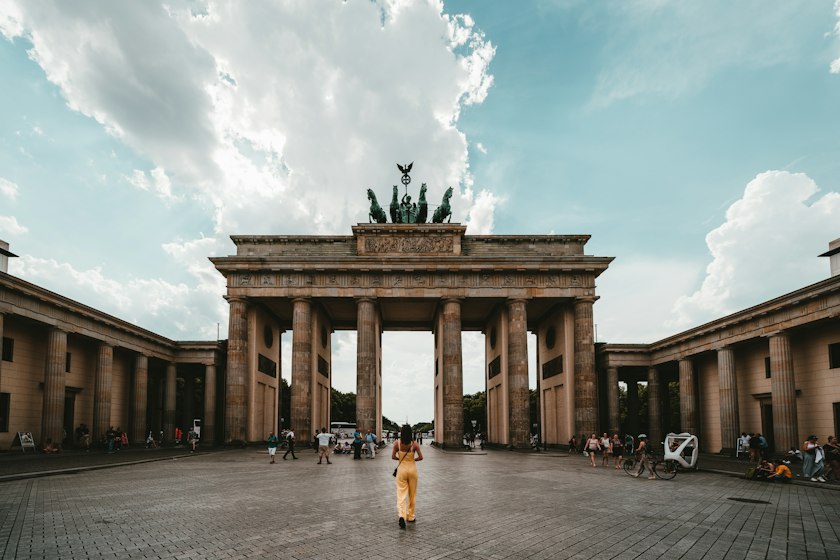
The Brandenburg Gate in Berlin lit at dusk

Why Germany works for Muslim travellers

Around 6.5% of the population is Muslim, predominantly of Turkish heritage with substantial Arab, Bosnian, Afghan and Kurdish communities. Halal food is easy in the cities and thin in rural areas.

Muslim population
~6.5%
Around 5.5 million, roughly half of Turkish heritage, plus Arab, Bosnian, Afghan, Kurdish, Iranian and more recent Syrian communities.
Halal certification
Fragmented
Several bodies including the European Halal Certification Institute and the Halal Control organisation. Most Turkish-run butchers and restaurants are uncertified but community-known.
Language
German
English is good in Berlin and among younger Germans, patchier elsewhere. Turkish is widely spoken in the Muslim districts.
Visa
Schengen
Visa-free for the UK, US, GCC and many others for 90 days. ETIAS pre-authorisation applies to visa-exempt nationalities once it launches.
Currency
Euro (EUR)
Germany is unusually cash-preferring for Western Europe - many small restaurants, bakeries and market stalls still do not take cards.
Best months
May-Sep, Dec
Summer for long days and outdoor life; December for the Christmas markets, which are the country's great winter attraction.

The döner kebab

Invented in Berlin in the early 1970s by Turkish guest workers who put the meat in bread with salad and sauce. Around two million are sold in Germany every day and it has entirely displaced the sausage as the national fast food.

Cologne Central Mosque

Opened in 2018 by the Turkish-German DITIB, a shell of curved concrete and glass by Paul Böhm - deliberately open and transparent, with a shopping arcade underneath and public tours.

The Museum of Islamic Art

Berlin's Pergamon Museum holds the Mshatta facade, an entire carved stone wall from an 8th-century Umayyad desert palace, and the Aleppo Room. Note that the Pergamon is undergoing major renovation - check which parts are open.

Turkish Germany

Kreuzberg and Neukölln in Berlin, Ehrenfeld in Cologne, Duisburg-Marxloh - districts where the bakeries, butchers, greengrocers and restaurants are Turkish and halal is the default.

The Christmas markets

Nuremberg, Dresden, Cologne and dozens of others, running through December - mulled wine aside, they are food, craft and atmosphere, and genuinely worth a winter trip.

Efficient and well connected

ICE trains link Berlin, Cologne, Frankfurt and Munich in a few hours each. Germany is easy to move around and cheaper than France or Britain.

Know before you go

Eight days: Berlin, Cologne and Munich

Four days in Berlin, two in Cologne and the Rhine, two in Munich and Bavaria, by ICE train. Each city has a substantial Turkish quarter.

1Day

Berlin: the centre

Brandenburg Gate - Reichstag - Museum Island

morning
Arrive in Berlin. The Brandenburg Gate, the Reichstag with Norman Foster's glass dome (free, but book weeks ahead), and the Memorial to the Murdered Jews of Europe.
afternoon
Museum Island - five museums on one island in the Spree. The Neues Museum holds Nefertiti; the Pergamon's Islamic collection is part of the ongoing renovation programme, so check access.
evening
Kreuzberg for dinner - the Turkish quarter, with döner, lahmacun, pide and Turkish breakfast places on almost every street.
Berlin's Turkish population is the largest outside Turkey and Kreuzberg has been its centre since the 1960s.
2Day

Berlin: the Wall and the Turkish quarter

East Side Gallery - Maybachufer market - Sehitlik Mosque

morning
The East Side Gallery, 1.3 km of the Berlin Wall painted by artists in 1990, and the Topography of Terror on the site of the Gestapo headquarters.
afternoon
The Turkish Market on Maybachufer, twice a week along the canal in Neukölln - produce, cheese, fabric, bread and street food, and the best market in Berlin.
evening
Sehitlik Mosque in Neukölln - Ottoman in style, built by Turkish-Germans on land given to the Ottoman embassy in 1866, with a cemetery that is the oldest Muslim burial ground in Germany. It runs regular public tours.
Sehitlik's guided tours are given by young German-Turkish volunteers and are among the most open mosque visits in Europe.
3Day

Berlin: museums and Potsdam

Jewish Museum - Potsdam - Sanssouci

morning
The Jewish Museum Berlin in Daniel Libeskind's zinc-clad building, one of the most powerful pieces of museum architecture anywhere.
afternoon
Potsdam, 40 minutes by S-Bahn - Sanssouci palace and park, and the extraordinary Moorish pumping station on the Havel, a steam engine house built in 1842 disguised as a mosque with a minaret for a chimney.
evening
Back to Berlin. Mustafas Gemüse Kebap in Kreuzberg is the best-known döner stand in Germany and has the queue to match.
Potsdam's mosque-shaped pumping station is one of the strangest buildings in Germany and worth the detour.
4Day

Berlin: Charlottenburg and the west

Charlottenburg - Kurfürstendamm - Tiergarten

morning
Charlottenburg Palace and its gardens, and the Kaiser Wilhelm Memorial Church, left ruined as a war memorial with a modern blue-glass nave beside it.
afternoon
The Tiergarten and the Victory Column, or the Gemäldegalerie for old master painting.
evening
Wilmersdorf Mosque, built in 1924-28 in Mughal style by the Ahmadiyya community, the oldest surviving purpose-built mosque in Germany. Dinner in Kreuzberg or Neukölln.
Charlottenburg has a substantial Arab and Gulf community around Kurfürstendamm, with Lebanese and Syrian restaurants.
5Day

Cologne

Cologne Cathedral - Central Mosque - Ehrenfeld

morning
ICE to Cologne (4h20 from Berlin). The cathedral, begun in 1248 and finished in 1880, with twin spires that were the tallest structure in the world for four years. Climb the 533 steps.
afternoon
Cologne Central Mosque in Ehrenfeld - Paul Böhm's 2018 building of curved concrete shells and glass, deliberately transparent, with an arcade of shops underneath. Public tours run regularly.
evening
Ehrenfeld itself - a Turkish and Arab quarter with restaurants, bakeries and shops, and one of the most mixed districts in Germany.
The Central Mosque was controversial through its planning and construction, and the architect's insistence on transparency was a deliberate response to that.
6Day

The Rhine or Duisburg

Rhine valley - or Duisburg-Marxloh

morning
The Rhine gorge between Koblenz and Rüdesheim - castles on every bend, terraced vineyards and the Lorelei rock. Best seen from a boat or the slow train along the bank.
afternoon
Or Duisburg-Marxloh north of Cologne, where the Merkez Mosque was built in 2008 with unusual local cooperation and is one of the most-visited mosques in Germany.
evening
Back to Cologne, or on to Frankfurt for the onward train.
The Rhine valley between Bingen and Koblenz is UNESCO-listed and the train along the west bank costs a few euros.
7Day

Munich

Marienplatz - Englischer Garten - Munich Forum for Islam

morning
ICE to Munich (4h30 from Cologne). Marienplatz, the Glockenspiel, and the Viktualienmarkt food market.
afternoon
The Englischer Garten, larger than Central Park, with surfers riding a standing wave on the Eisbach at its northern end.
evening
Munich has a smaller Muslim community than Berlin or Cologne but a growing Turkish and Arab restaurant scene around the Hauptbahnhof and in Sendling.
The Munich Forum for Islam is a long-running project for a central Islamic centre and mosque; check its current status.
8Day

Neuschwanstein or Dachau, then home

Neuschwanstein - or Dachau - airport

morning
Neuschwanstein, two hours south, the 19th-century fantasy castle that inspired Disney's, in the Alpine foothills. Book the timed entry well ahead.
afternoon
Or Dachau, the first Nazi concentration camp, 30 minutes from Munich and now a memorial site. Free, sobering and important.
evening
Fly out of Munich. Both Munich and Berlin airports have multi-faith prayer rooms.
Neuschwanstein's interior tour is short and the castle is best seen from the Marienbrücke bridge above it - check whether the bridge is open.

Shorter and longer versions

Mosques and Islamic sites in Germany

Germany has around 2,800 mosques and prayer rooms, the great majority run by Turkish organisations. Several of the large purpose-built mosques run public tours, and the annual Open Mosque Day on 3 October sees hundreds open to visitors.

Cologne Central Mosque Cologne 2018, tours

Paul Böhm's building of curved concrete shells with glass between them, deliberately transparent, holding 1,200 with a shopping arcade underneath. Built by DITIB and one of the most architecturally significant mosques in Europe. Public tours run regularly.

Sehitlik Mosque Berlin Tours

Ottoman in style, built in the 1980s on land granted to the Ottoman embassy in 1866. The adjoining cemetery is the oldest Muslim burial ground in Germany. Runs frequent guided tours in German and English, given by young volunteers.

Wilmersdorf Mosque Berlin 1928, oldest

Built 1924-28 by the Ahmadiyya community in Mughal style with two 32-metre minarets - the oldest surviving purpose-built mosque in Germany, and a listed monument.

Merkez Mosque Duisburg-Marxloh 2008

Built with unusual cooperation between the Turkish community and the city, and widely cited as a model of how mosque construction can go well. One of the most-visited mosques in Germany.

Imam Ali Mosque (Blue Mosque) Hamburg 1965

On the Alster lake, built by the Iranian community in the 1960s with a blue-tiled dome. One of the oldest Shia mosques in Europe, though its governing body has been subject to legal action in recent years - check current status.

Yavuz Sultan Selim Mosque Mannheim 1995

One of the largest mosques in Germany, built alongside a Catholic church as a deliberate statement, with an interfaith dialogue programme.

Berlin Islamic Federation mosques Kreuzberg and Neukölln Neighbourhood

Dozens of smaller mosques and prayer rooms across Berlin's Turkish and Arab districts, often in converted commercial buildings.

Penzberg Islamic Forum Bavaria Design

A small, architecturally admired mosque in Bavaria with a glass facade carrying the shahada in Kufic script as a decorative screen. Frequently cited in debates about German mosque design.

Frankfurt Abu Bakr Mosque Frankfurt Central

One of the main mosques in Frankfurt, serving a diverse community in Germany's most international city.

Potsdam Moorish pumping station Potsdam Curiosity

Not a mosque - an 1842 steam pumping station built in Moorish style with a minaret as its chimney, to supply the fountains of Sanssouci. A listed monument and a genuine oddity.

Islamic heritage and museums

Museum für Islamische Kunst, Pergamon Berlin Major collection

Holds the Mshatta facade, an entire carved limestone wall from an 8th-century Umayyad desert palace in Jordan, and the Aleppo Room, a painted 17th-century Syrian reception room. The Pergamon is under phased renovation - check what is open.

Turkish Market, Maybachufer Berlin Market

Twice-weekly market along the canal in Neukölln - produce, cheese, olives, fabric, bread and street food. The most genuinely useful market in Berlin and the heart of Turkish Berlin.

Kreuzberg and Neukölln Berlin Districts

The centre of Turkish Germany since the 1960s guest worker programme. Bakeries, butchers, greengrocers, restaurants and mosques - and, increasingly, the most interesting neighbourhoods in the city.

Jewish Museum Berlin Berlin Architecture

Daniel Libeskind's zinc-clad building with its voids and the Garden of Exile - one of the most affecting works of museum architecture anywhere, and essential context for Germany.

Cologne Cathedral Cologne UNESCO

Begun 1248 and completed 1880, with twin spires that briefly made it the tallest building in the world. The 533-step climb is worth it.

Dachau Memorial Near Munich Memorial

The first Nazi concentration camp, opened 1933, now a memorial and documentation centre. Free entry, thirty minutes from Munich, and difficult and necessary.

What to eat in Germany - and where

German cuisine is pork-based, but Turkish Germany has produced one of Europe's best street food cultures. In Berlin, Cologne and the Ruhr, halal is the default across whole districts.

Dishes worth planning a day around

Döner kebab

Invented in Berlin in the early 1970s by Turkish guest workers, who put the spit-roasted meat into bread with salad and sauce. Around two million are sold daily in Germany and it has displaced the sausage as the national fast food.

Dürüm

The wrap version - the same meat and salad rolled in a thin lavash rather than in bread. Usually the better order.

Lahmacun

Thin dough with spiced minced lamb, rolled around parsley and lemon. A euro or two from any Turkish bakery.

Turkish breakfast (kahvaltı)

Cheeses, olives, tomato, cucumber, honey, jam, eggs and endless tea, spread across a table. Kreuzberg and Neukölln do it properly at weekends.

Pide

Boat-shaped baked flatbread with cheese, minced meat or egg. The Turkish bakeries make it fresh all day.

Börek

Layered pastry with cheese, spinach or mince, sold by the slice from Turkish bakeries. Breakfast and snack food.

Halal currywurst

Germany's other national dish - sausage with curry ketchup and chips - in beef or chicken form at halal stands in Berlin and the Ruhr.

Baklava and Turkish sweets

Kreuzberg and Neukölln's Turkish patisseries sell baklava by weight, along with künefe, lokum and sütlaç.

Brezel and bread

German bread is exceptional and almost always just flour, water, salt and yeast. The bakery culture alone rewards a visit.

Arabic and Lebanese food

Berlin's Sonnenallee in Neukölln is lined with Syrian, Lebanese and Palestinian restaurants and sweet shops - a direct result of post-2015 migration and now one of the best food streets in the city.

Christmas market food

Roasted almonds, crepes, potato pancakes and gingerbread - much of it meat-free. The mulled wine is the obvious exception; non-alcoholic Kinderpunsch is always available.

Ayran and Turkish tea

Salted yoghurt drink and small tulip glasses of black tea, served everywhere in the Turkish districts.

Restaurants

Mustafas Gemüse Kebap Kreuzberg, Berlin Halal

The most famous döner stand in Germany - chicken with roasted vegetables, feta and herbs. The queue is frequently an hour; the branch at Mehringdamm is the original.

Imren Grill Berlin - several branches Halal

A long-running Berlin Turkish grill chain doing döner, dürüm and Adana kebab. Less famous than Mustafas and often better.

Adana Grillhaus Kreuzberg, Berlin Halal

Proper Turkish ocakbaşı grilling - lamb chops, Adana kebab, liver - with the coals at the counter. A sit-down meal rather than street food.

Hasir Berlin - several branches Halal

A Berlin Turkish restaurant group whose founder is among those credited with the döner's invention. Sit-down Turkish cooking across the city.

Sonnenallee Neukölln, Berlin Halal district

Syrian, Lebanese and Palestinian restaurants, sweet shops and bakeries along a single street - shawarma, knafeh, mana'eesh. One of the best food streets in Europe.

Maybachufer Turkish Market Neukölln, Berlin Halal

Twice weekly along the canal - gözleme cooked to order, cheese, olives, produce and bread. Cash only, and the best market food in Berlin.

Kreuzberg Turkish bakeries Berlin Halal

Börek, pide, lahmacun and simit from dozens of bakeries across Kreuzberg and Neukölln, open from early morning for a euro or two.

Ehrenfeld restaurants Cologne Halal district

Turkish and Arab restaurants, bakeries and butchers around the Central Mosque, in one of Germany's most mixed neighbourhoods.

Duisburg-Marxloh and the Ruhr North Rhine-Westphalia Halal district

The Ruhr has Germany's largest concentration of Turkish Germans and correspondingly the densest halal provision - restaurants, bakeries and butchers on every high street.

Halal currywurst stands Berlin and the Ruhr Halal

Beef or chicken currywurst at halal stands - Germany's other national dish in a form you can eat.

Konditorei and Turkish patisseries Berlin, Cologne Halal

Baklava, künefe and lokum sold by weight. Check German cakes and desserts for gelatine and alcohol, which are both common.

Munich Hauptbahnhof area Munich Halal

Munich's halal provision is thinner than Berlin's but concentrates around the main station and in Sendling - Turkish, Afghan and Arab restaurants.

Halal butchers (Helal Kasap) Muslim districts Halal

Turkish butchers across Kreuzberg, Neukölln, Ehrenfeld and the Ruhr, useful for self-catering and reliable within the community.

Vegetarian restaurants Berlin especially Safe

Berlin has one of Europe's largest vegan and vegetarian scenes, which sidesteps the pork problem entirely and is genuinely good.
Watch out for:
  • Pork is central to German cuisine - Schweinshaxe, Bratwurst, Leberkäse and Speck, which appears in salads, soups and vegetable dishes.
  • Gelatine is very widespread in German confectionery, desserts and some yoghurts. Halal-certified gummy sweets are sold in Turkish supermarkets.
  • Beer and wine are used in cooking - in sauces, in braises and in some bread and cake recipes.
  • Beer gardens and Christmas markets are built around alcohol, though both serve plenty of food and non-alcoholic drinks.
  • Certification is fragmented. Most Turkish-run butchers and restaurants in Germany are uncertified but community-trusted; formal certification is less established than in Britain or France.

Prayer, dress and practicalities

Around 2,800 mosques and prayer rooms, most run by Turkish organisations and located in the Muslim districts. Public prayer facilities at stations and airports exist but are less common than in Britain.

WherePrayer facilities
Frankfurt, Munich and Berlin airportsMulti-faith prayer rooms with ablution facilities. Frankfurt, as the largest hub, has the best provision.
MosquesAround 2,800 nationwide, concentrated in Berlin, the Ruhr, Cologne, Hamburg, Stuttgart and Mannheim. Most are neighbourhood prayer rooms rather than purpose-built mosques.
BerlinSehitlik in Neukölln, the Wilmersdorf Mosque, and dozens of smaller prayer rooms across Kreuzberg and Neukölln.
Cologne and the RuhrThe Central Mosque in Ehrenfeld and the Merkez Mosque in Duisburg-Marxloh, plus numerous neighbourhood mosques throughout the region.
Main railway stationsSome large stations have a chapel or quiet room; dedicated prayer facilities are uncommon.
UniversitiesMany German universities have a room of silence (Raum der Stille) available to all faiths.
HotelsQibla markers are not standard. Rooms are the usual option; hotels in the Muslim districts are more likely to accommodate requests.

Practical notes

Where to stay in Germany

In Berlin, Kreuzberg and Neukölln put you among the halal food and are well connected. Elsewhere, look for the Turkish quarter.

Kreuzberg Berlin Halal district

The heart of Turkish Berlin, with döner stands, bakeries, the canal and good nightlife. Central, well connected and the best base in the city.

Neukölln Berlin Halal district

Sonnenallee's Syrian and Lebanese restaurants, the Maybachufer market and the Sehitlik Mosque. Cheaper than Kreuzberg and rapidly changing.

Mitte Berlin Central

Museum Island, the Brandenburg Gate and the government quarter. Convenient for sightseeing, with halal food a short U-Bahn ride south.

Charlottenburg Berlin Quieter

The west - Kurfürstendamm, the palace, and a substantial Arab and Gulf community with Lebanese and Syrian restaurants.

Ehrenfeld and the Belgian Quarter Cologne Halal district

Ehrenfeld for the Central Mosque and Turkish food, the Belgian Quarter next door for cafés and design shops. Both a short tram ride from the cathedral.

Cologne Altstadt Cologne Central

Beside the cathedral and the Rhine, walkable to everything, with Ehrenfeld's food ten minutes away by tram.

Munich Altstadt and Ludwigsvorstadt Munich Central

Marienplatz and the old centre, or the area around the Hauptbahnhof, which has most of Munich's halal restaurants and cheaper hotels.

Duisburg and the Ruhr North Rhine-Westphalia Halal district

Germany's largest Turkish community, with extensive halal provision and much cheaper accommodation than Cologne or Düsseldorf.

Beaches, pools and leisure

What a halal-friendly trip to Germany costs

Cheaper than France or Britain, with Berlin notably cheaper than Munich. All figures are per person per day unless stated, excluding international flights.

ItemBudgetMid-rangePremium
AccommodationEUR 65-100EUR 130-220EUR 450+
Food (3 meals)EUR 22-38EUR 55-95EUR 200+
Local transportEUR 8-10 (day ticket)EUR 25-50EUR 200 (car and driver)
AttractionsEUR 0-15EUR 40-75EUR 200+
ICE Berlin-CologneEUR 35-60 (Sparpreis)EUR 90-130EUR 180+
Daily total per personEUR 100-155EUR 215-380EUR 850+

Best time to visit Germany

Continental - cold winters, warm summers, and a December Christmas market season that is a genuine reason to visit.

PeriodWeatherVerdict for a halal trip
May-September16-26CThe best window. Long days, outdoor life, beer gardens and festivals. July and August are warmest and busiest.
December0-5CChristmas market season - Nuremberg, Dresden, Cologne and Munich. Cold, dark by 4pm, and genuinely atmospheric.
October-November6-14CAutumn colour and few visitors, with Oktoberfest in Munich in late September and early October. Cheap and pleasant.
January-March-2 to 8CCold and grey, with the lowest prices of the year. Berlin's museums and the indoor culture carry it.
Travelling during Ramadan: Germany's Turkish and Arab communities make Ramadan very visible in Kreuzberg, Neukölln, Ehrenfeld and the Ruhr - restaurants fill after maghrib, bakeries work through the night, and mosques run large communal iftars, many of them explicitly open to non-Muslim neighbours. Fasting hours in June and July exceed seventeen hours at Berlin's latitude. Nothing closes during the day. Eid prayers fill mosques, sports halls and exhibition centres, and several German cities now hold public Eid festivals. Open Mosque Day on 3 October is a separate long-running initiative that sees hundreds of mosques open their doors.

Germany halal travel FAQ

The questions Muslim travellers ask most often before booking.

Was the döner kebab really invented in Germany?
The sandwich form was. Spit-roasted döner is Turkish and much older, but putting it into bread with salad and sauce as a portable meal is a Berlin invention of the early 1970s, credited variously to Kadir Nurman and Mehmet Aygün among others. Around two million are now sold in Germany every day.
Where is the best halal food in Germany?
Berlin by a distance - Kreuzberg and Neukölln for Turkish, Sonnenallee in Neukölln for Syrian and Lebanese. After that the Ruhr (Duisburg, Essen, Dortmund) has the largest Turkish population in the country, and Cologne's Ehrenfeld is excellent. Munich and the south are much thinner.
Can I visit German mosques?
Yes at several. Cologne Central Mosque and Sehitlik in Berlin both run regular public tours, and the annual Open Mosque Day on 3 October sees hundreds of mosques across Germany open with tours and refreshments - deliberately scheduled on the anniversary of reunification.
Is the Islamic art collection in Berlin open?
Check before you go. The Museum für Islamische Kunst is part of the Pergamon Museum, which is undergoing a phased renovation running over several years with different wings closed at different times. The Mshatta facade and the Aleppo Room are the highlights when accessible.
Is halal certification reliable in Germany?
Less formalised than in Britain or France. Several certification bodies operate but most Turkish-run butchers and restaurants are uncertified and simply community-trusted. In the Turkish districts this is generally not a practical problem; outside them, ask directly.
Are the Christmas markets worth visiting?
Yes, and they are not principally about the mulled wine. Roasted almonds, potato pancakes, crepes, gingerbread and craft stalls, in towns that look their best under lights in December. Non-alcoholic Kinderpunsch is available everywhere. Nuremberg and Dresden are the most famous.
How expensive is Germany?
Cheaper than France or Britain. A mid-range eight days for two is around USD 3,700-6,600 excluding flights. Berlin is notably cheaper than Munich, food in the Turkish districts is excellent value, and the Deutschland-Ticket makes regional transport almost free.
Do I need to carry cash?
More than in most of Western Europe, yes. Germany remains unusually cash-preferring - many small restaurants, bakeries, market stalls and even some larger shops do not take cards, which regularly catches visitors out.