🇲🇻Halal Travel Guide to the Maldives

The Maldives is the only country in the world where every citizen is legally Muslim, and outside the resorts it is a conservative Sunni society where alcohol is banned and modest dress is the norm. That creates two entirely different holidays: the resort islands, each a private leased atoll with its own rules, and the inhabited islands, opened to guesthouse tourism in 2009, where you stay in a Maldivian town for a tenth of the price. This guide covers both, with the halal considerations for each.

Last updated: 20 September 2026
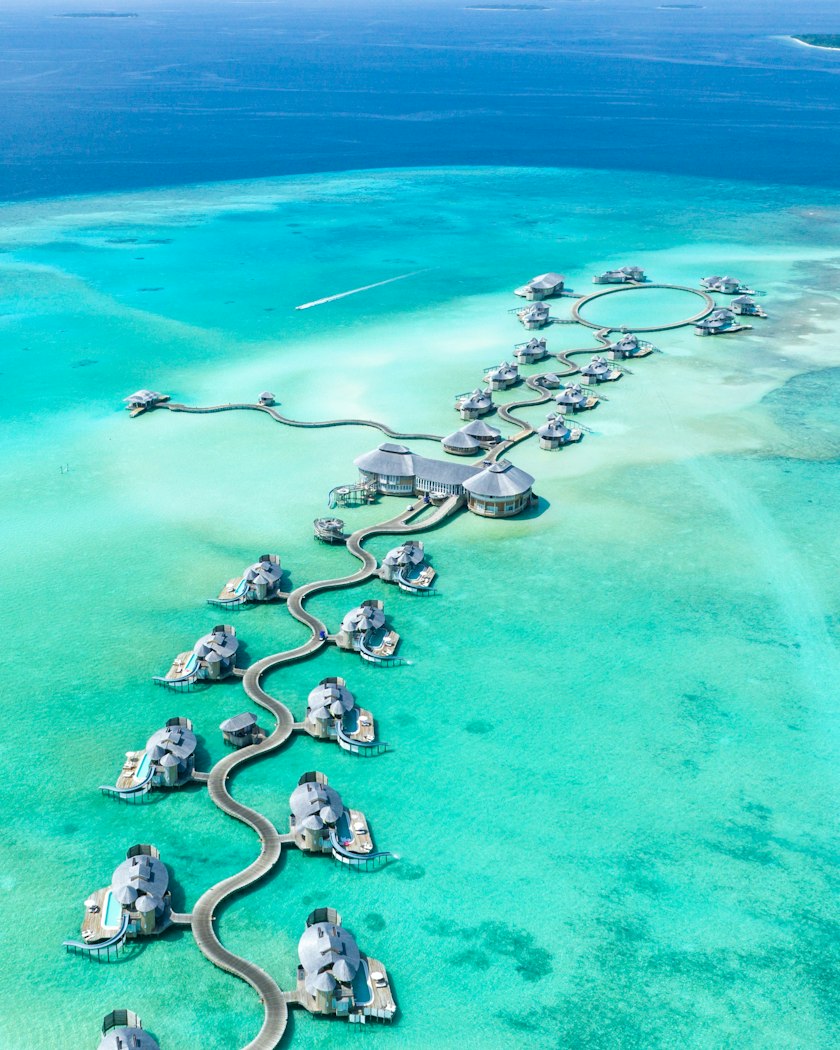
Turquoise lagoon and white sand bank in a Maldivian atoll

Why Maldives works for Muslim travellers

Sunni Islam is the state religion and a condition of citizenship. Every inhabited island is dry and modest; the resort islands operate under a separate regime and are licensed for alcohol.

Muslim population
100%
Sunni Islam is the state religion and Maldivian citizenship legally requires being Muslim. Public practice of other religions is not permitted.
Halal status
Total on local islands
Pork and alcohol are banned on inhabited islands and are not imported for general sale. Resorts hold licences and serve both.
Language
Dhivehi
Written in Thaana, right to left. English is widely spoken in tourism and by most younger Maldivians.
Visa
Free on arrival
A 30-day visa is issued free on arrival to all nationalities, subject to a confirmed booking and onward ticket.
Currency
Rufiyaa (MVR)
US dollars are accepted everywhere in tourism and resorts price in dollars. Carry rufiyaa only for local island shops.
Best months
November-April
The dry northeast monsoon. May to October is wetter and windier, and considerably cheaper.

The reefs

Manta rays at Hanifaru Bay, whale sharks year-round in South Ari atoll, and reef systems you can swim to from the beach. Among the best and most accessible snorkelling anywhere.

Hukuru Miskiy

Male's Old Friday Mosque, built in 1658 from carved coral stone with Qur'anic inscriptions cut directly into the blocks and a lacquered timber interior. One of the most unusual mosques in the Islamic world.

Local islands cost a tenth

Guesthouse tourism on inhabited islands, legal since 2009, means a Maldives trip on USD 80-150 a day rather than USD 800. The reef is the same reef.

Entirely Muslim society

Adhan five times a day from island mosques, no alcohol on inhabited islands, and a social norm of modest dress. For many Muslim travellers the local islands are more comfortable than the resorts.

Free visa for everyone

A 30-day visa on arrival, free, for every nationality. Few countries are this open.

Reliable weather

Between November and April the dry monsoon gives flat seas, clear water and almost no rain.

Know before you go

Eight days: Male, a local island and a reef atoll

A night in Male for the mosque and the museum, then a speedboat or ferry to a local island for the reefs and the village, with an optional resort night at the end.

1Day

Male: the old mosque and the city

Hukuru Miskiy - National Museum - fish market

morning
Arrive at Velana International and cross to Male - ten minutes by ferry or the Sinamale bridge. The capital holds a third of the country's population on two square kilometres.
afternoon
Hukuru Miskiy, the Old Friday Mosque of 1658, built entirely from carved coral stone with Qur'anic inscriptions cut into the blocks and lacquered timber inside. Entry requires permission from the Ministry of Islamic Affairs, usually arranged by a guide.
evening
The Grand Friday Mosque with its golden dome, the National Museum in Sultan Park, and the fish market on the waterfront at the end of the afternoon when the dhonis come in.
Male has no beach and is not a place to stay long, but one night gives you the country's history and its only real city.
2Day

To a local island

Public ferry or speedboat - Maafushi, Dhigurah or Ukulhas

morning
Speedboat or public ferry out to a local island. Maafushi is the busiest and easiest, Ukulhas the cleanest and quietest, Dhigurah the best for whale sharks and a long sandbank.
afternoon
Settle in and walk the island - most are under two kilometres long, with a mosque, a school, a harbour and a few hundred people.
evening
Maldivian dinner at the guesthouse - reef fish curry, garudhiya broth, roshi bread. Alcohol-free, as all inhabited islands are.
Public ferries are cheap (a few dollars) but slow and do not run every day; speedboats cost USD 25-50 and run daily.
3Day

Reefs and sandbanks

House reef - sandbank - dolphin cruise

morning
Snorkel the house reef straight off the beach. Most local islands have a reef edge within swimming distance with turtles, reef sharks and rays.
afternoon
A sandbank trip - a bare strip of white sand in open ocean, where guesthouses drop you for a few hours with a picnic. Swimwear is generally accepted on uninhabited sandbanks.
evening
A dolphin cruise at sunset - spinner dolphins ride the bow wave of the dhonis in pods of dozens.
On inhabited islands, swim in shorts and a rash vest or on the designated bikini beach. On sandbanks and excursion boats the rules relax.
4Day

Whale sharks or mantas

South Ari atoll or Hanifaru Bay

morning
South Ari atoll has a resident whale shark population year-round - a full-day excursion from Dhigurah or Dhangethi, snorkelling alongside animals up to ten metres long.
afternoon
In Baa atoll, Hanifaru Bay is a UNESCO biosphere site where hundreds of manta rays feed between May and November. Snorkelling only, numbers strictly limited, no diving.
evening
Back to the island for maghrib and dinner. Island life is quiet after dark; the mosque and the harbour are the two centres.
Whale shark and manta excursions are weather-dependent and the animals are wild - operators will be honest about the odds.
5Day

Diving or island life

Dive sites - village - boduberu

morning
Two-tank dive with the island's centre. Maldivian diving is drift diving through channels - thilas, giris and overhangs with grey reef sharks, eagle rays and napoleon wrasse.
afternoon
Or stay on land: the island's mosque, the school, the boatyard where dhonis are still built, and the swing chairs on the beach that every Maldivian island has.
evening
Boduberu - a drumming and dance performance with a lead singer and a line of drummers, building to a very fast finish. Guesthouses arrange it.
PADI open water courses on local islands cost roughly USD 550-750, considerably less than at the resorts.
6Day

A second atoll or a resort day

Inter-atoll transfer - resort day pass

morning
Either transfer to a second local island in a different atoll, or take a resort day pass - many resorts sell day access from nearby local islands for USD 80-250 including lunch and the use of the beach.
afternoon
Resort day passes let you see the overwater villas and the manicured version without paying to stay. Note that the resort's bar operates and swimwear rules are resort rules.
evening
Back to the guesthouse, or check in for a night or two at the resort if you have split the trip.
Splitting a trip - five nights local, two nights resort - is common and gets both experiences without the full resort cost.
7Day

Slow day

Beach - reef - village

morning
A last snorkel, or a morning fishing trip on a dhoni - handlines over a reef edge, and the catch grilled on the beach at sunset.
afternoon
The sandbank again, or the bikini beach, or a hammock. This is what the Maldives is for.
evening
Sunset fishing and a beach barbecue is the standard guesthouse offering and is genuinely good.
Reef fish caught on these trips is cooked the same evening - the shortest supply chain in any cuisine.
8Day

Back to Male and home

Speedboat - Velana International

morning
Speedboat back to Male, timed to your flight. Allow a wide margin - sea conditions change and transfers get delayed.
afternoon
If you have hours to spare, the airport has a hotel on the island itself, and Hulhumale, the reclaimed island next door, has a long public beach.
evening
Fly out. Velana International has prayer rooms in both terminals.
Seaplane transfers only operate in daylight, so a late international arrival often means a night in Male or Hulhumale.

Shorter and longer versions

Mosques and Islamic sites in Maldives

Every inhabited island has at least one mosque, and the adhan carries across the water. Male's coral-stone mosques are architecturally unique in the Islamic world - built from cut coral blocks with the inscriptions carved into the stone itself.

Hukuru Miskiy (Old Friday Mosque) Male 1658, coral stone

Built from interlocking carved coral blocks with Qur'anic inscriptions cut directly into the stone, and a lacquered timber interior. On the UNESCO tentative list. Non-Muslim visitors need permission from the Ministry of Islamic Affairs, usually arranged through a guide.

Grand Friday Mosque (Masjid al-Sultan Muhammad Thakurufaanu Al Auzam) Male Largest

The Islamic Centre's mosque, with a golden dome visible from the water, holding over 5,000 worshippers. Opened 1984 and the largest in the country.

Medhu Ziyaaraiy Male Shrine

The tomb of Abul Barakat Yusuf al-Barbari, the Moroccan or Somali traveller traditionally credited with bringing Islam to the Maldives in 1153. Beside the Old Friday Mosque.

Eid Miskiy Male Historic

A small 1815 coral-stone mosque used for the Eid prayers, in the old quarter near the Friday mosque.

Fenfushi Friday Mosque Fenfushi, Ari atoll Coral carving

A 17th-century coral-stone mosque on a local island, notable because Fenfushi was the island whose stonemasons carved much of the country's coral architecture.

Meedhoo Friday Mosque Addu atoll Oldest cemetery

In the far south, beside a cemetery with coral headstones said to be among the oldest Islamic graves in the country.

Hulhumale Mosque Hulhumale Modern

The main mosque of the reclaimed island beside the airport, convenient for anyone staying there before a flight.

Island mosques Every inhabited island Everywhere

Every inhabited island, however small, has a mosque at its centre with an ablution area, and the call to prayer structures the day. Visitors are welcome to pray.

Islamic heritage and museums

National Museum Male History

In Sultan Park, covering the pre-Islamic Buddhist period, the conversion in 1153, the sultanate, the Portuguese occupation and independence. Modest but the only place to get the history.

Medhu Ziyaaraiy Male Conversion

The shrine of the traveller credited with the country's conversion to Islam in 1153 - the single most historically significant site in the Maldives.

Coral stone mosque tradition Nationwide UNESCO tentative

A building tradition using cut and carved coral blocks fitted without mortar, with lacquered woodwork inside. Found nowhere else, and on the UNESCO tentative list.

Utheemu Ganduvaru Haa Alif atoll National hero

The wooden palace of Sultan Muhammad Thakurufaanu, who led the rebellion that ended the Portuguese occupation in 1573. In the far north.

Hanifaru Bay, Baa Atoll Baa atoll UNESCO biosphere

A UNESCO biosphere reserve where hundreds of manta rays and whale sharks gather to feed between May and November. Strictly managed - snorkelling only, limited numbers.

Boduberu Nationwide Music

Traditional Maldivian drumming and dance, African in origin, performed on local islands and at resorts, building from slow chanting to a very fast finish.

What to eat in Maldives - and where

Maldivian cooking is fish, coconut and chilli, with Sri Lankan and South Indian influence. Everything on inhabited islands is halal; there is no pork in the country outside the licensed resorts.

Dishes worth planning a day around

Mas huni

Shredded smoked tuna with grated coconut, onion, chilli and lime, eaten with roshi flatbread. The national breakfast.

Garudhiya

A clear tuna broth served with rice, lime, chilli and onion. Plain, restorative and the most traditional Maldivian dish.

Rihaakuru

A thick brown tuna paste, the reduced residue of boiling tuna for hours. Intensely savoury, eaten as a condiment, and utterly Maldivian.

Fihunu mas

Whole reef fish scored, rubbed with chilli paste and grilled over coconut husks. Usually the catch from that afternoon.

Mas riha

Tuna curry with coconut milk, curry leaves and Maldivian chilli - closer to Sri Lankan than Indian cooking.

Hedhikaa (short eats)

The afternoon tea tradition - gulha, bajiya, masroshi, keemia. Small fried or steamed savouries, mostly tuna and coconut, eaten with black tea.

Bis keemiya

A samosa-like pastry filled with tuna, cabbage and boiled egg. The best of the short eats.

Roshi

Unleavened flatbread cooked on a griddle, the base of most Maldivian meals.

Saagu bondibai

Sago pudding with coconut milk and rose water, the standard Maldivian dessert and a Ramadan staple.

Raa and coconut

Raa is sweet unfermented palm toddy, drunk fresh in the morning. Fresh coconut water is everywhere and costs almost nothing.

Sai (black tea)

Strong black tea with sugar, drunk with short eats in the afternoon in every island teashop.

Reef fish

Jobfish, snapper, grouper and tuna, caught by handline that day. The quality is the single best thing about eating in the Maldives.

Restaurants

Guesthouse kitchens Local islands Halal

Most local island guesthouses serve three meals, usually Maldivian and international, with the day's catch grilled in the evening. Half board is the normal arrangement and the food is better than the price suggests.

Seagull Cafe House Male Halal

A long-running garden café in the capital with Maldivian and Western dishes and famous ice cream. A pleasant break from Male's density.

Symphony Restaurant Male Halal

Maldivian and Asian cooking in the centre of Male, reliable and popular with locals at lunch.

Dine Male Male Halal

A rooftop restaurant with a view over the harbour, doing Maldivian dishes alongside an international menu.

Hotel Jen and Hulhumale hotels Male and Hulhumale Halal

The hotels on Male and Hulhumale serve halal food throughout; the mainland is dry, unlike the resorts.

Teashops (sai hotaa) Every island Halal

The Maldivian institution - a room with formica tables where men drink black tea and eat short eats in the afternoon. A dollar or two, and the best local food anywhere.

Maafushi guesthouse restaurants Maafushi Halal

The busiest local island has a dozen guesthouse restaurants along the beach road, all alcohol-free, doing grilled fish and curries.

Floating bars off local islands Various Licensed

Some local islands have a licensed boat moored offshore serving alcohol to tourists, outside the island's jurisdiction. Worth knowing about so you can avoid or find them as you prefer.

Resort restaurants Resort islands Mixed

Resorts serve halal meat as standard given the Maldivian staff and the Gulf clientele, but also serve pork and alcohol. Several resorts market themselves explicitly to Muslim travellers - ask before booking.

Male Fish Market Male Halal

Not a restaurant, but the best hour in the capital - yellowfin tuna landed and cut on the waterfront in the late afternoon.

Hulhumale beach cafés Hulhumale Halal

A row of cafés along the reclaimed island's public beach, alcohol-free, useful for an airport layover.

Sandbank barbecues Excursions Halal

Guesthouses grill the day's catch on an uninhabited sandbank at sunset. The best meal of most Maldives trips.

Watch out for:
  • There is effectively nothing to avoid on inhabited islands - pork and alcohol are illegal and not imported.
  • Resorts hold separate licences and do serve pork and alcohol. If you want a fully halal environment, either stay on a local island or check the specific resort's policy.
  • Floating bars are moored off some local islands, technically outside the island's jurisdiction. They are easy to avoid and easy to find, as you wish.
  • Alcohol brought in at Velana International airport is confiscated at customs and returned on departure.
  • Food on local islands is repetitive - fish, rice and curry, three times a day. Some guesthouses can vary it if asked.

Prayer, dress and practicalities

The adhan from the island mosque is the clock on a local island. Every inhabited island has a mosque with ablution facilities and visitors are welcome to pray.

WherePrayer facilities
Velana International AirportPrayer rooms in both the international and domestic terminals with ablution facilities.
Every inhabited islandAt least one mosque per island, with ablution facilities, open for all five prayers. Shops and offices close briefly at each prayer time.
MaleDozens of mosques including the Grand Friday Mosque, and the Islamic Centre. Male is dense enough that one is always within a few minutes.
ResortsMost resorts have a prayer room for staff, and will direct guests to it. Some resorts marketing to Gulf travellers provide guest prayer rooms and qibla markers.
Excursion boatsDhoni crews are Maldivian and Muslim; they know the qibla and will accommodate prayer on longer trips.
GuesthousesQibla markers and mats are standard on local islands, where the staff are local and Muslim.
Friday prayersLocal islands close almost entirely between about 11.30am and 1.30pm on Friday. Excursions are scheduled around it.

Practical notes

Where to stay in Maldives

Three options: a guesthouse on an inhabited island, a resort island, or a liveaboard boat. Only the first puts you in Maldivian society, and it costs a fraction of the second.

Maafushi Kaafu atoll Local island

The busiest and most developed local island, 90 minutes by speedboat from Male, with dozens of guesthouses, dive centres, a bikini beach and excursions daily. The easiest introduction.

Ukulhas Ari atoll Local island

Small, exceptionally clean - it runs a well-known waste management programme - with a good house reef and a quiet, conservative village.

Dhigurah South Ari atoll Local island

A long island with a three-kilometre sandbank and the best access to the resident whale sharks of South Ari. Quiet and good for divers.

Fulidhoo and Thoddoo Vaavu and Ari atolls Local island

Fulidhoo for nurse sharks and stingrays in the harbour at night; Thoddoo for watermelon farms and a genuinely rural island.

Hulhumale Beside the airport Transit

A reclaimed island with a long public beach, cheap hotels, a bridge to Male and ten minutes to the airport. Useful for late arrivals and early flights.

Resort islands Nationwide Licensed

One resort per island, with overwater villas, house reefs and full board. Expensive, and licensed for alcohol. Several market explicitly to Muslim travellers with prayer rooms and private pool villas.

Liveaboard boats Atolls Diving

Seven to ten nights moving between atolls with three or four dives a day. The best way to dive the country, and several operators run alcohol-free boats.

Male Capital One night

Dense, hot and with no beach, but the only place with the mosques, the museum and the fish market. One night is enough.

Beaches, pools and leisure

What a halal-friendly trip to Maldives costs

The widest price range of any destination in this guide - local islands and resorts differ by a factor of ten. All figures are per person per day unless stated, excluding international flights.

ItemBudgetMid-rangePremium
AccommodationUSD 50-90 (guesthouse)USD 150-300USD 800-3,000 (resort)
Food (3 meals)USD 20-35USD 50-90Included (full board)
Transfers (return)USD 50-100 (speedboat)USD 150-250USD 400-700 (seaplane)
ExcursionsUSD 30-60 (sandbank)USD 80-150 (whale shark)USD 300+ (private)
Diving (2 tanks)USD 90-130USD 140-190USD 250+
Daily total per personUSD 100-160USD 250-450USD 1,000+

Best time to visit Maldives

Two monsoons. The northeast (dry) runs roughly November to April and the southwest (wet) May to October, though the Maldives is never cold and rain is usually short.

PeriodWeatherVerdict for a halal trip
November-April28-31C, dry, calm seasThe main season. Clear water, flat seas, best visibility for diving. Peak prices over Christmas, New Year and February.
May-July28-31C, wetter, windierRain in short bursts, choppier crossings, and much lower prices. Hanifaru Bay's manta season begins.
August-October28-31C, wetThe wettest months and the cheapest. Manta aggregations at Hanifaru peak, and surf season is at its best in the central atolls.
Whale sharks, year-roundAnySouth Ari atoll has a resident whale shark population all year, unlike most destinations where they are seasonal.
Travelling during Ramadan: The Maldives fasts fully. On inhabited islands, restaurants and teashops close during daylight and open after maghrib, and eating in public during the day is not acceptable. Resorts operate normally for guests. Working hours shorten and the ferry and excursion schedules change. Iftar on a local island, with the whole village at the mosque and then at table, is a genuinely warm experience if you are travelling to see the country rather than only the reef. Eid al-Fitr brings mass island celebrations, boduberu drumming and inter-island visiting.

Maldives halal travel FAQ

The questions Muslim travellers ask most often before booking.

Local island or resort?
Local islands cost roughly a tenth as much, put you in an actual Maldivian town, are entirely alcohol-free and require modest dress outside the designated bikini beach. Resorts are private islands with overwater villas, full board, licensed bars and no dress restrictions. Many visitors split the trip - five nights local, two nights resort.
Can I swim in a burkini?
Yes, and on inhabited islands it is the norm rather than the exception. Locals swim fully clothed. On designated bikini beaches, uninhabited sandbanks, excursion boats and resort islands, ordinary swimwear is fine.
Is alcohol really banned?
On every inhabited island, yes - it is illegal, not imported for general sale, and confiscated at the airport if you bring it. Resort islands hold separate licences and serve alcohol. Some local islands have a licensed boat moored offshore, technically outside the island's jurisdiction.
Can non-Muslims visit the Maldives?
Yes, freely, with a free 30-day visa on arrival for all nationalities. What is restricted is public practice of other religions and the import of religious materials for distribution. Non-Muslim visitors need ministry permission to enter Male's Old Friday Mosque; ordinary island mosques are not tourist sites.
How do I get between islands?
Public ferries are cheap - a few dollars - but slow and only run on certain days. Speedboats cost USD 25-50 and run daily. Seaplanes serve distant resorts at USD 400-700 return and fly only in daylight. Check the ferry schedule before booking non-refundable guesthouse nights.
When can I see manta rays and whale sharks?
Whale sharks are resident year-round in South Ari atoll, which is why Dhigurah and Dhangethi are popular. Manta aggregations at Hanifaru Bay in Baa atoll run roughly May to November, with numbers capped and snorkelling only - book well ahead.
Is it good for families?
Very. Local islands are safe, tiny, entirely walkable, and the shallow lagoons are ideal for children. Resorts have kids' clubs and private villas. The constraint is the transfers, which can be long and choppy for small children.
How much does a realistic trip cost?
On local islands, USD 100-160 per person per day all in, so a week for two is roughly USD 2,000-3,200 plus flights. At a mid-range resort the same week is USD 8,000-15,000. The reef, which is the reason to come, is the same in both cases.