France has around six million Muslims, more than any other Western European country, largely of Algerian, Moroccan and Tunisian heritage. That has produced a food culture in which couscous is regularly voted among the nation's favourite dishes, whole quarters of Paris, Lyon and Marseille where halal is the default, and the Grande Mosquée de Paris - built in 1926 to honour the Muslim soldiers who died for France, and which sheltered Jews during the Occupation. It has also produced a complicated set of laws about religious dress that visitors should understand before arriving.
Around 9% of the population is Muslim - roughly six million people - predominantly of North and West African heritage. Halal butchers and restaurants are common in the Muslim districts of every large city.
Built in 1926 in Hispano-Moorish style to honour the Muslim soldiers who died for France in the First World War. During the Occupation it sheltered Jews and issued false Muslim identity papers. It has a tea room, a hammam and a garden.
Opened in 2012 under a undulating glass roof in the Visconti courtyard - 3,000 objects across 1,300 years, from Spain to India. One of the great Islamic collections and often almost empty.
Repeatedly voted among the country's favourite meals. North African restaurants are everywhere, and the ones in the Muslim quarters are halal and inexpensive.
Jean Nouvel's building on the Seine, whose south facade is a grid of photosensitive mashrabiya apertures that open and close with the light. A museum, a library and a roof terrace with the best view in the Latin Quarter.
Barbès and Belleville in Paris, La Guillotière in Lyon, Noailles in Marseille. These are working immigrant quarters with butchers, bakeries, restaurants and mosques.
Paris to Lyon in two hours, Marseille in three. The TGV makes a multi-city trip simple and avoids flying entirely.
Five days in Paris, one in Lyon and two in Marseille, all by TGV. Each city has its own Muslim quarter and its own North African food tradition.
Grande Mosquée - Jardin des Plantes - Latin Quarter
Louvre - Tuileries - Institut du Monde Arabe
Barbès - Goutte d'Or - Sacré-Cœur
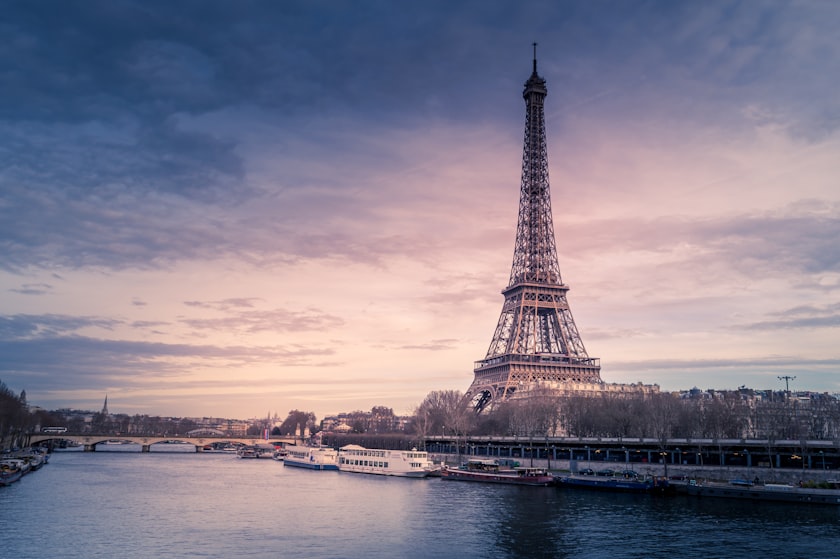
Eiffel Tower - Seine - Champs-Élysées
Versailles - or Saint-Denis market
Grande Mosquée de Lyon - Vieux Lyon - Guillotière
Noailles - Vieux-Port - Notre-Dame de la Garde
Calanques - Marseille airport
France has around 2,500 mosques and prayer rooms, most of them small and in converted buildings. The Grande Mosquée de Paris is the historic institution and receives visitors; others are working mosques rather than monuments.
Built in Hispano-Moorish style with a 33-metre minaret, zellij courtyards and a garden, to honour the Muslim soldiers who died for France in the First World War. Sheltered Jews during the Occupation. Open to visitors for a small fee; has a tea room, restaurant and hammam.
White stone with a turquoise dome and a slender minaret, funded partly by Saudi Arabia, and one of the more carefully designed modern French mosques. Guided visits can be arranged.
The largest mosque in eastern France, with a copper dome shaped like an opening flower. Strasbourg's status under local law allowed public funding that would be impossible elsewhere in France.
One of the largest mosques in the Paris region, serving the substantial Muslim population of the southeastern suburbs.
One of the largest mosques in France when it opened, in the new town south of Paris, and also a halal certification authority.
On the Rue Jean-Pierre Timbaud, at the centre of a cluster of halal restaurants and shops, and one of the most used mosques in central Paris.
Marseille is around a quarter Muslim and has dozens of mosques and prayer rooms across the northern districts and Noailles, though a long-planned grand mosque was never built.
A replica in red-painted concrete of the Great Mosque of Djenné in Mali, built in 1930 for Senegalese colonial troops stationed on the Riviera. A listed monument and a strange, moving thing.
One of the largest mosques in western France, serving a growing community.
A notable modern mosque west of Paris, with a distinctive contemporary design and a large congregation.
Opened 2012 in the Visconti courtyard under an undulating glass roof - 3,000 objects across 1,300 years from Spain to India, including the Baptistère de Saint Louis and the Pyxis of al-Mughira. Often the quietest gallery in the Louvre.
Jean Nouvel's 1987 building whose south facade carries 240 photosensitive mashrabiya apertures that open and close with the light. Museum, library, bookshop and a roof terrace with the best free view in the Latin Quarter.
Built 1922-1926 to honour the 100,000 Muslim soldiers who died for France in the First World War. During the Occupation its rector issued false Muslim identity papers to Jews and hid people in the building.
The Museum of European and Mediterranean Civilisations, in a lace-concrete cube linked by footbridge to a 17th-century fort. Strong on the Mediterranean's Muslim, Jewish and Christian entanglements.
Covers the arts of Africa, Asia and Oceania, including West African Islamic material - manuscripts, textiles and Sahelian architecture.
A 1930 concrete replica of the Great Mosque of Djenné, built for Senegalese tirailleurs stationed nearby. A listed historic monument and a direct reminder of France's West African Muslim soldiers.
Couscous is regularly voted among France's favourite dishes, and North African food is woven into the national diet. The Muslim quarters of Paris, Lyon and Marseille are where halal is the default.
Steamed semolina with a vegetable and meat broth, merguez, and harissa on the side. Algerian, Moroccan and Tunisian versions differ; the Grande Mosquée's restaurant is the classic Paris address.
Moroccan slow-cooked stews - lamb with prunes, chicken with preserved lemon and olive. Every North African restaurant in France has them.
Spiced lamb and beef sausage, North African in origin and now entirely naturalised in France - sold at every market and grilled at every summer barbecue.
French bread is flour, water, salt and yeast. Croissants and pain au chocolat are butter-based in any decent bakery, though industrial versions may use other fats.
Moroccan pastilla - pigeon or chicken in filo with almonds, cinnamon and icing sugar - is served in the better North African restaurants in Paris and Marseille.
Algerian date semolina pastries and Moroccan almond crescents, sold in the pastry shops of Barbès, Belleville and Noailles.
Poured from height into small glasses, heavily sugared. The Grande Mosquée's courtyard tea room is the best place in Paris to drink it.
France has a large halal fast-food sector - O'Tacos, halal branches of burger chains, and independent halal brasseries serving steak frites.
Vegetable dishes from the south - ratatouille, tian, soupe au pistou - which are naturally safe and excellent in Marseille and Provence.
Marseille's bouillabaisse is fish-based, though traditional versions use a splash of pastis. The fish markets and grilled fish restaurants are straightforward.
Most French cheeses use animal rennet. Several are made with microbial or vegetable rennet, and halal-certified cheeses are sold in the Muslim districts.
Breton buckwheat galettes with egg and cheese, and sweet crêpes. Widely available and usually straightforward - check for ham and for cider in the batter.
Couscous and tagine in a tiled room beside the mosque, with the tea room in the courtyard next door. Touristy, atmospheric, alcohol-free and a genuine Paris institution.
A long-established Parisian couscous restaurant with several branches, serving generous North African cooking. Check the specific branch's halal status when booking.
Halal butchers, Algerian and Moroccan pastry shops, the Marché Dejean and a dense cluster of restaurants. Loud, cheap and entirely unlike central Paris.
North African, Tunisian-Jewish and Chinese food across a few streets, with halal restaurants and a market twice a week. One of the most genuinely mixed quarters in the city.
A street of halal restaurants, Tunisian bakeries and shops around the Omar mosque, walking distance from République.
France has a large halal fast-food sector - O'Tacos (a French invention, not Mexican), halal burger chains and independent grill houses on most suburban high streets.
Lyon's North African quarter, with halal restaurants, butchers and pastry shops - the practical answer in a city whose famous bouchons are built on pork.
The Marché des Capucins, spice shops, Comorian and Algerian restaurants, and the best cheap street food in Marseille. Feels like an extension of North Africa.
Marseille's street food - chickpea-flour panisse and wood-fired pizza - is often vegetarian and widely available. Check the toppings.
Found across Barbès, Belleville, Saint-Denis, La Guillotière and Noailles. AVS certification is the strictest and most recognised among observant French Muslims.
Tunisian and Algerian pastry shops selling makroud, zlabia, cornes de gazelle and baklava, particularly around Belleville and Noailles.
West African restaurants serving thieboudienne, mafé and yassa, concentrated in the Goutte d'Or and Château Rouge. Excellent and inexpensive.
France's vegetarian scene has expanded substantially, and seafood restaurants sidestep the pork problem in cities with few halal options.
Mint tea and North African pastries under fig trees in the mosque's courtyard, open to everyone. Two or three euros and one of the most pleasant hours in Paris.
Around 2,500 mosques and prayer rooms, mostly small and in converted buildings in the suburbs and immigrant quarters. Public prayer facilities at stations and monuments are rare - this is a consequence of French secularism.
| Where | Prayer facilities |
|---|---|
| Charles de Gaulle and Orly | Multi-faith prayer rooms in the main terminals at both Paris airports, with ablution facilities. Lyon and Marseille also have them. |
| Mosques | Around 2,500 nationwide, concentrated in the Paris suburbs, Lyon, Marseille, Lille and the north. Most are small prayer rooms serving a local community. |
| Grande Mosquée de Paris | The most convenient central Paris option, open for the five prayers, with the tea room and restaurant in the same complex. |
| Muslim quarters | Barbès, Belleville, Saint-Denis, La Guillotière and Noailles all have several prayer rooms within a few streets. |
| Stations and monuments | Dedicated prayer rooms are rare. French laïcité means public buildings generally do not provide them, unlike in Britain. |
| Universities | Also rare - French universities generally do not provide prayer rooms, again as a consequence of the secularism framework. |
| Hotels | Qibla markers are not standard. Rooms are the usual option, with a compass app. |
Central Paris is expensive and short on halal food; the eastern and northern arrondissements have both cheaper rooms and the Muslim quarters.
The Grande Mosquée, the Institut du Monde Arabe, the Jardin des Plantes and the Sorbonne, with the Seine and Notre-Dame a short walk away. The best-placed central option.
The Rue Jean-Pierre Timbaud halal cluster and the Omar mosque, central, well connected and cheaper than the 1st to 8th.
The North and West African quarter with Sacré-Cœur above it. Much cheaper than central Paris, with excellent food. Busy and not to everyone's taste.
Walkable to most of the centre, with good transport and a wide choice of hotels. Halal options require a short metro ride.
The Renaissance quarter and the peninsula between the rivers, with La Guillotière's halal restaurants a short walk or metro ride away.
The old port and the market quarter beside it, with halal restaurants, the MuCEM and the boats to the Calanques. Noailles is rough at the edges and full of life.
North of Paris on the metro, with the royal basilica, one of the region's largest markets and extensive halal provision. Considerably cheaper than the city.
A small port town east of Marseille, with the Calanques on the doorstep and a much calmer atmosphere than the city.
Paris is expensive; Lyon and Marseille are noticeably cheaper. All figures are per person per day unless stated, excluding international flights.
| Item | Budget | Mid-range | Premium |
|---|---|---|---|
| Accommodation | EUR 80-130 | EUR 160-280 | EUR 600+ |
| Food (3 meals) | EUR 30-50 | EUR 70-120 | EUR 250+ |
| Local transport | EUR 8-12 (Navigo day) | EUR 30-60 | EUR 250 (car and driver) |
| Attractions | EUR 0-15 | EUR 45-90 | EUR 250+ |
| TGV Paris-Marseille | EUR 45-80 (advance) | EUR 110-160 | EUR 220+ |
| Daily total per person | EUR 120-180 | EUR 260-440 | EUR 1,000+ |
Temperate in the north, Mediterranean in the south. Paris and Marseille have quite different climates.
| Period | Weather | Verdict for a halal trip |
|---|---|---|
| May-June | 15-25C | The best window. Long days, gardens at their peak, and before the August exodus and the summer crowds. |
| July-August | 22-32C, hotter in the south | Peak tourist season, and August is when Parisians leave and many restaurants close. The south is hot and the Riviera is full. |
| September-October | 14-24C | Excellent - warm, quieter, and Paris back at work. The best value window of the year. |
| November-March | 4-12C | Cold and often grey, with Christmas markets in December, particularly in Strasbourg and the east. Cheapest, and the museums are indoors. |
The questions Muslim travellers ask most often before booking.