Japan has around 230,000 Muslims and a halal restaurant scene that barely existed fifteen years ago. It now includes halal ramen shops in Tokyo and Kyoto, certified wagyu, halal branches of national chains, and prayer rooms in airports, stations and department stores. It still requires more planning than anywhere else in this guide - you book restaurants rather than wander into them - but the reward is a country where everything else works flawlessly. Tokyo Camii, an Ottoman-style mosque in Shibuya, is one of the most beautiful buildings in the city.
Around 230,000 Muslims in a population of 123 million, mostly Indonesian, Pakistani, Bangladeshi and Turkish, plus a growing Japanese Muslim community. Halal certification is fragmented across several bodies, so the practical approach is restaurant-by-restaurant.
An Ottoman mosque in Yoyogi-Uehara, built with Turkish craftsmen and Turkish materials, with free daily tours in English and Japanese, a Turkish cultural centre and a halal market in the basement.
Chicken-broth halal ramen shops in Asakusa, Shinjuku and Kyoto; certified halal wagyu yakiniku in Shibuya; and halal branches of CoCo Ichibanya curry. None of this existed in 2010.
Trains to the second, luggage forwarding between hotels, immaculate public toilets and no tipping. Japan removes every logistical friction except the food one.
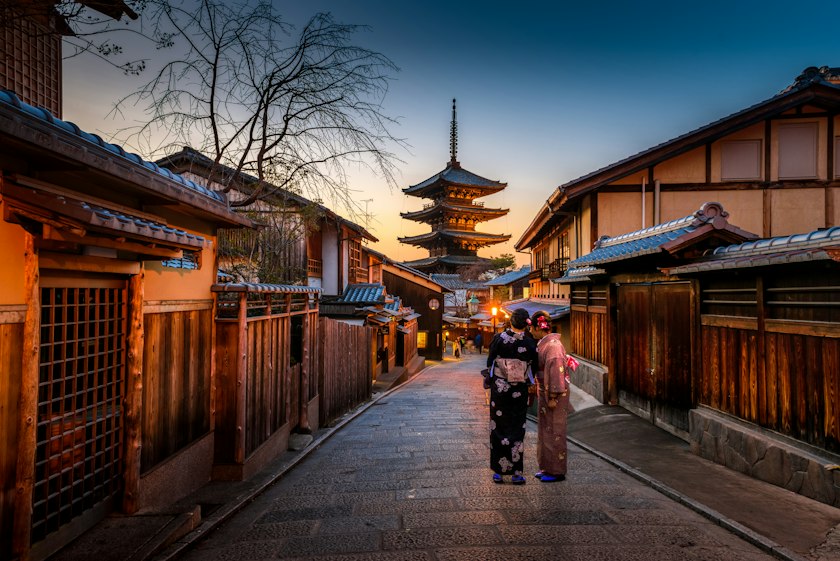
Cherry blossom, autumn maples in Kyoto, Fuji from Hakone, the Nakasendo post towns, Nara's deer. The visual payoff is as high as anywhere on earth.
One of the lowest crime rates in the world, and a culture in which lost property is routinely returned. Comfortable for solo travellers and families alike.
The weak yen means Japan now costs roughly what Western Europe does rather than substantially more - a good hotel is JPY 15,000-25,000 and a meal JPY 1,500-3,000.
The Golden Route, planned around the halal restaurant clusters - Asakusa and Shinjuku in Tokyo, the Kyoto station area, and Namba in Osaka. Shinkansen between cities.
Senso-ji - Nakamise - Sumida
Tokyo Camii - Meiji Jingu - Shibuya
Shinjuku - Tokyo Skytree - Akihabara
Hakone loop - Lake Ashi - Owakudani
Kyoto Station - Fushimi Inari - Gion
Kinkaku-ji - Arashiyama - Kiyomizu-dera
Todai-ji - Nara Park - Kasuga Taisha
Osaka Castle - Dotonbori - Kobe Mosque
Kuromon market - Shinsekai - Kansai
Japan has over a hundred mosques, most of them small prayer rooms in converted buildings. The three purpose-built ones worth visiting are Tokyo Camii, Kobe Mosque and Osaka Masjid.
The largest mosque in Japan, rebuilt in 2000 with Turkish craftsmen, Turkish marble and Iznik tile. Free guided tours daily in English and Japanese, a Turkish cultural centre, and a halal market in the basement.
The first mosque built in Japan, funded by Indian, Turkish and Tatar traders. It survived the 1945 firebombing of Kobe and the 1995 Great Hanshin earthquake, sheltering people through both.
The main mosque of the Kansai region, in Nishinari ward, serving a large South Asian and Indonesian community with a halal shop attached.
Run by the Islamic Circle of Japan, in a converted building near Otsuka station. Small, central and welcoming, with an active Japanese Muslim congregation.
A small prayer room attached to the Naritaya halal restaurant complex near Senso-ji - the most convenient prayer space for anyone sightseeing in old Tokyo.
One of the larger mosques outside Tokyo and Osaka, with a Turkish-influenced design and an attached halal shop.
A modest mosque run by the Kyoto Muslim Association, near Kyoto University, serving students and visitors. Kyoto has very few prayer facilities, so this and the station-area hotel rooms are the options.
The main mosque in Kyushu, with a halal shop, serving the growing Muslim student population in the region.
A small mosque near Hiroshima station, convenient for anyone visiting the Peace Park.
The main mosque of Hokkaido, useful for winter visitors to the ski resorts and the snow festival.
One of the older Japanese mosques outside the major cities, serving the industrial belt of central Honshu.
A short train ride from Tokyo, serving Yokohama's international community.
Tokyo's oldest temple, approached through the Kaminarimon gate and the Nakamise shopping street. Not Islamic, but the historic heart of the city and next to its best halal cluster.
Ten thousand vermilion torii gates climbing Mount Inari, donated by businesses over centuries. Free, open around the clock, and best at dawn or dusk.
Houses a 15-metre bronze Buddha cast in 752, in what remains the largest wooden building in the world even after being rebuilt at two-thirds its original size.
A gold-leaf-covered pavilion reflected in its pond, rebuilt in 1955 after an arson attack. The most photographed building in Japan.
The Genbaku Dome, left as it stood after 6 August 1945, and the museum beside it. Difficult and important.
Japan's first mosque, from 1935, and a monument to the Indian, Turkish and Tatar trading communities that built it - plus a survivor of two of the worst disasters in modern Japanese history.
The hardest food environment in this guide, and rapidly improving. Halal ramen, certified wagyu, halal Japanese curry and Muslim-friendly kaiseki all now exist. The rule is to plan and book rather than wander.
Chicken or beef broth rather than the standard pork tonkotsu, with alcohol-free seasoning. Naritaya, Ayam-Ya and Ramen Ouka are the names to know in Tokyo and Kyoto.
Certified halal wagyu is produced in Japan and served at a handful of yakiniku restaurants. Gyumon in Shibuya is the best-known - you grill it yourself at the table.
Fish is not the issue; the issues are mirin in the rice seasoning and sake in some preparations. Several halal-certified and Muslim-friendly sushi restaurants exist in Tokyo and Osaka.
Thick, mild and sweet, served over rice with a breaded cutlet. The CoCo Ichibanya branch in Akihabara is halal-certified and is a dependable fallback.
Battered and deep-fried seafood and vegetables. The problem is usually shared fryer oil - halal restaurants use dedicated fryers.
Grilled chicken skewers and deep-fried skewers. Halal versions exist in Osaka's Namba district and at some Tokyo restaurants.
Osaka's octopus balls and savoury pancake. The sauces normally contain alcohol and the batter sometimes uses dashi with additives - halal versions are available in Namba.
Powdered green tea and the sweets served with it - mochi, dorayaki, yokan. Almost all are plant-based and fine; check any with gelatine.
Rice balls with salmon, tuna or kelp. Convenience store labelling in Japan is detailed, and a growing number of products carry English allergen and ingredient lists.
Japanese fruit is extraordinary and extraordinarily expensive - a single muskmelon can cost JPY 5,000. Worth trying once at a department store food hall.
Several ryokan now offer a full halal or Muslim-friendly kaiseki multi-course dinner, booked in advance. The best way to experience Japanese fine dining.
Japan's Muslim communities run excellent Turkish, Pakistani and Indonesian restaurants in every major city - often the easiest option and reliably halal.
Halal chicken ramen and gyoza a few minutes from Senso-ji, with a prayer room attached. The single most useful address for a Muslim traveller in Tokyo.
Halal chicken ramen with a rich paitan broth, plus karaage. Branches in Tokyo and near Kyoto Station, which is where Kyoto's halal options are thinnest.
Halal-certified wagyu yakiniku - you grill it yourself over charcoal. Small, expensive and worth booking well ahead.
Halal ramen with a chicken and seafood broth in a tiny shop near Shinjuku Gyoenmae station. Queue at peak times.
Halal, vegan and allergen-free menus in one place, near Senso-ji and the Skytree. Useful if the group has mixed requirements.
A halal-certified branch of Japan's largest curry chain, with a separate kitchen. Familiar, cheap and open late.
Halal chicken ramen with branches in Shibuya and Osaka, and one of the more consistent of the halal ramen operations.
Japanese dishes including sushi and yakiniku in halal form, in central Osaka. Useful in a city with fewer options than Tokyo.
The Kyoto branch, near the Kiyomizu-dera approach, which is exactly where you need it after a morning of temples.
Halal meat, Turkish groceries and bread in the mosque basement. The place to stock up for self-catering or long train days.
A growing number of ryokan offer halal or Muslim-friendly kaiseki dinners and private onsen baths, always booked in advance. Kyoto and Hakone have the most.
Japan's Turkish community runs reliable halal restaurants in Tokyo, Osaka, Kyoto and Nagoya - an easy default when Japanese options are booked out.
Serving Japan's large Indonesian student and worker population, and generally the cheapest reliable halal food in the country.
Kyoto Station's food floors now include several Muslim-friendly options, which is the practical answer on a tight Kyoto day.
Prayer rooms have multiplied in the last decade - airports, major stations, department stores and tourist offices increasingly have them, and the Halal Gourmet Japan and Muslim Pro apps map them.
| Where | Prayer facilities |
|---|---|
| Narita, Haneda and Kansai airports | Prayer rooms airside and landside at all three, with ablution facilities. Narita and Kansai also have halal restaurants. |
| Major stations | Kyoto Station, Tokyo Station, Shinjuku and Osaka's Namba have prayer rooms or multi-faith spaces; some are inside tourist information centres. |
| Department stores | Takashimaya, Isetan and several other chains have added prayer rooms in their flagship stores, usually on the upper floors near the customer service desk. |
| Mosques | Tokyo Camii, Otsuka, Asakusa, Osaka Masjid, Kobe and Kyoto are the ones most useful to visitors. Over a hundred nationwide, mostly small. |
| Universities | Most large universities have a prayer room for their international students, and they are generally accessible if you ask. |
| Hotels | Muslim-friendly hotels provide qibla markers, mats and sometimes a prayer room. Elsewhere, hotel rooms are clean and private, which is what most travellers use. |
| Theme parks and attractions | Tokyo Disney, Universal Studios Japan and several large attractions now have prayer rooms - check the park map. |
Stay where the halal food is. In Tokyo that means Asakusa or Shinjuku; in Kyoto, near the station; in Osaka, Namba. The alternative is long train rides for dinner.
Senso-ji, Naritaya's halal ramen and prayer room, Sekai Cafe and several other halal options within a few streets. The most practical Tokyo base for Muslim travellers.
The world's busiest station, with lines to everywhere, several halal restaurants and Shinjuku Gyoen next door. Note the Kabukicho nightlife district on one side.
Walking distance to Tokyo Camii and Meiji Jingu, with Gyumon's halal wagyu in Shibuya. Younger and busier.
Kyoto's halal restaurants cluster here, along with the bus and train connections. Less atmospheric than Gion but far more convenient.
Machiya townhouses and temple lanes, the most beautiful part of the city. Very few food options after dark - plan dinner elsewhere.
Osaka's halal restaurants are concentrated here, along with Dotonbori and the shopping arcades.
A growing number offer halal or Muslim-friendly kaiseki dinners and private family onsen baths. Always booked well in advance.
Ryokan with Fuji views and private hot spring baths, 90 minutes from Tokyo. Several now cater to Muslim guests with advance notice.
The weak yen has made Japan considerably cheaper for foreign visitors than it was a decade ago. All figures are per person per day unless stated, excluding international flights.
| Item | Budget | Mid-range | Premium |
|---|---|---|---|
| Accommodation | JPY 7,000-12,000 | JPY 18,000-30,000 | JPY 60,000+ |
| Food (3 meals) | JPY 3,000-5,000 | JPY 7,000-12,000 | JPY 30,000+ |
| Local transport | JPY 800-1,500 (IC card) | JPY 2,500-4,000 | JPY 25,000 (car and driver) |
| Attractions | JPY 0-1,500 (shrines) | JPY 2,500-5,000 | JPY 15,000+ |
| Shinkansen Tokyo-Kyoto | JPY 13,500 (reserved) | JPY 13,500 | JPY 18,000 (Green Car) |
| Daily total per person | JPY 12,000-19,000 | JPY 30,000-50,000 | JPY 120,000+ |
Four sharply defined seasons, and two of them are the reason people come.
| Period | Weather | Verdict for a halal trip |
|---|---|---|
| March-May | 10-22C | Cherry blossom - late March in Tokyo, early April in Kyoto. The best and busiest time. Book six months ahead. |
| June-August | 25-35C, humid | June is the rainy season; July and August are hot and humid with a strong risk of typhoons in the south. Hokkaido is the escape. |
| September-November | 15-25C | The other great window. Autumn colour peaks in Kyoto in mid to late November and is, if anything, better than the blossom. |
| December-February | 0-12C | Cold, clear, and the cheapest time. Kyoto under snow is extraordinary, Fuji is most visible in winter, and Hokkaido's ski season is superb. |
The questions Muslim travellers ask most often before booking.