🇲🇾Halal Travel Guide to Malaysia

Malaysia has topped the Global Muslim Travel Index almost every year it has been published, and it is not a close contest. Halal is the default rather than the exception: JAKIM certification is the global gold standard, every shopping mall and motorway stop has a signposted surau, and the national cuisine - nasi lemak, nasi kandar, satay, laksa - is overwhelmingly Muslim-cooked. This guide covers a week across Kuala Lumpur, Penang and Langkawi, the mosques worth a detour, where to eat, and what it costs.

Last updated: 20 September 2026
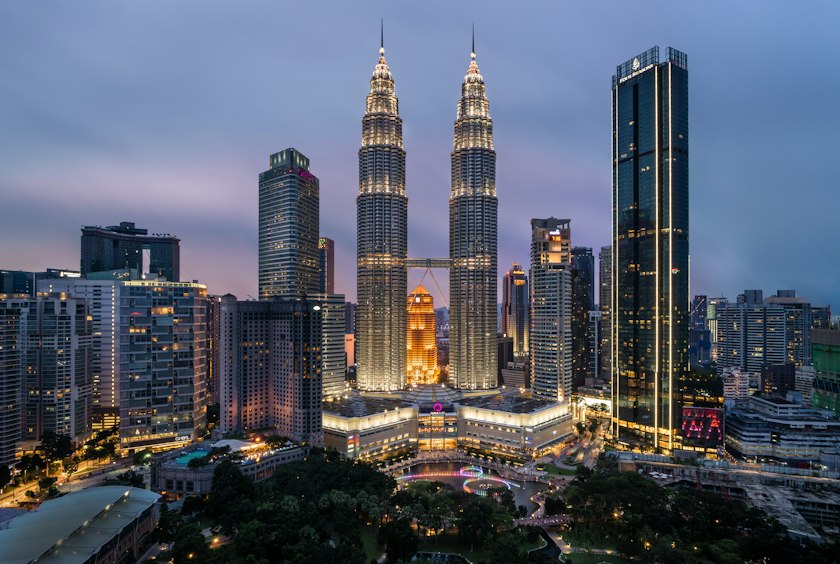
Petronas Twin Towers rising over the Kuala Lumpur skyline at dusk

Why Malaysia works for Muslim travellers

Muslims are about 63% of the population, Islam is the religion of the federation, and the tourism industry has been built around Muslim visitors for three decades. Practically, that means you can stop thinking about logistics and start thinking about food.

Muslim population
~63%
Sunni, Shafi'i school. Islam is the religion of the federation; other faiths are practised freely.
Certification body
JAKIM
The Department of Islamic Development Malaysia. Its logo is the most widely recognised halal mark in the world.
Language
Malay + English
English is near-universal in cities, on menus and on signage. You will not need a phrasebook.
Visa
Visa-free for most
90 days visa-free for GCC, UK, EU, US and many others; 30 days for several South Asian passports. Check MDAC pre-arrival registration.
Currency
Ringgit (MYR)
Cash still useful at food stalls; cards and QR payments accepted nearly everywhere else.
Best months
Feb-Apr, Jun-Aug
West coast is driest then. The east coast has a monsoon from November to February.

JAKIM certification you can trust

JAKIM audits the whole supply chain, not just the kitchen, and will not certify premises that serve alcohol. The green logo on a window is a genuine guarantee, and it is on everything from street stalls to McDonald's and Domino's.

A surau in every building

Shopping malls, office towers, airports, petrol stations, motorway rest stops and even some cinemas have prayer rooms with wudhu facilities, separated for men and women. You will never plan your day around finding one.

The food is the reason to come

Malay, Indian-Muslim (mamak), Nyonya and halal-adapted Chinese cooking on one street. Nasi kandar in Penang and nasi lemak in Kuala Lumpur are worth the flight on their own.

Built for extended families

Restaurants expect groups, hotels do connecting rooms as standard, and theme parks and islands are geared to family travel rather than nightlife.

Cheap for what you get

A superb meal costs MYR 10-20 at a stall and MYR 40-70 in a good restaurant. Four-star hotels in Kuala Lumpur run MYR 220-400 a night.

A genuine hub

KLIA connects to most of Asia, the Gulf and Australia, and AirAsia makes onward hops to Thailand, Indonesia and Brunei very cheap. Easy to combine with a second country.

Know before you go

Seven halal-friendly days in Malaysia

Kuala Lumpur for the city and the mosques, Penang for the food, Langkawi to finish on a beach. Internal flights are 55-70 minutes and cost MYR 80-200 if booked ahead.

1Day

Kuala Lumpur: arrival and the old core

KLIA to city centre - Masjid Jamek - Merdeka Square - Kampung Baru

morning
Land at KLIA and take the KLIA Ekspres to KL Sentral (28 minutes, MYR 55). Drop bags, then take the LRT to Masjid Jamek, the 1909 Moorish-style mosque at the confluence of the two rivers that gave the city its name.
afternoon
Walk the colonial core - Merdeka Square, the Sultan Abdul Samad Building - then the River of Life promenade, best seen when the fountains are lit.
evening
Dinner in Kampung Baru, the Malay urban village in the middle of the city. Nasi lemak at Wanjo, then walk to the edge of the neighbourhood for the classic view of the Petronas Towers framed by wooden stilt houses.
Masjid Jamek admits non-Muslim visitors outside prayer times and lends robes and scarves free at the entrance.
2Day

Kuala Lumpur: mosques, museum and the towers

Masjid Negara - Islamic Arts Museum - KLCC

morning
Masjid Negara, the National Mosque, opens to visitors between prayers. The folded 16-point star roof and the 73-metre minaret are worth the early start, and it is quiet before 10am.
afternoon
The Islamic Arts Museum Malaysia is a five-minute walk away and is one of the best Islamic museums anywhere - Qur'an manuscripts, Ottoman and Mughal work, and a hall of mosque architectural models. Allow three hours; its restaurant is halal.
evening
Pray maghrib at the Suria KLCC surau, then the KLCC park fountain show and dinner overlooking it. If you want the Petronas Towers skybridge, book the slot online days ahead.
The museum and Masjid Negara sit in the Lake Gardens; combine with the Bird Park if you have children.
3Day

Day trip: Putrajaya and Batu Caves

Putra Mosque - Putrajaya lake - Batu Caves - Masjid Wilayah

morning
Take the KLIA Transit to Putrajaya (20 min). The rose-tinted Putra Mosque on the lakeside is the photograph everyone comes for; robes are provided. The Perdana Putra and the Seri Wawasan bridge are a short walk.
afternoon
Back into the city for Batu Caves - 272 rainbow steps and a Hindu shrine in a limestone cavern. Not an Islamic site, but the single most striking landscape near KL and free to visit.
evening
Masjid Wilayah Persekutuan in Jalan Duta, an Ottoman-influenced mosque with 22 domes, is the most photogenic in the city at blue hour. Dinner at Rebung in Bangsar.
Putrajaya also has the striking steel-and-glass Masjid Tuanku Mizan Zainal Abidin, the 'Iron Mosque', ten minutes away by Grab.
4Day

Fly to Penang: Georgetown on foot

Penang International - Georgetown UNESCO core

morning
Morning flight to Penang (1 hour). Check in around Lebuh Chulia or Armenian Street so everything is walkable.
afternoon
Masjid Kapitan Keling, built in 1801 by the Indian Muslim community, is the anchor of the Street of Harmony - a Chinese temple, a Hindu temple, an Anglican church and a mosque within 400 metres of each other. Then the Georgetown street-art trail.
evening
Nasi kandar is the point of Penang. Hameediyah on Lebuh Campbell has been open since 1907; Line Clear on Penang Road runs almost around the clock.
Masjid Kapitan Keling and the nearby Acheen Street Mosque are both working mosques with visitor hours posted at the gate.
5Day

Penang: hill, heritage and more food

Penang Hill - Kek Lok Si - Gurney Drive

morning
Penang Hill funicular at opening time, before the queue and the haze. The view runs from the Strait to the mainland.
afternoon
The Pinang Peranakan Mansion for Straits Chinese heritage, or the Penang State Museum. If you have children, Entopia butterfly park is excellent.
evening
Gurney Drive hawker centre for the halal stalls and cendol, with the sea on one side.
Penang's Floating Mosque, Masjid Terapung Tanjung Bungah, is a short Grab ride north and best at sunset.
6Day

Langkawi: ferry or flight, then the sea

Langkawi - Cenang - Sky Bridge

morning
Ferry from Penang (2h45) or a 40-minute flight. Langkawi is duty-free, and the beaches are the reason to come.
afternoon
Langkawi SkyCab to Gunung Machinchang and the curved Sky Bridge, 660 metres above sea level. Go early; afternoon cloud closes it often.
evening
Dinner at Wan Thai for halal Thai, then the Cenang beachfront. Several beach clubs serve alcohol - the family end of Cenang and the Tanjung Rhu side do not.
Masjid Al-Hana in Kuah town is the island's main mosque and an easy stop on the way back from the jetty.
7Day

Langkawi: mangroves, then home

Kilim Geoforest Park - Kuah - departure

morning
Kilim Karst Geoforest Park by boat - eagles, mangrove tunnels, limestone caves and a fish farm. Three hours, MYR 250-350 per boat for up to six people.
afternoon
Eagle Square and the duty-free shops in Kuah, or a last swim at Tanjung Rhu, the quietest good beach on the island.
evening
Fly home from Langkawi, or back to KLIA for an onward connection. Both KLIA terminals have suraus airside on every level.
Ask your boat operator for a prayer stop if your trip crosses asr - most will pull in at the jetty without fuss.

Shorter and longer versions

Mosques and Islamic sites in Malaysia

Malaysia's mosques are unusually welcoming to non-Muslim visitors - most of the major ones lend robes and headscarves free of charge and have posted visiting hours. Avoid the half-hour either side of each congregational prayer, and Friday midday entirely.

Masjid Negara (National Mosque) Kuala Lumpur Visitors welcome

The 1965 national mosque, with a 16-point folded concrete star for a roof and a reflecting pool around it. Free robes at the entrance. Open to visitors 9am-12pm and 3pm-4pm most days, closed to visitors Friday morning.

Masjid Jamek Sultan Abdul Samad Kuala Lumpur Oldest in KL

Built in 1909 in Moorish Revival style at the meeting of the Klang and Gombak rivers - the spot the city is named after. Right beside the Masjid Jamek LRT station and the River of Life walkway.

Masjid Wilayah Persekutuan Kuala Lumpur Ottoman style

Twenty-two domes borrowed from the Blue Mosque in Istanbul and Ottoman calligraphy throughout. Less visited than the National Mosque and consequently more pleasant. Best photographed at dusk.

Putra Mosque Putrajaya Signature photo

Rose-tinted granite on the edge of Putrajaya Lake, finished in 1999, holding 15,000 worshippers. Robes provided. Twenty minutes from KL Sentral on the KLIA Transit.

Masjid Tuanku Mizan Zainal Abidin (Iron Mosque) Putrajaya Modern

Steel mesh walls instead of solid ones, so the whole building is cooled by cross-breeze and dappled light. A completely different architectural argument from the Putra Mosque a few minutes away.

Sultan Salahuddin Abdul Aziz Mosque (Blue Mosque) Shah Alam Largest dome

One of the largest mosques in Southeast Asia, with a blue-and-silver dome 51 metres across and four 142-metre minarets. Thirty minutes west of Kuala Lumpur; guided tours run for visitors.

Masjid Kapitan Keling Georgetown, Penang 1801

Founded by Penang's Indian Muslim traders, with Mughal domes and a single golden minaret. Part of the Street of Harmony, where a mosque, a Chinese clan temple, a Hindu temple and a church stand within a few hundred metres.

Masjid Terapung Tanjung Bungah (Floating Mosque) Penang Sunset

Built on stilts over the Strait of Malacca north of Georgetown. Small, working and entirely photogenic at maghrib.

Masjid Selat Melaka (Malacca Straits Mosque) Malacca Sunset

On the man-made Malacca Island, appearing to float when the tide is high. Middle-Eastern styling with stained glass; the most photographed mosque in the country after Putra.

Masjid Kristal (Crystal Mosque) Kuala Terengganu East coast

Steel, glass and crystal on the Terengganu river, lit in changing colours at night. Sits inside the Islamic Heritage Park, which has scale models of 20-odd famous mosques from around the world.

Masjid Ubudiah Kuala Kangsar, Perak Royal

Golden onion domes and striped minarets beside the royal town of Perak, completed in 1917 and widely held to be the most beautiful mosque in Malaysia.

Masjid Bandaraya Kota Kinabalu Kota Kinabalu, Sabah Borneo

Blue and gold domes on a man-made lagoon so the reflection doubles the building. Worth the Borneo detour if you get that far.

Islamic heritage and museums

Islamic Arts Museum Malaysia Kuala Lumpur Do not miss

Twelve galleries of Qur'an manuscripts, Ottoman ceramics, Mughal jewellery, textiles and a hall of architectural models of the world's great mosques. The building itself, with Iranian-tiled domes, is part of the exhibit. Halal restaurant on site.

Islamic Heritage Park (Taman Tamadun Islam) Kuala Terengganu Families

Twenty-one scale replicas of famous mosques - the Taj Mahal, the Dome of the Rock, the Great Mosque of Samarra - on a river island. Genuinely good with children.

Kampung Baru Kuala Lumpur Neighbourhood

A Malay reserve village of wooden stilt houses that the city grew around but never demolished. Best walked at dusk for the food stalls and the skyline contrast.

Acheen Street Mosque and the Malay quarter Georgetown, Penang UNESCO

Built in 1808 by an Acehnese prince, this was the departure point for Southeast Asian pilgrims sailing to Mecca and the heart of Penang's Malay-Arab trading quarter.

Royal Museum (Istana Negara Lama) Kuala Lumpur History

The former national palace, now open as a museum of the Malay sultanate and the modern monarchy.

What to eat in Malaysia - and where

Roughly the entire Malay and mamak food scene is halal, which makes Malaysia the rare country where the problem is choosing rather than finding. The exceptions are Chinese kopitiam and a handful of famous non-halal institutions - those are flagged below.

Dishes worth planning a day around

Nasi lemak

Coconut rice, sambal, fried anchovies, peanuts, egg and cucumber, usually with fried chicken or beef rendang. The national breakfast; eaten at any hour.

Nasi kandar

Penang Indian-Muslim rice with a ladle of several curries poured over it (banjir, 'flooded'). Order the ayam merah or the fish head curry.

Roti canai

Flaky flatbread slapped and spun to order, served with dhal and curry. MYR 2-3 at any mamak, all day and most of the night.

Satay

Skewered marinated chicken or beef over charcoal with peanut sauce, ketupat and raw onion. Kajang, outside KL, is the town that made its name on it.

Asam laksa

Penang's sour mackerel and tamarind noodle soup - pungent, fishy and addictive. Different dish entirely from the coconut curry laksa elsewhere.

Beef rendang

Beef simmered for hours in coconut milk and spice until it is dry, dark and intense. The Eid dish, on menus year-round.

Mee goreng mamak

Indian-Muslim fried noodles with potato, tofu, tomato and a squeeze of lime. The default late-night order.

Nasi kerabu

Kelantanese blue rice, dyed with butterfly pea flower, with herbs, salted egg, fish crackers and ayam percik. East coast speciality.

Murtabak

Roti canai stuffed with spiced minced meat and onion, folded and griddled. Ramadan bazaar staple.

Cendol and ABC

Shaved ice with palm sugar, coconut milk and green rice-flour jellies; ABC piles on red beans, sweetcorn and jelly. The correct response to the heat.

Teh tarik

Condensed-milk tea 'pulled' between two jugs until foamy. The national drink and the reason mamak stalls exist.

Apam balik

A thick pancake folded over crushed peanuts, sugar and sweetcorn. Night-market food, MYR 2-4.

Restaurants

Village Park Restaurant Damansara Uptown, Petaling Jaya Halal

Widely argued to serve the best nasi lemak in the Klang Valley - the fried chicken is the reason. Queues from 8am; go on a weekday morning.

Nasi Lemak Wanjo Kampung Baru Kampung Baru, Kuala Lumpur Halal

The Kampung Baru institution, open since the 1980s. Pick your dishes from the counter - sotong sambal, rendang, paru. Cash.

Rebung Chef Ismail Bangsar, Kuala Lumpur Halal

Chef Ismail's Malay buffet, over a hundred traditional dishes, and the best single place to understand the range of Malay home cooking. Book for dinner.

Nasi Kandar Pelita Nationwide chain JAKIM certified

A reliable 24-hour mamak chain found across the country, including a branch near KLCC. The default answer when you land at 2am and need to eat.

Madam Kwan's Suria KLCC and other malls JAKIM certified

Certified Malay-Nyonya comfort food in a mall setting - nasi lemak, nasi bojari, curry laksa. The easy, air-conditioned option with family in tow.

De.Wan 1958 by Chef Wan Kuala Lumpur Halal

Upscale modern Malay from the country's best-known chef. The place for one proper dinner out.

Sate Kajang Haji Samuri Kajang, Selangor Halal

The name in Malaysian satay since 1988, with branches now around the Klang Valley. Order by the dozen; the peanut sauce comes hot.

Hameediyah Lebuh Campbell, Georgetown Halal

Open since 1907 and claiming to be the oldest nasi kandar restaurant in Malaysia. Order the ayam merah and the murtabak.

Line Clear Nasi Kandar Penang Road, Georgetown Halal

Down an alley, almost always open, and the most photographed nasi kandar counter in the country. Point at what you want; ask for it banjir.

Restoran Kapitan Lebuh Chulia, Georgetown Halal

Tandoori chicken, naan and nasi kandar opposite the Kapitan Keling mosque. Consistent, busy and open late.

Gurney Drive Hawker Centre Penang Mixed - check stalls

Seafront hawker centre with a clearly marked halal section. Excellent for cendol, rojak and mee goreng - but check individual stalls rather than assuming the whole centre.

Pak Putra Tandoori & Naan Jalan Hang Lekir, Malacca Halal

Tandoori chicken cooked on the street by a Pakistani-Malaysian family, a block off Jonker Street. Opens at 5.30pm, closed Wednesdays, queue by 6.

Restoran Wan Thai Pantai Cenang, Langkawi Halal

Halal Thai on the main Cenang strip - tom yum, green curry, pandan chicken - and a reliable alternative to the alcohol-serving beach clubs nearby.

Jalan Alor night food street Bukit Bintang, Kuala Lumpur Mixed - check stalls

The famous night eating street, and genuinely worth seeing, but halal and non-halal stalls sit side by side. Look for the JAKIM sticker or the Muslim-friendly sign on each stall.
Watch out for:
  • Chinese kopitiam and coffee shops usually serve pork and are not halal, even when the individual dish sounds safe.
  • Some of Malacca's and Penang's most famous places - satay celup, certain char kway teow stalls - are explicitly non-halal. Fame is not certification.
  • Lard is a common frying medium in Chinese-style cooking, including in otherwise vegetarian noodle dishes.
  • Cakes and desserts in hotel lounges may contain rum or gelatine; certified bakeries state it on the label.

Prayer, dress and practicalities

This is the easiest country in the world in which to keep your prayers on time. Surau signage uses a distinctive white-on-green pictogram and it is everywhere.

WherePrayer facilities
KLIA and KLIA2 airportsSuraus on every level, landside and airside, with full wudhu areas, separated by gender and open around the clock. Signposted in Malay and English.
Shopping mallsEvery major mall - Suria KLCC, Pavilion, Mid Valley, Gurney Plaza, Queensbay - has a surau, usually on the top floor or beside the car park lifts. Ask for the 'surau' at the concierge.
Motorway rest stops (R&R)Every PLUS highway rest area has a mosque or large surau, toilets and halal food. Effectively a guaranteed prayer stop every 40-60 km.
Petrol stationsPetronas and Shell stations on main roads almost always have a small surau at the back.
Train stationsKL Sentral, the KTM intercity stations and the larger LRT/MRT interchanges have suraus; look for signage near the concourse toilets.
HotelsMost mid-range and above provide a qibla sticker in the wardrobe, a prayer mat on request, and many have a surau off the lobby or in the gym corridor.
Tourist attractionsBatu Caves, Penang Hill, the Sky Bridge station on Langkawi and the major museums all have prayer rooms on site.

Practical notes

Where to stay in Malaysia

Malaysia has a real Shariah-compliant hotel sector - alcohol-free, with prayer mats, qibla markers and separated gym hours - alongside the usual international brands, which are all straightforwardly Muslim-friendly anyway.

PNB Perdana Hotel & Suites on the Park KLCC, Kuala Lumpur Alcohol-free

Bumiputera-owned, alcohol-free, with large family suites and a location a short walk from the Petronas Towers and the KLCC park. The reliable first choice in the city.

TH Hotel Kelana Jaya, Alor Setar and others Shariah-compliant

Run by the group associated with Malaysia's pilgrimage fund. Fully Shariah-compliant, modest prices, prayer facilities on site.

De Palma Hotel Ampang and Shah Alam Shariah-compliant

A small Malaysian chain operating to Shariah-compliant standards - no alcohol, prayer rooms, family-oriented. Good value outside the city core.

Bukit Bintang and KLCC Kuala Lumpur Neighbourhood

Where most visitors stay: walkable to Jalan Alor, Pavilion and the towers, on the monorail and MRT. Bukit Bintang has more nightlife; KLCC is quieter and better with family.

Armenian Street and Lebuh Chulia Georgetown, Penang Neighbourhood

Heritage shophouse hotels inside the UNESCO zone, walkable to Kapitan Keling and the nasi kandar shops. Much more atmospheric than the Gurney high-rises.

Adya Hotel Langkawi Kuah, Langkawi Muslim-friendly

Islamic-Moorish architecture, near the jetty and the duty-free shops. A calmer base than the Cenang beach strip.

Tanjung Rhu Langkawi Quiet beach

The northern end of the island - long empty sand, no bar scene, resorts with private stretches. The choice if the point of the trip is a quiet beach.

Beaches, pools and leisure

What a halal-friendly trip to Malaysia costs

Malaysia is the cheapest of the top-tier halal destinations by a wide margin. All figures are per person per day unless stated, excluding international flights.

ItemBudgetMid-rangePremium
AccommodationMYR 80-140 (guesthouse)MYR 220-400 (4-star)MYR 600-1,400 (resort)
Food (3 meals)MYR 25-40 (stalls)MYR 70-120MYR 200-350
Local transportMYR 8-15 (rail)MYR 30-60 (Grab)MYR 150+ (private car)
AttractionsMYR 0-25MYR 40-90MYR 150-300
Internal flight (one way)MYR 80-120MYR 150-250MYR 400+
Daily total per personMYR 150-220MYR 380-620MYR 1,100+

Best time to visit Malaysia

Malaysia is equatorial - hot and humid all year, around 30-33C by day. What changes is the rain, and which coast it falls on.

PeriodWeatherVerdict for a halal trip
December-FebruaryWest coast dry, east coast monsoonExcellent for KL, Penang and Langkawi. The east coast islands are closed and Terengganu and Kelantan are wet.
March-MayHot, occasional stormsThe best overall window - both coasts are workable, and it is the quietest time before the mid-year holidays.
June-AugustDrier on the east coastPrime time for the Perhentians and Redang. Busy with regional holidaymakers; book ahead.
September-NovemberWettest on the west coastAfternoon downpours in KL and Penang, usually short. Cheapest hotel rates of the year.
Travelling during Ramadan: Malaysia is one of the best places in the world to experience Ramadan as a visitor. Every town runs a bazaar Ramadan in the late afternoon - hundreds of stalls selling murtabak, ayam percik, kuih and bubur lambuk - and the big mosques fill for taraweeh. Restaurants stay open during the day for non-fasting customers, unlike much of the Gulf, so travel is unaffected either way. Eid al-Fitr triggers balik kampung, the mass return to home villages: flights, trains and buses sell out weeks ahead, city restaurants close for several days, and hotel rates in tourist areas jump. Ramadan falls around February-March in 2027 and moves roughly eleven days earlier each year.

Malaysia halal travel FAQ

The questions Muslim travellers ask most often before booking.

Is all food in Malaysia halal?
No, but most of it is. Malay and Indian-Muslim (mamak) food - which is the majority of what you will eat - is halal, and JAKIM certification is displayed widely. Chinese restaurants and coffee shops frequently serve pork and are not certified. The practical rule: if the staff are Malay or Indian-Muslim, or the JAKIM logo is on the window, you are fine.
Do I need to wear a headscarf in Malaysia?
Not in public. Malaysia does not require non-Muslim or Muslim women to cover their hair outside mosques. You do need a headscarf and covered arms and legs to enter a mosque, and every major mosque lends robes and scarves free at the door. The east coast states are more conservative in practice and modest dress is appreciated there.
Is alcohol served in hotels?
Yes, in most states, to non-Muslims. International hotels have bars and minibars. If you want a fully alcohol-free stay, book a Shariah-compliant property such as PNB Perdana, TH Hotel or De Palma. Kelantan and Terengganu restrict alcohol sales sharply.
Which is better for food, Kuala Lumpur or Penang?
Penang, by consensus, for street food and nasi kandar - it is a food destination in its own right. Kuala Lumpur has the greater range, better fine dining and better Malay home-style buffets. Most people do both; they are a one-hour flight or a four-hour drive apart.
Can non-Muslims enter Malaysian mosques?
Yes, at the major mosques, outside prayer times, with robes provided free. Masjid Negara, Putra Mosque, the Blue Mosque in Shah Alam and Masjid Wilayah all have posted visiting hours and are used to non-Muslim visitors. Smaller neighbourhood suraus are for worshippers rather than sightseers.
How many days do I need?
Four days covers Kuala Lumpur and Putrajaya properly. Seven days adds Penang and a beach. Ten days lets you add Malacca or Ipoh without rushing. Two weeks lets you reach the east coast islands or Borneo.
Is Malaysia good for a first halal-focused trip?
It is the best possible first trip. Everything is signposted in English, the halal infrastructure requires no planning at all, the country is cheap, and it is safe and easy to move around. Travellers who start here tend to find later trips to Japan or Europe much simpler to plan by comparison.
Is it safe for solo female travellers?
Broadly yes. Malaysia is one of the safer countries in the region, Grab removes most transport risk, and women travelling alone are unremarkable in Kuala Lumpur and Penang. Standard precautions apply for late-night walking and for petty theft in crowded tourist areas.